

Aged care service use outcomes following first comprehensive assessment approvals in 2019–20

Key messages

Among all three approval groups of interest (approved for either a home care package only, permanent residential aged care only, or both, in 2019–20), 73% had received their approved service and 19% had received home support only by 30 June 2022.

In general, 96% of individuals with approvals had received some service, including home support, on or before 30 June 2022.

Everyone who was approved for a home care package, permanent residential aged care, or both, in 2019–20, were included and followed until 30 June 2022 (Figure 1).

During the analysis period, notable events – that likely affected care availability and individual preferences to take up aged care – include the outbreak of the COVID-19 pandemic and the releases of additional home care packages by the Australian Government.

Figure 1: Project timelines, key events and select government actions in aged care
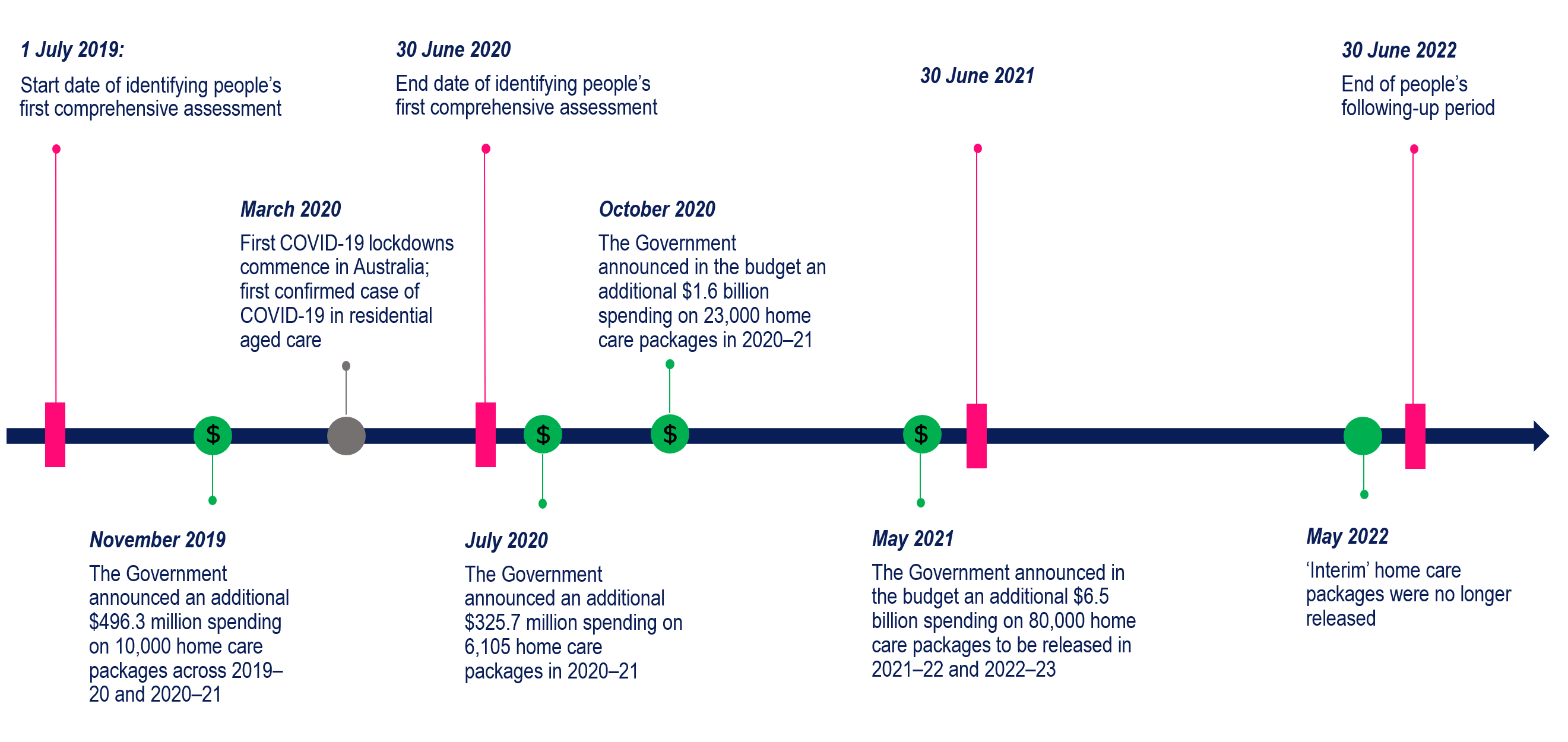
The figure shows the three-year period of the report (1 July 2019 to 30 June 2022), including report milestones, first COVID-19 lockdown (March 2020) and funding announcement of home care packages in November 2019, July and October 2020, and May 2021.To align with the Report on Government Services reporting, throughout the analysis of this report, people aged 65 and over include both First Nations and non-Indigenous people, while those aged 50-64 years include only First Nations people. Of everyone who had their first comprehensive assessment in 2019–20 (about 104,000 people), the largest group of approvals was for those approved for ‘both a home care package and permanent residential care’ (45%, about 46,500), followed by ‘a home care package only’ (31%, 32,100), and ‘permanent residential care only’ (24%, 25,400) (Figure 2).

The group with the highest proportion of people who received their approved service on or before 30 June 2022 was ‘both a home care package and permanent residential aged care’ (77%, about 35,900), followed by ‘a home care package only’ (71%, 22,700), and ‘permanent residential aged care only’ (68%, 17,200).

Figure 2: Number of people who had their first comprehensive assessment in 2019–20 and received their approved care service by 30 June 2022

The figure shows the number of people who were approved for ‘a home care package only’, ‘permanent residential aged care only’, or ‘both a home care package and permanent residential aged care’ for the first time in 2019–20, and the number of people who had received their approved service on or before 30 June 2022.

The figure shows the number of people who were approved for ‘a home care package only’, ‘permanent residential aged care only’, or ‘both a home care package and permanent residential aged care’ for the first time in 2019–20, and the number of people who had received their approved service on or before 30 June 2022.

Figure 3 shows the diverse and complex pathways that are taken through the aged care system. For some people approved for aged care services, rather than receiving their approved care service (73%):

  • they were offered another service (23.5%)
  • they died prior to or on 30 June 2022 without receiving a home care package, permanent residential aged care or home support (2.1%)
  • no outcome was recorded in the analysis period (censored – timed out of the analysis period) (1.4%).

By 30 June 2022, among all three approval groups of interest (about 104,000 people):

  • The majority (73%, 75,800 people) had received their approved service – presented as aged care service use outcome 1 in Figure 3
  • The second most common outcome was people received home support only (19%, 20,000 people) at any time up to 30 June 2022 (including prior to 2019–20) ­­­­­­­­­­­­­­­­­­­­­­­­­­­­­­­­­­­­­­­­­­­­­­­­­­­­­­­­­­­­­­­­­­­­­­­­­­­­– presented as aged care service use outcome 4 in Figure 3
  • In general, 96% (100,000 people) had received some service (aged care service use outcomes 1 to 4).

It is noted that it is not possible to identify from the data how many people had been offered a care service and elected not to access the service. Quarterly data about the number of people on the National Priority System offered an interim home care package that chose not to take up the offer can be found in the Home Care Packages report.

Figure 3: Aged care service use outcomes (1-7) following first comprehensive assessment approvals in 2019–20, up to 30 June 2022

The figure shows a Sankey diagram illustrating the pathways of people from their first comprehensive assessment in 2019–20, where they were approved for either a home care package only, permanent residential aged care only, or both, through to seven aged care service outcomes.

The figure shows a Sankey diagram illustrating the pathways of people from their first comprehensive assessment in 2019–20, where they were approved for either a home care package only, permanent residential aged care only, or both, through to seven aged care service outcomes.

Data used for this figure are displayed in Table S1 of the Supplementary data tables

Of those approved for ‘a home care package only’, 71% had received their approved home care package and 98% had received some service.

Of those approved for ‘permanent residential aged care only’, 68% had received permanent residential aged care and 93% had received some service.

Of those approved for ‘both a home care package and permanent residential aged care’, 77% had received their approved care service (54% received their approved home care package and 23% entered permanent residential aged care) and 97% had received some service.

Among those who were approved for ‘a home care package only’, 19% received home support at any time including prior to 2019–20 or an interim (lower level) home care package during the analysis period, but never their approved level of care. Of those who were approved for ‘permanent residential aged care only’, 5.0% died before receiving permanent residential aged care, a home care package, or home support (aged care service use outcome 5) and 1.7% were censored, i.e. timed out of the analysis period (aged care service use outcome 7 – did not receive aged care service or have further comprehensive assessment by 30 June 2022). Those approved for ‘permanent residential aged care only’ who died before receiving the service likely had the greatest complexity or severe health condition at the time of assessment. This group may include those nearing the end-of-life stage, who might have sought more suitable services such as palliative care available in acute settings (state and territory hospitals including hospital in the home).