


Mortality in the context of a pandemic
Historically, pandemics have affected mortality patterns.
The Spanish influenza (pneumonic influenza) pandemic occurred during 1918–1919 and impacted Australian mortality. Death rates increased through the Spanish influenza pandemic, to the highest observed since national collection of death data began in 1901 (ABS,1920). Changes to the leading causes of death were also observed, including:
- the newly emerged virus becoming the leading cause of death in 1919 (1 in 6 deaths caused by the Spanish flu) (ABS, 1920)
- the decline of cardiovascular disease death rates 8% in one year (1918–1919) (see Historic trends).
This section of the report highlights key changes to mortality over the COVID-19 pandemic.
Figure 4 below provides a timeline of the COVID-19 waves and response in Australia from 2020–2023 (AIHW, 2024). This provides important context, particularly as the responses across the pandemic reduced mortality through:
- reducing spread of the COVID-19 virus through boarder restrictions and social distancing
- reducing community transmission and mortality of other infectious diseases
- vaccine availability.
Figure 4: Timeline of the COVID-19 response in Australia
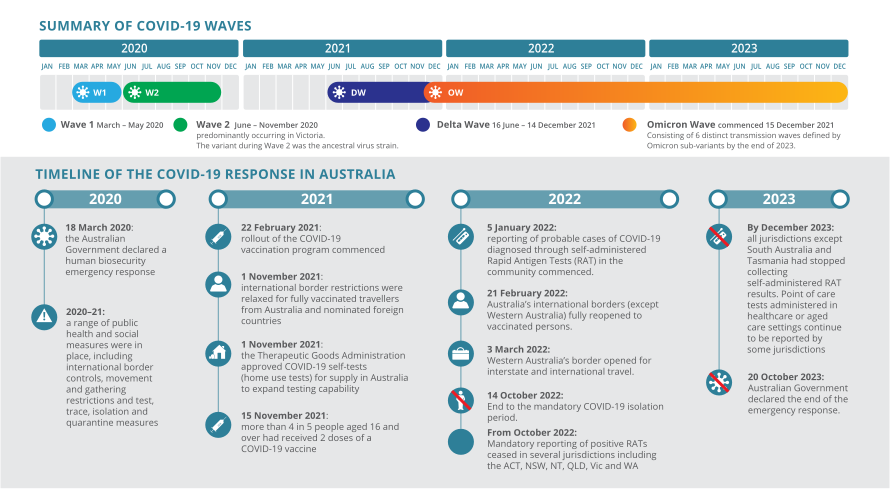
Source: COVID-19 web article, AIHW (2024).
Increase in death rate in 2022 resulting in excess mortality
Prior to the COVID-19 pandemic, death rates had steadily declined since the early 1970s (see Historic trends). In 2020, the largest year-on-year rate decrease was seen in the past two decades (Table S4.1).
During 2020, public health measures were introduced to limit the spread of COVID-19 (see Figure 4). People were travelling less, and conscious with social distancing and personal hygiene (mask wearing, hand washing). As a result, there was a decrease in the expected number of deaths (also known as mortality displacement) for some causes including:
- influenza and pneumonia
- conditions where infections are common terminal conditions (such as cancer and dementia).
The increase in the age-standardised death rate for 2022 (see Figure 4.1 below) reflects a year of known excess mortality (ABS 2023, Senate 2024, Actuaries Institute 2023), and a relaxation of public health measures related to the pandemic (Timeline of the COVID-19 response). Globally, excess mortality was seen in the years after the COVID-19 pandemic (Mostert 2024).
Excess mortality aims to understand if the number of deaths is more than what is expected, using historical data to predict the expected number of deaths.
A senate inquiry into excess mortality was undertaken in 2024 with reference to identifying contributing factors, with the tabled report (Senate 2024) identifying:
- COVID-19 as the ‘key contributing factor’, including deaths both directly from the virus or where the person died with the virus
- reversal of the mortality displacement seen in 2020 (the deaths which would have usually occurred in 2020, occurred in later years instead)
- some potential preventable drivers including access to health services and screening, and changes to health seeking behaviours.
Figure 4.1: Age-standardised death rate, by sex, Australia 2015–2024
The line graph highlights the increase in age-standardised death rates during the COVID-19 pandemic years, 2020 to 2023.

The bump chart shows COVID-19 appearing as the 3rd leading cause of death in 2022 for persons, then dropping down the rankings to 8th in 2024 and 10th in 2024.
