




About
The Child Wellbeing Data Asset (CWDA) aims to improve outcomes for children, young people and their families. It enables researchers to safely, securely and ethically access enduring, integrated data across sectors to analyse children and young people’s wellbeing and pathways through government services over time.
The CWDA can be conceptualised as a system that enables access to a ‘container’ of data collections that can be integrated to measure different aspects of children and young people’s wellbeing.
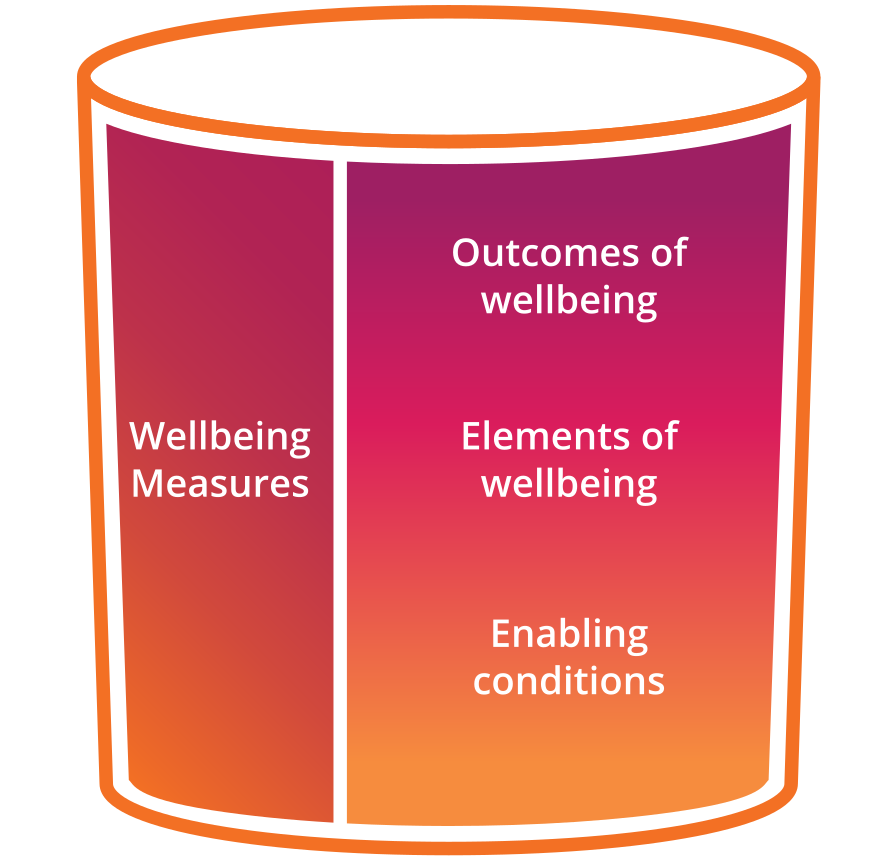
The CWDA enables a more holistic understanding of how children and young people move between government services, including welfare services directed at children – something not currently enabled by other national assets.
The institute has responsibility to deliver the CWDA as an initiative under the First National Action Plan of the National Strategy to Prevent and Respond to Child Sexual Abuse 2021-2030.
The CWDA currently includes data from:
- Australian Early Development Census
- Medicare Benefits Schedule
- Pharmaceuticals Benefits Scheme
The remaining priority collections in the CWDA’s initial iteration are expected to be added in stages in 2026, as data development and governance are finalised. These include:
- Youth Justice National Minimum Data Set
- Child Protection National Minimum Data Set
- National Community Mental Health Care Database
Other data collections available through the National Health Data Hub (NHDH) will also be accessible to users of the CWDA. The NHDH web pages provide detailed information on all available data collections and their access requirements.
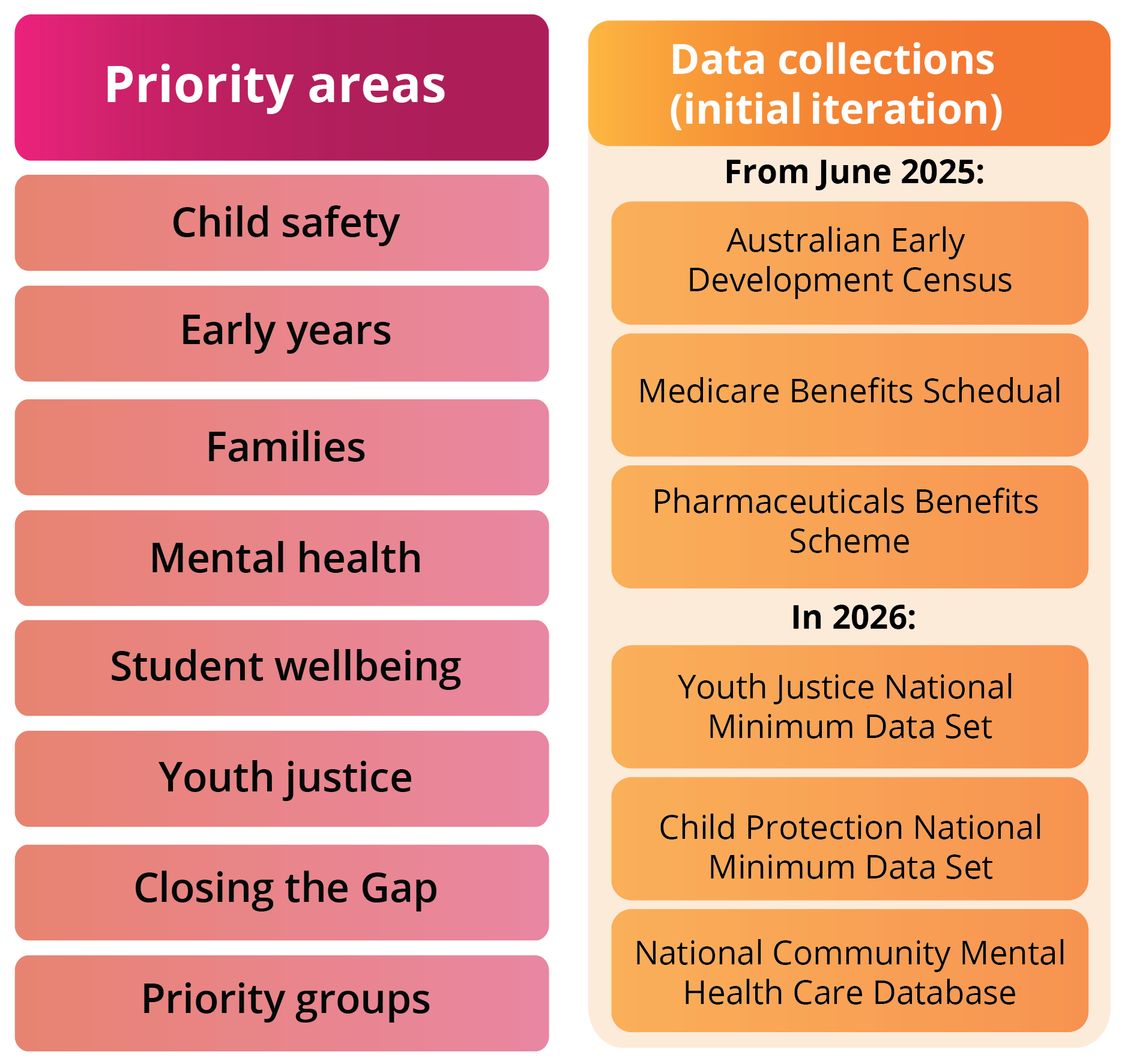
AIHW are continuing to consider additional data collections for future iterations of the CWDA to enable more research supporting better outcomes for children and young people.
Implementation timeline
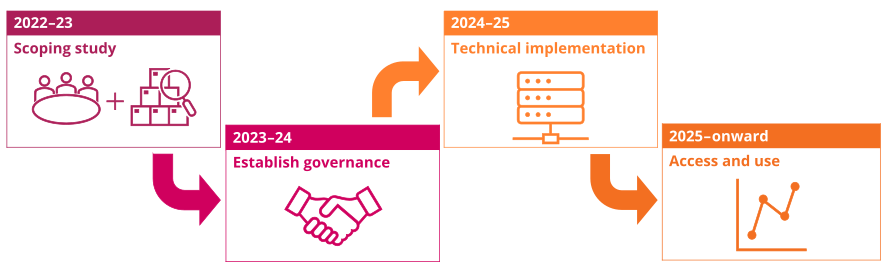
The institute completed the scoping study for the CWDA in 2023, with priorities and initial data collections identified and reported in The Child Wellbeing Data Asset Development Framework and Roadmap [PDF 3.7MB]. The study was informed by input from government, academic, non-government organisation and peak body stakeholders across 28 consultation sessions conducted by the Social Research Centre between September 2022 and February 2023.
The governance and technical implementation for the CWDA is being finalised.
As of June 2025, the CWDA is open for approved pilot projects.
General project applications to the CWDA will open in 2026, once governance arrangements for child protection and youth justice data collections are finalised. Eligible researchers are welcome to contact the CWDA team at [email protected] to discuss potential projects.
What the CWDA can be used for
The CWDA aims to enable research that can support better outcomes for children, young people and their families. Details on the type of research that the CWDA can and cannot be used for will be clearly detailed in the CWDA Governance Framework, which AIHW are currently finalising.
This page will be updated once the CWDA Governance Framework is finalised.
Community benefits
The CWDA will help answer persistent questions on how children and young people transition through major developmental stages, interact with services and move through different systems.
The insights produced by research using the CWDA can support governments and the community to measure and monitor the impact and success of initiatives, implement evidence-based policies and practices and support future investment in better services to improve outcomes for all children and young people.
Engaging with the community
The institute's approach to developing the CWDA is informed by consultation with non-government, peak body and government stakeholders conducted by the Social Research Centre between September 2022 and February 2023. For more information please view The Child Wellbeing Data Asset Development Framework and Roadmap [PDF 3.7MB].
Additionally, the institute is continuing to actively engage with advocates for children and young people and future users of the CWDA to ensure that they are kept informed of and are able to contribute to the CWDA’s development. This includes establishing the non-government CWDA Advisory Group, including academic, priority group and sector representatives, who have provided advice on the CWDA’s development and continue to advise on the CWDA’s use and future development.
The institute will also provide updates on the CWDA via a stakeholder newsletter emailed to subscribers.
First Nations engagement
The institute recognises the specific needs, interests and priorities of Aboriginal and Torres Strait Islander (First Nations) people and aims to minimise the risks of causing harm through culturally unsafe or insensitive data collection, analysis and reporting. For the CWDA’s development, SNAICC, the national peak body for Aboriginal and Torres Strait Islander children, has agreed to be a member on the CWDA Advisory Group.
The institute also recognises the essential role Indigenous Data Sovereignty (IDS) must play in the development and operation of the CWDA. The AIHW will implement IDS principles in line with the Australian Government’s Framework for the Governance of Indigenous Data. In addition to engagement via the CWDA Advisory Group, AIHW continues to engage with SNAICC and other relevant First Nations bodies and experts for input on the implementation of IDS principles in the CWDA.