


Doing inclusive research
Our team does inclusive research. This means people with lived expertise of disability are part of the team doing the work. This helps make the work more relevant, practical, and more likely to make a difference in the lives of people with disability.
'When you include people with disability at the start you don't just get more inclusion; you actually get better questions. You get research that's grounded in everyday experience and not just academic curiosity.'
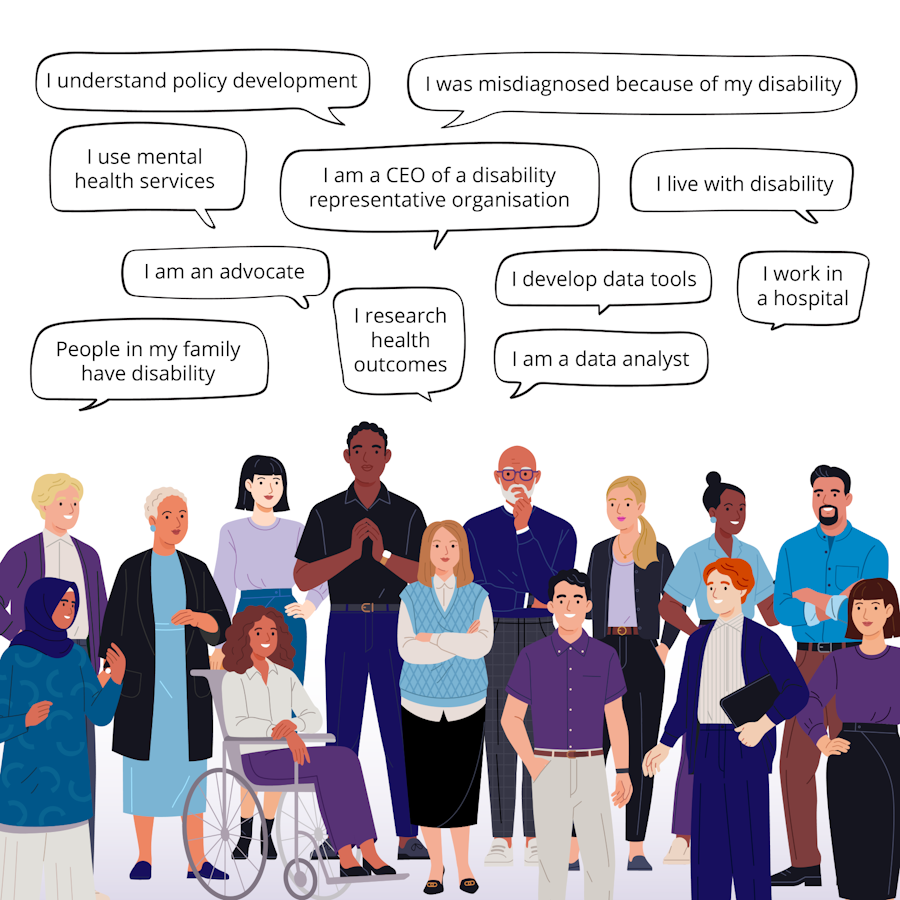
Inclusive research teams bring together different perspectives, experiences and skills. Many people bring more than one kind of expertise. Our team includes people with lived experience and expertise in disability, as well as expertise in health service design, advocacy, research, and data analysis.
We know our team cannot represent every experience of disability. However, this approach is an important step toward stronger representation and genuine partnership with the disability community.
All team members are paid for their time and expertise.
Figure 1: An inclusive research team
There are lots of ways to work inclusively.
We work together, and at times separately, to:
- explore what research and analysis is possible
- plan and guide the work
- review and interpret findings
- decide how to share the findings.
We also work with an independent facilitator trained in trauma-informed practice. Our facilitator supports the team and encourages reflection throughout the research process.