How people with disability are represented
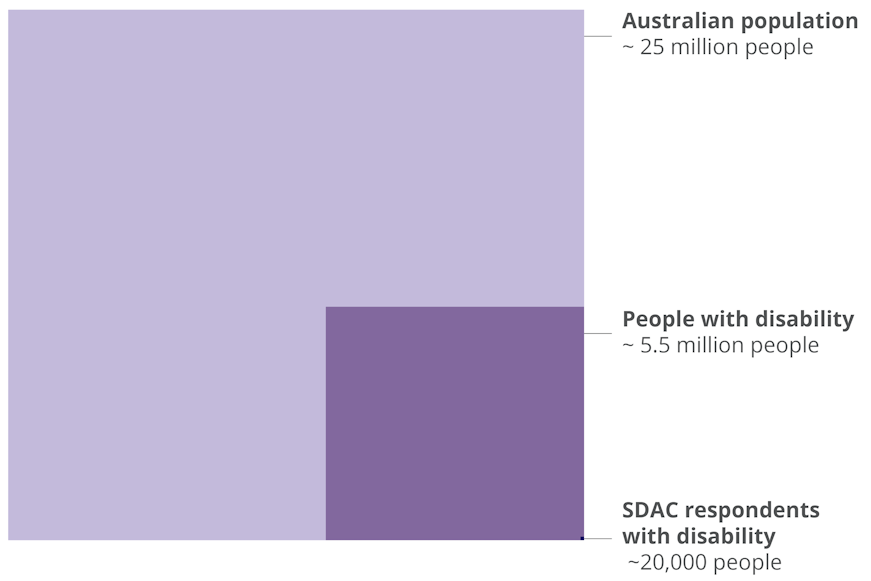
Based on the SDAC results, we estimate that about 5.5 million people in Australia have a disability. This is shown in Figure 1.
Figure 1: People with disability in Australia
You can read more about people with disability in Australia on the Disability page of this website.
How the National Disability Data Asset represents people with disability
We know roughly how many people in Australia have a disability, but we don’t always know how they use services or whether those services meet their needs. This is because disability is not consistently recorded in the data that government agencies collect. This makes it hard to understand people’s experiences and outcomes.
We are using a new approach. As part of the National Disability Data Asset (NDDA), the Australian, state and territory governments worked with the disability community and other experts to develop the first set of disability flags (NDDA 2026). The flags are also called disability indicators.
Disability flags are community-supported ways of representing people who may have a disability.
The disability flags are not physical flags. The disability flags are codes in the data that show a record belongs to a person with disability based on the government services they use. This data is de-identified, so no names or identifying personal details are included.
You can read about the disability community’s role in the NDDA and the development of the flags in the NDDA Charter.
Who is included in the first set of disability flags?
The first set of disability flags includes people who use one or more of the following government disability supports:
- the National Disability Insurance Scheme (NDIS)
- the Disability Support Pension (DSP)
- having a carer who gets a payment
- Centrelink disability supports such as mobility support.
The first set of disability flags do not include all people with disability in Australia.
Most people with disability do not access government disability supports. This means the current disability flags only represent part of the disability population.
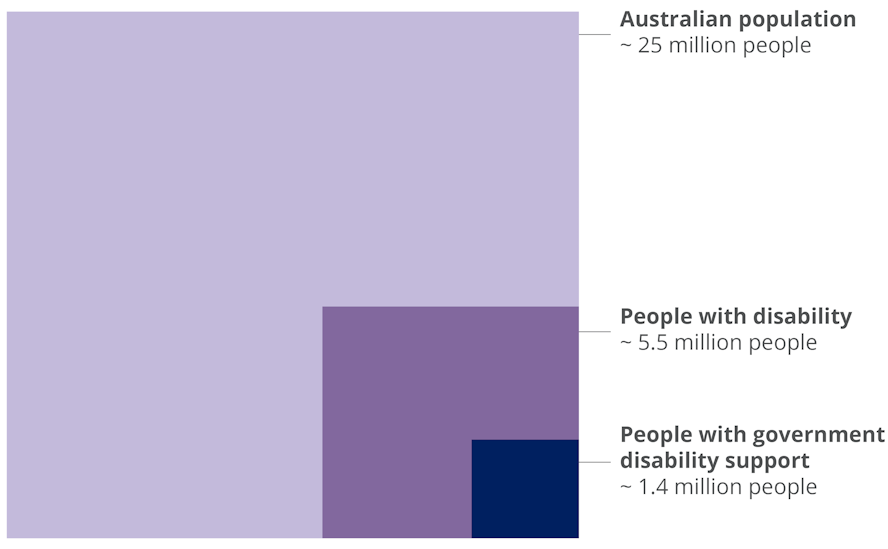
Around 1.4 million people with disability who receive government disability supports are represented by the first disability flags (Figure 2). In this project, this population is called “people with government disability supports” in this project and they are around 25% of people with disability in Australia.
The rest of the population is called “people with no government disability supports”, which includes people with disability who do not receive government disability supports, as well as people without disability.
Figure 2: Who is represented by the first disability flags?
Future disability flags will aim to better represent Australians with disability.
Learn more about the groups of people included in the first set of disability flags
Who is not well-represented by the first set of disability flags?
The first set of disability flags only includes people with disability who use government disability supports. People with disability who do not use these supports are not captured by the flags. This means the people with disability represented by the flags can be different from the wider population of people with disability.
For some people who are included in the flags, we do not have information about them, such as their gender or cultural background. These details can affect the types of services they use and what they need. Without this information, we cannot report results for some groups, even though their experiences and risks may be different.
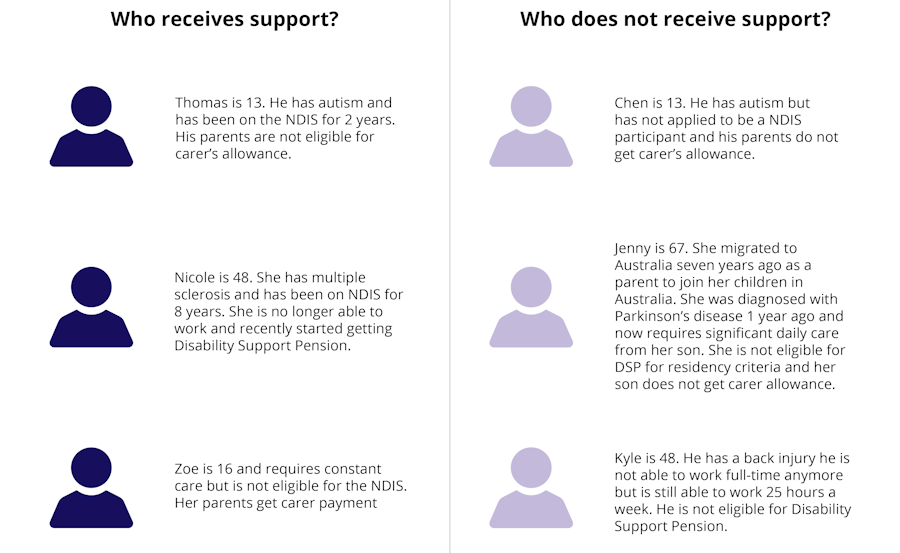
Figure 4 shows hypothetical examples of people who receive and do not receive government disability support.
Figure 4: Who receives government disability support