


Summary
Alcohol and other drug (AOD) treatment services aim to support people to reduce harmful AOD use. Clients accessing these services often receive multiple episodes of treatment, with some clients requiring more intensive treatment (for example, more episodes of treatment over a number of years) to achieve their goals.
Using data from the Alcohol and Other Drug Treatment Services National Minimum Data Set (AODTS NMDS), this report examines characteristics and patterns of service use for 3 client cohorts who received treatment for either alcohol only or alcohol and another principal drug of concern (PDOC) from publicly funded specialist AOD services between 1 July 2013 and 30 June 2023.
The 3 client cohorts were those whose treatment pattern was defined as:
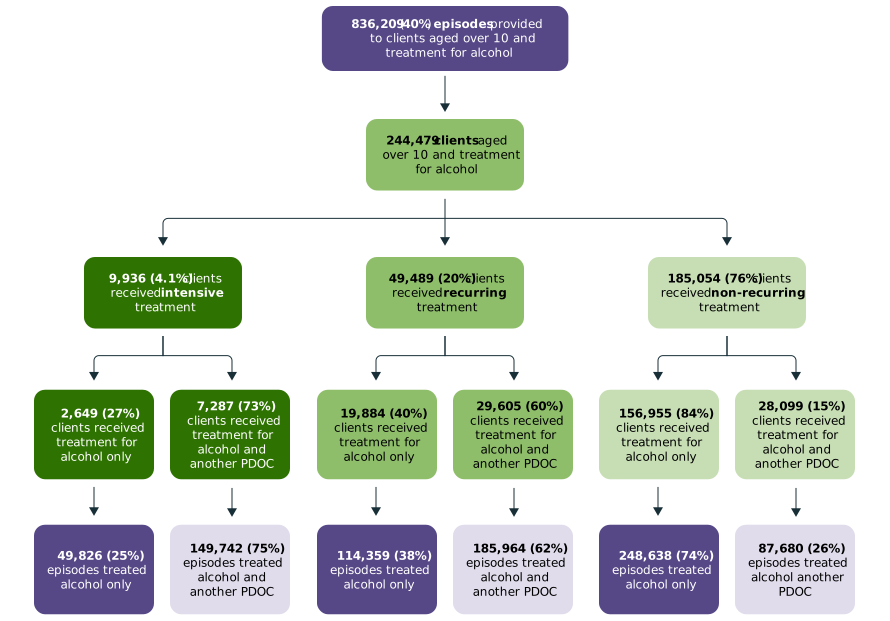
- non-recurring treatment (185,054 clients, or 76%) – clients who received treatment in fewer than 3 years within the 10-year period between 2013–14 and 2022–23
- recurring treatment (49,489 clients, or 20%) – clients who received fewer than 13 treatment episodes in at least 3 years
- intensive treatment (9,936 clients, or 4.1%) – clients who received 13 or more treatment episodes in at least 3 years (see Figure treatment intensity 1).
An estimated 244,500 clients received around 836,200 treatment episodes for their alcohol use between 2013–14 and 2022–23
Most clients were treated for alcohol only (73%, or 179,488 clients), were male (67%), aged 30–49 (47%), and resided in Major cities or Inner regional areas (75%).
Most clients treated for alcohol only received treatment in fewer than 3 years between 2013–14 and 2022–23
Most clients who received treatment for alcohol only (179,488 clients), received treatment in fewer than 3 years between 2013–14 and 2022–23 (84%, non-recurring cohort).
Clients treated for alcohol and another PDOC received about half of all treatment episodes, and most treatment occurred in 3 or more years
While around 1 in 4 clients (27%, or 64,991 clients) received treatment for alcohol and another PDOC they received around half (51%) of all the treatment episodes. Most of these clients (56%) received treatment in 3 or more years between 2013–14 and 2022–23 (that is, the recurring and intensive cohorts).
Clients treated for alcohol only were more likely to be older when they first received treatment than those treated for alcohol and another PDOC
Around half of the clients in each of the 3 cohorts treated for alcohol only were aged 30–49 when they first received treatment: non-recurring (47%), recurring (58%) or intensive (63%) client cohorts.
In contrast, more than half of all clients in each of the 3 cohorts treated for alcohol and another principal drug of concern (PDOC) were aged 20–39: non-recurring (56%), recurring (62%) and intensive (59%).
Where clients were treated for alcohol and another PDOC, the most common other PDOCs were amphetamines and cannabis
For clients in the intensive and recurring cohorts who received treatment for alcohol and another PDOC, the most common other PDOCs were amphetamines (22% and 23% of episodes, respectively) followed by cannabis (14% and 17%, respectively). In contrast, for clients in the non-recurring cohort, the most common other PDOCs were cannabis followed by amphetamines (19% and 14% of episodes, respectively).
The most common treatment pathways for clients aged 10–19 started with cannabis followed by subsequent episodes for either cannabis or alcohol. In contrast, the most common pathways for clients aged 20–39 started with amphetamines or alcohol followed by subsequent episodes for amphetamines or alcohol. This pattern was the same, regardless of the client treatment cohort.
Withdrawal management was the most common treatment type for clients treated for alcohol only in the intensive cohort
Withdrawal management (26%, or 12,706 episodes) was the most common treatment type for clients treated for alcohol only in the intensive treatment cohort, while counselling was the most common in the non-recurring (45%, or 112,627) and recurring (40%, or 46,197) client cohorts. Withdrawal management was the second most common treatment type for clients treated for alcohol and another PDOC in the intensive treatment cohort.
Clients treated for alcohol and another PDOC followed many unique treatment pathways
Clients treated for alcohol and another PDOC followed many more unique treatment pathways than clients who received treatment for alcohol only. Patterns in the type of main treatment received ranged from around 4,500 unique sequences for the non-recurring cohort up to 7,245 for intensive treatment. In contrast, main treatment pathways for those treated for alcohol only ranged from 2,600 to 4,700, for the non-recurring and intensive cohorts, respectively.
Figure treatment intensity 1: Analysis criteria of clients who, at any point, received treatment for alcohol, by service use cohort, and treatment episodes, 2013–14 to 2022–23
For further information see Client interaction with AOD services.