

Technical notes
On this page:
Scope and features of the COVID-19 register
The AIHW was funded by the Medical Research Future Fund in April 2022 to establish the COVID-19 register (the Register), which is a national linked data asset linking COVID-19 notification data to a range of administrative datasets. This report uses the most recent version of the COVID-19 Register (Version 2.6).
Figure A1 summarises the coverage of each of the data sources used in this report.
COVID-19 case notification data consisted of all notifications from 7 out of 8 states and territories between 25 January 2020 (the date the first case was reported (Hunt 2020)) to 31 December 2022. At the time of setting up the Register, COVID-19 case notifications from all states/territories (except Western Australia (WA)) were available for linkage, owing to WA’s decision to work towards providing these notifications data to the National Health Data Hub (NHDH) instead.
The number of cases of COVID-19 in notifications data will always be an underestimation of the true infection and case rates in the community as some people will not have symptoms, may not seek medical attention or be tested if they are symptomatic. However, underestimation of the rates of COVID-19 probably increased from late 2022 onwards due to a reduction in case detection through changes to testing and reporting requirements, as well as less likelihood of severe disease occurring due to the protective effects of vaccination and prior infection (AIHW 2024).
There are some differences in the geographic and temporal scope of each data source due to the availability of the data in Version 2.6. For example, data from the National Hospital Morbidity Database (NHMD) was only available up to 30 June 2022 and excludes data from Western Australia and the Northern Territory. Time periods for the COVID-19 data also vary slightly by jurisdiction (see Table A1).
Figure A1: Temporal coverage of data sets used (based on the COVID-19 Register Version 2.6)
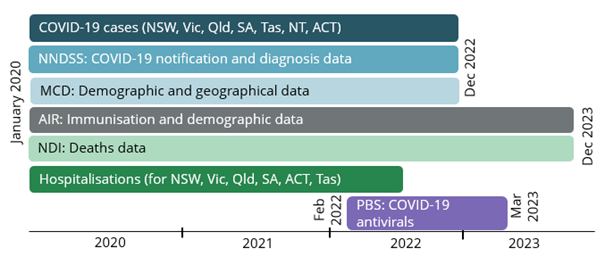
Horizontal bar charts show the time period of each dataset used from the COVID-19 Register, from 2020 to 2023. Data on COVID-19 cases were available for January 2020 to December 2022 and was matched to NNDSS and MCD for the same period, while AIR and Deaths data was up to December 2023. Hospitalisations data was available from January 2020 up to June 2022. Antivirals data from PBS was only available from February 2022 till March 2023.
Data coverage | Temporal coverage |
|---|---|
New South Wales | 25 January 2020 – 31 December 2022 |
Victoria | 25 January 2020 – 31 December 2022 |
Queensland | 28 January 2020 – 31 December 2022 |
South Australia | 30 January 2020 – 31 December 2022 |
Tasmania | 2 March 2020 – 31 December 2022 |
Australian Capital Territory | 12 March 2020 – 31 December 2022 |
Northern Territory | 21 February 2020 – 31 December 2022 |
Source: AIHW COVID-19 Register (version 2.6)
Existing reports on the impact of COVID‑19 in Australia have focused on how many ‘cases’ there are in the community, rather than how many individual ‘people’ have been diagnosed with COVID‑19 (Department of Health and Aged Care 2024). The Register allows for each person in Australia to have a unique record in the data and distinguishes if that person has had subsequent SARS-CoV-2 infections over time.
Considerations for interpreting report findings
Due to data quality and data availability in Version 2.6 of the COVID-19 Register, there are several important considerations to note when interpreting information presented in this report.
- Some COVID-19 cases may not have been identified (not tested) or reported to the notifiable diseases’ register (for example, positive rapid antigen tests not reported to public health units). A separate study by the Australian COVID-19 Serosurveillance Network estimates that by December 2022, more than two-thirds of the adult population had been infected with SARS CoV-2, virtually all subsequent to the appearance of the Omicron variant in late 2021 (Australian COVID-19 Serosurveillance Network, 2023).
- The Register contains notification data for all states/territories (except Western Australia) up to 31 December 2022 as mandatory reporting ceased in late 2022.
- There may be some overlap in reporting where people have a notification of COVID reported in a state or territory which is different from their usual place of residence.
- Different state and territory jurisdictions may also have different testing and reporting requirements based on their public health orders.
- There may be potential confounding effects that also contribute to health outcomes including other illnesses and comorbidities, or how the eligibility for vaccination was prioritised for those with higher risk of severe disease. This report is descriptive in nature and does not warrant evidence to infer causation.
- Analysis of hospitalisations among the COVID-19 case cohort during the Omicron period is limited due to data availability as hospitalisations data for 2022-23 will not become available until COVID-19 data is included in the National Health Data Hub (NHDH).
- WA and NT hospitalisations data are not included in the linked COVID-19 Register.
- COVID-19 antivirals were made available through PBS from March 2022 and eligibility criteria for antivirals changed throughout 2022.
- Confidence intervals (at 95% level) were added to selected figures and data tables where rates of COVID-19 related hospitalisation and deaths were examined. This is supplementary information for times where such rates in this report may be interpreted as risk of health outcomes rather than observed values. See Australia’s health - Glossary for the definition of confidence intervals.
At the time of writing, the Register was in the process of being integrated into the National Health Data Hub (NHDH). As the NHDH is an enduring linked dataset, COVID-19 notifications data (from January 2020 up to December 2022) in the NHDH will allow examination of health outcomes and health service utilisation following a COVID-19 diagnosis for longer periods than was possible for this report.
AIHW (2024) COVID-19, AIHW, Australian Government, accessed 13 November 2024.
Australian COVID-19 Serosurveillance Network (2023), Seroprevalence of SARS-CoV-2-specific antibodies among Australian blood donors: Round 4 update, Australian COVID-19 Serosurveillance Network, accessed 1 April 2025.
Department of Health and Aged Care (2024) COVID-19 reporting, Department of Health and Age Care website, accessed 13 November 2024.
Hunt G (2020) First confirmed case of novel coronavirus in Australia, Department of Health and Aged Care website, accessed 13 November 2024.
Identifying people with COVID-19
The COVID-19 cohort was created from unique linked COVID-19 notification data received from 7 participating states and territories (excluding Western Australia) in the National Notifiable Diseases Surveillance System (NNDSS), and a small subset of cases (n=509) from the National Death Index (NDI) who were identified as having died from COVID-19 but not recorded in the COVID-19 notification data.
Defining COVID-19 diagnoses (or infections)
The term COVID-19 ‘diagnosis’ in this report refers to people with at least one COVID-19 notification reported to state and territory notifiable disease registers. It includes people diagnosed using nucleic acid amplification testing (for example, reverse transcription polymerase chain reaction) or Rapid Antigen Tests. It is important to note that the number of cases of COVID-19 in notifications data will always be an underestimation of the true infection and case rates in the community as some people will not have symptoms, may not seek medical attention or be tested if they are symptomatic.
As people may have diagnoses from different sources and in some cases, conflicting information about whether they have a confirmed COVID-19 diagnosis, the Communicable Diseases Network Australia (CDNA) Series of National Guidelines (SoNGs) definitions (Department of Health and Aged Care 2024a) and the NNDSS variable ‘confirmation status’ was used to exclude cases.
The following criteria was applied to define the COVID-19 case cohort:
- For notifications between 25 January 2020 and 14 December 2021 (pre-Omicron wave), only those with a ‘confirmed’ COVID-19 diagnosis were included.
- For cases between 15 December 2021 and 31 December 2022 (Omicron wave), those identified as ‘probable’ or ‘confirmed’ were included as the Rapid Antigen Test (RAT) was approved for diagnosing COVID-19 during this period (COVID-19 Epidemiology and Surveillance Team 2024).
- Notifications with a ‘historic’ designation were excluded. These notifications were originally recorded as a COVID-19 case but later removed due to negative results in follow-up testing (Department of Health and Aged Care 2024b).
Subsequent notified infections (reinfections)
A subsequent notified COVID-19 infection (or reinfection) is defined in this report as more than 90 days between two positive tests in accordance with international studies (CDC 2023, Stein C et al. 2023, Yahav D et al. 2021).
Australia’s surveillance definition of subsequent COVID-19 infections changed over time due to changes in available evidence (Department of Health and Aged Care 2022, APH 2022, NSW Health 2022). Before 8 July 2022, this was a positive COVID-19 test that occurred more than 90 days (or 12 weeks) after an initial diagnosis. From 9 July 2022 to 14 October 2022, this changed to a positive COVID-19 test occurring at least 28 days since isolation ended, and from 14 October 2022 it changed to a positive COVID-19 test occurring at least 35 days after a previous positive test.
For this report, the 90-day difference definition was used for all time periods. A sensitivity analysis found that the number of COVID-19 cases did not differ significantly by applying different reinfection definitions.
Centers for Disease Control and Prevention (CDC 2023) Coronavirus Disease 2019 (COVID-19) 2023 Case Definition, National Notifiable Diseases Surveillance System, Division of Health Informatics and Surveillance (DHIS), CDC website, accessed 17 September 2024.
COVID-19 Epidemiology and Surveillance Team (2024) ‘COVID-19 Australia: Epidemiology Report 85 Reporting period ending 10 March 2024’, Communicable Diseases Intelligence, 2024; 48, doi: 10.33321/cdi.2024.48.11.
Department of Health and Aged Care (2022) AHPPC statement on COVID-19 winter update and ongoing health protection measures to support our community, Department of Health and Aged Care website, accessed 17 September 2024.
Department of Health and Aged Care (2024a) Coronavirus (COVID-19) - CDNA National Guidelines for Public Health Units, Department of Health and Aged Care website, accessed 16 September 2024.
Department of Health and Aged Care (2024b) Coronavirus Disease 2019 (COVID-19) – Surveillance case definition, Department of Health and Aged Care website, accessed 16 September 2024.
NSW Health (2022) COVID-19 reinfection period reduced to four weeks, NSW Health website, accessed 17 September 2024.
Parliament of Australia (APH 2022) Inquiry into Long COVID and Repeated COVID Infections, Submission from the Department of Health and Aged Care to the Standing Committee on Health, Aged Care and Sport, Submission 196, APH website, accessed 17 September 2024.
Stein C et al. (2023) ‘Past SARS-CoV-2 infection protection against re-infection: a systematic review and meta-analysis’, The Lancet, 401(10379):833-842, doi: 10.1016/S0140-6736(22)02465-5.
Yahav D et al. (2021) ‘Definitions for coronavirus disease 2019 reinfection, relapse and PCR re-positivity’, Clin Microbiol Infect, 27(3): 315–318, doi: 10.1016/j.cmi.2020.11.028. Demographic information
Age group
A person’s age was based on their estimated age as at 31 December 2022 or their recorded age at death.
- For people who were alive between January 2020 and December 2022:
- date of birth was derived from the month and year of birth in the Medicare Consumers Directory (MCD), with the 15th of the month assigned to all people to ensure consistency. Age was calculated as the difference between derived date of birth and 31 December 2022
- if date of birth is missing in the MCD, their age in the NNDSS was used as this was the age at which they tested positive for COVID-19 (as reported to the health authority).
- For people who died between January 2020 and December 2022, their age would instead be age at death, which was derived by using date of death in mortality data and date of birth from the MCD.
Less than 1% of the cohort were missing age or age at death after deriving from the MCD and NNDSS. See the footnotes in the Data tables for information on whether people with missing ages were included or excluded in the analysis.
Sex
The MCD was used as the primary data for determining sex. If sex was missing in the MCD, sex recorded in the Australian Immunisation Register (AIR) was used followed by the NNDSS. Overall, less than 1% of the COVID-19 cohort were missing sex details.
Response categories of ‘not stated’ and ‘undetermined’ and were designated as ‘missing’.
State/territory of usual residence
State/territory of usual residence was derived from the Statistical Area level 2 (SA2) from the MCD. This information was available for the vast majority of the COVID-19 cohort.
For the small proportion where SA2 information was missing in the MCD, it was imputed from records in AIR or from state and territory case notifications. SA2 is a small area unit within the ABS’ Australian Statistical Geography Standard (ASGS) where the SA2 for each record was mapped to its relevant state/territory (ABS 2021a).
In this report, state/territory of usual residence is not limited to the 7 participating states/territories who provided the COVID-19 notifications data, as some cases were notified through a different jurisdiction to their usual residence.
Remoteness area
Remoteness area was classified using the Australian Statistical Geography Standard (ASGS) Remoteness Structure 2021 which defines remoteness areas as Major cities, Inner regional, Outer regional, Remote, and Very remote. Remoteness areas are centred on the Accessibility/Remoteness Index of Australia, which is based on distances people have to travel for services (ABS 2021b). More information on the remoteness structure can be found on the ABS website.
For this report, SA2s of a person’s usual residence taken from the MCD, AIR or State and territory notifiable disease databases were assigned to one remoteness category based on the largest percentage of population distribution as of June 2021.
Socioeconomic groups
Socioeconomic groups were classified using the ABS Index of Relative Socioeconomic Disadvantage (IRSD) 2021. The IRSD is a geographic based measure based on social and economic characteristics of a given area (ABS 2023). The IRSD classifies individuals according to the socioeconomic characteristics of the area in which they live. It scores each area by summarising attributes of the population, such as low income, low educational attainment, high unemployment and jobs in relatively unskilled occupations. More information can be found on the ABS website.
IRSD reflects the overall or average level of disadvantage of the population of an area; it does not show how individuals living in the same area differ from each other in their socioeconomic position. Inequality estimates based on area-level measures of socioeconomic position underestimate inequalities because of the variation in socioeconomic position within areas (Mather et al. 2014).
For this report, SA2s of a person’s usual residence taken from the MCD, AIR or State and territory notifiable disease databases were assigned their IRSD using a correspondence table, and the population was then divided into 5 socioeconomic areas (containing around 20% of the population in each), based on the level of disadvantage of the statistical local area of their residence. The population living in the 20% of areas with the greatest overall level of disadvantage was described as the ‘lowest socioeconomic group’. The 20% at the other end of the scale – the top fifth – was described as the ‘highest socioeconomic group.
Population estimates based on data from the 2021 Census of Population and Housing showed that in 2021, there was a lower proportion of people aged 85 and over living in Remote and Very remote areas (Table A2).
Remoteness area/ Socioeconomic group | Percentage of people aged 85 and over |
|---|---|
Major cities | 2.0 |
Inner regional Australia | 2.5 |
Outer regional Australia | 2.1 |
Remote and very remote | 1.0 |
Socioeconomic quintile 1 (lowest) | 2.1 |
Socioeconomic quintile 2 | 2.3 |
Socioeconomic quintile 3 | 2.0 |
Socioeconomic quintile 4 | 1.9 |
Socioeconomic quintile 5 (highest) | 2.1 |
Source: AIHW analysis of Australian Bureau of Statistics data.
Australian Estimated Resident Population
The Estimated Resident Population (ERP) from the Australian Bureau of Statistics (ABS) is the official measure of the Australian population and contains estimates of the usual resident population of Australia. The ERP includes all people, regardless of nationality or citizenship, who usually live in Australia (except for foreign diplomatic personnel and their families). More information is available from the ABS website.
Age- and sex-specific ERP data were used as denominators to derive COVID-19 diagnosis rates or proportions where relevant (see downloadable data tables). The percentage of the estimated resident population with a COVID-19 diagnosis is based on the number of people with a reported COVID-19 diagnosis and residing in NSW, Vic, Qld, SA, Tas, NT and ACT divided by the ABS ERP as at 30 June 2021 or 30 June 2022 for these jurisdictions, depending on the COVID-19 wave being analysed. For the full cohort, ERP as at 30 June 2022 is used. A small number of people may be included in the counts of diagnosis but not the denominator due to a COVID-19 notification from a participating state or territory, but whose state/territory of usual residence is in another jurisdiction.
Similarly, age and sex-specific proportions were calculated for each ASGS remoteness area and IRSD quintile using the ABS ERP as at 30 June 2021, or 30 June 2022 for these jurisdictions, depending on the COVID-19 wave being analysed.
Australian Bureau of Statistics (ABS 2021a) Australia and State/Territory, ABS website, accessed 17 September 2024.
ABS 2021b Remoteness Structure, ABS website, accessed 17 September 2024.
ABS (2023) Socio-Economic Indexes for Areas (SEIFA), Australia methodology, ABS website, accessed 17 September 2024.
Mather T, Banks E, Joshy G, Bauman A, Phongsavan P and Korda RJ (2014) ‘Variation in health inequalities according to measures of socioeconomic status and age’, Australian and New Zealand Journal of Public Health, 38(5):436–440, doi:10.1111/1753-6405.12239.
Hospitalisations
Data source and coverage
The COVID-19 Register contains data from the National Hospital Morbidity Database (NHMD). Version 2.6 of the COVID-19 Register includes admitted patient data from 25 January 2020 to 30 June 2022.
In this report, the following hospital admissions were excluded:
- Patients with a usual state of residence of Western Australia or the Northern Territory, as the NHMD does not have data from these jurisdictions.
- Same day hospitalisations (that is, admitted and separated on the same date)
- Specific episode care types including: 7.3 (newborn with unqualified days only), 9 (organ procurement) and 10 (hospital boarder).
The NHMD is a compilation of episode-level records from admitted patient morbidity data collection systems in Australian public and private hospitals that counts episodes of care rather than patients. The counting unit in the NHMD is a separation. Separation is the term used to refer to the episode of admitted patient care, which can be a total hospital stay (from admission to discharge, transfer or death) or a portion of a hospital stay beginning or ending in a change of type of care (for example, from acute care to rehabilitation).
The hospital separations data do not include episodes of non-admitted patient care provided in outpatient clinics or emergency departments. However, patients in these settings may be admitted subsequently, with the care provided to them as admitted patients being included in the NHMD.
A complete data quality statement for the NHMD is available online at METEOR website.
COVID-19 related hospitalisation definition
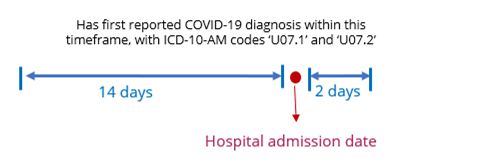
In this report, a standardised definition was used to report COVID-19 related hospitalisations. Hospital admissions that are related in time to a COVID-19 diagnosis will initially be identified and further classified according to ICD-10-AM diagnosis codes recorded in any diagnosis field. Time related hospitalisation is defined as a hospitalisation:
- with a first COVID-19 diagnosis up to 14 days before or 2 days after the hospital admission date, and
- that was not admitted and discharged on the same day to capture admissions related to more severe disease.
A COVID-19 related hospitalisation also had to have COVID-19 recorded in the hospital record (with ICD-10-AM code of U07.1 or U07.2 in any diagnosis field) (Figure A2). A COVID-19 related hospitalisation could be having COVID-19 as a principal diagnosis or an additional diagnosis.
Figure A2: Identification of a COVID-19 related hospitalisation
For the analysis, hospitalisations were created from individual separations. For instance, if a person had multiple separations and the separation and subsequent admission dates were within one day of each another, then they were counted as one hospitalisation. This was to ensure a more accurate alignment of a hospitalisation related in time to a COVID-19 diagnosis. The length of hospital stay was calculated based on the difference between the admission and separation dates.
A first COVID-19 diagnosis had to occur between 15 December 2021 and 1 July 2022 as this end date is the last possible notification date that meets the definition of a COVID-19 related hospitalisation. The small number of hospitalisations related to reinfections were excluded in order to account for the effect of infection-induced immunity on health outcomes. The timeframe used to define a COVID-19 related hospitalisation is based on existing literature and in consultation with National Centre for Immunisation Research and Surveillance (NCIRS) (NSW Government 2023, Stowe et al. 2022).
Using the methodology mentioned above, there were about 30% of COVID-19 related hospitalisations (or close to 35,000) with a COVID-19 code and an acute respiratory code (ICD-10-AM codes J00 to J22) in any diagnosis field (see Table A3).
Diagnosis code for hospitalisation | Number of people with COVID-19 |
|---|---|
Total people with COVID-19 in scope for hospitalisation analysis | 6,200,968 |
No time related hospital admission | 6,075,406 |
Time related hospital admission with a COVID-19 code (COVID-19 related hospitalisation) in any diagnosis field | 114,777 |
Number given an acute respiratory code (J00-J22) in any diagnosis field | 34,940 |
Number without an acute respiratory code (J00-J22) in any diagnosis field | 79,837 |
Time related hospital admission without a COVID-19 code | 10,785 |
Number given an acute respiratory code (J00-J22) in any diagnosis field | 836 |
Number without an acute respiratory code (J00-J22) in any diagnosis field | 9,949 |
Total time related COVID-19 hospitalisations | 125,562 |
Note: This analysis is based on people who had their first reported COVID-19 diagnosis during the Omicron wave. Hospitalisations that occur after subsequent diagnoses for the same person are excluded.
Source: AIHW COVID-19 Register (version 2.6)
Severe and/or fatal hospital outcomes
Severe and/or fatal hospital outcomes were defined as any of the following during the hospital admission:
- having an intensive care unit (ICU) stay
- involving continuous ventilatory support (CVS)
- died in hospital (as recorded by a separation mode of 8 or 80 in the NHMD).
These categories are not mutually exclusive. For example, a person who had an ICU stay and then died in hospital would appear in both categories.
NSW Government (2023) NSW Respiratory Surveillance Report – two weeks ending 31 December 2022, NSW Government, Australian Government, accessed 17 October 2023.
Stowe, J, Andrews, N, Kirsebom, F et al. Effectiveness of COVID-19 vaccines against Omicron and Delta hospitalisation, a test negative case-control study, Nat Commun, 2022;13(1):5736, doi:10.1038/s41467-022-33378-7
Deaths
The COVID-19 Register contains deaths data from the National Death Index (NDI). Version 2.6 of the COVID-19 Register includes NDI data from 25 January 2020 to 31 December 2022.
It is important to note that the number of COVID-19 deaths reported in the COVID-19 Register may differ from those reported by the Australian Bureau of Statistics and state and territory health departments due to the nature of probabilistic linkage and differing definitions used.
Classifying causes of death
Causes of death are documented on death certificates by medical practitioners or coroners and coded by the Australian Bureau of Statistics (ABS) using the World Health Organization (WHO) International Statistical Classification of Diseases and Related Health Problems, 10th revision (ICD-10).
Underlying cause of death is the disease or injury that initiated the train of events leading directly to death, or the circumstances of the accident or violence that produced the fatal injury. Dying ‘from’ a cause refers to having the condition as the underlying cause.
Most deaths, however, result from more than one contributing disease or condition.
Associated causes of death are all causes involved in the death, other than the underlying cause of death. They include the immediate (or terminal) cause (the condition that occurred immediately before death or closest to the time of death), any intervening causes, and conditions which contributed to the death but were not related to the disease or condition causing the death. Analyses using associated causes of death offer insight into the disease processes occurring at the end of life or, for injury causes of death, the nature of the injury. Dying ‘with’ a cause refers to having the condition as an associated cause of death.
See also Life expectancy & deaths - Glossary and Australia’s health - Glossary.
Deaths due to or with COVID-19
This report aligns ICD-10 code inclusion for dying with, or due to, COVID-19 with other mortality analyses, including the ABS COVID-19 Mortality in Australia: Deaths registered until 31 January 2024.
Deaths due to COVID-19 refers to deaths with COVID-19 as an underlying cause of death, meaning COVID-19 initiated the sequence of events resulting in death. These deaths have an underlying cause of death recorded in the NDI as U07.1 COVID-19 virus identified; U07.2 COVID-19, virus not identified; or U10.9 Multisystem inflammatory syndrome associated with COVID-19.
Deaths with COVID-19 refers to deaths with COVID-19 as an associated cause of death, meaning COVID-19 contributed to the death but was not the underlying cause. These deaths have an associated cause of death recorded in the NDI as U07.1 COVID-19 virus identified; U07.2 COVID-19, virus not identified; or U09.9 Post COVID-19 condition, unspecified.
Deaths due to or with COVID-19 include those that occurred after a reported COVID-19 diagnosis, regardless of time period, or up to 21 days prior to diagnosis.
Case Fatality Rate
The case fatality rate refers to the number of deaths due to COVID-19 divided by the number of people diagnosed with COVID-19 expressed as a percentage.
Timeliness and completeness of deaths data
Cause of death information in the NDI is subject to a revisions process. Cause of death data in this report is final for 2020, revised for 2021, and preliminary revised for 2022. Cause of death information for people who died in 2023 was not available at the time of analysis. These deaths are excluded in the analysis of people who died with or due to COVID-19. For more information on the revisions process, coverage and how deaths data are processed, see ABS Causes of death, Australia, Methodology: Data quality - Revisions process and ABS Causes of Death, Australia methodology.
COVID-19 antiviral prescriptions
Eligibility and access
COVID-19 oral antiviral treatments, Lagevrio® (molnupiravir) and Paxlovid® (nirmatrelvir and ritonavir), were approved by the Australian government for use from January 2022 and made available for selected populations through the Pharmaceutical Benefits Scheme (PBS) from March 2022 (Pharmaceutical Benefits Scheme 2024a, 2024b). COVID-19 antivirals are generally recommended to be taken within 5 days of symptoms starting or testing positive for COVID-19 (Department of Health and Aged Care 2024a).
It should be noted that the eligibility criteria for COVID-19 antivirals have been set up to provide access for people who are vulnerable to severe disease and have broadened over time. Eligible individuals include older Australians and people with specified risk factors, people who are moderately to severely immunocompromised, or people with history of previously being hospitalised for COVID-19 (Pharmaceutical Benefits Scheme 2024c and 2024d).
Table A4 shows the eligibility criteria for COVID-19 antivirals and how they have broadened over time.
Changes to eligibility criteria | Age (years) and/or risk | Moderately to severely immuno-compromised patients | Aboriginal or Torres Strait Islander (First Nations) people |
|---|---|---|---|
65 to 74 with 2 risk factors; or >=75 with one risk factor | No age criteria | >= 50 years with 2 risk factors | |
50 to 69 with 2 risk factors; or >=70 | >=18 | >=30 with 2 risk factors | |
50 to 69 with 2 risk factors; or >=70 | >=18 | >=30 with one risk factor | |
50 to 69 with 2 risk factors (or previously hospitalised for COVID-19); or >=70 | >=18 | >=30 with one risk factor (or previously hospitalised for COVID-19) | |
18 to 49 and previously hospitalised for COVID-19; or 50 to 59 with 2 risk factors (or previously hospitalised for COVID-19); or 60 to 69 with one risk factor (or previously hospitalised for COVID-19); or >=70 | >=18 | >=30 with one risk factor (or previously hospitalised for COVID-19) | |
18 to 49 and previously hospitalised for COVID-19; or 50 to 69 years with one risk factor (or previously hospitalised for COVID-19); or >=70 | >=18 | >=30 with one risk factor (or previously hospitalised for COVID-19) | |
| Criteria from 1 March 2024 | 18 to 49 and previously hospitalised for COVID-19; or 50 to 69 with 2 risk factors (or previously hospitalised for COVID-19); or >=70 | >=18 | >=30 with one risk factor (or previously hospitalised for COVID-19) |
Source: Schedule of Pharmaceutical Benefits
COVID-19 antivirals are generally not recommended for those aged under 18 (Pharmaceutical Benefits Scheme 2024c). However it should be noted that individuals aged under 18 may be prescribed antivirals under exceptional circumstances according to guidelines from some jurisdictions (Children’s Health Queensland 2023, Perth’s Children Hospital 2023, SA Health 2024, The Royal Children’s Hospital Melbourne 2022).
Antiviral data source and coverage
COVID-19 antiviral data in this report were drawn from records of prescriptions dispensed under the PBS in the COVID-19 Register, where either the:
- Australian Government paid a subsidy
- prescription was dispensed at a price less than the relevant patient co-payment (under co-payment prescriptions) and did not attract a subsidy.
PBS data covers all COVID-19 antiviral prescriptions dispensed by approved suppliers, including community pharmacies, public and private hospital pharmacies and dispensing doctors, but does not cover:
- private prescriptions
- medicines supplied to admitted patients in public hospitals (prescriptions to patients on discharge and non-admitted patients in all states and territories are in scope, except for New South Wales and the Australian Capital Territory)
- medicines dispensed through alternative arrangements where the patient cannot be identified, such as direct supply to Aboriginal health services, are excluded.
Provision of some medicines may be under-represented in remote areas, particularly in the Northern Territory, where there are a high proportion of First Nations people who access medicines through Aboriginal health services.
Identifying people who were prescribed COVID-19 antivirals
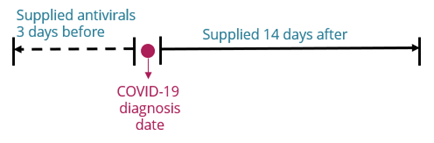
In this report, a person with COVID-19 was considered to have been prescribed COVID-19 antivirals if they were supplied within 3 days before diagnosis of COVID-19 and up to 14 days after diagnosis (Figure A3).
If a person had repeated COVID-19 infections (more than 90 days between two positive tests), prescriptions of antivirals were examined for each infection.
Figure A3: Timeframes for prescribing of COVID-19 antivirals
The following considerations were used for the above definition:
- antivirals supplied a few days before the diagnosis date accounted for any possible delay in COVID-19 notifications or delay in supply of antivirals (as compared to the actual prescribed date)
- antivirals are generally commenced within 5 days of symptoms starting or testing positive for COVID-19 and taken for a course of 5 days (Pharmaceutical Benefits Scheme 2024c and 2024d)
- the median incubation period for SARS-CoV-2 circulating in the time period covered in this report is 5 to 7 days, with a range of 1 to 14 days (Department of Health and Aged Care 2024b)
The analysis on COVID-19 antivirals considers individuals with COVID-19 notification dates from 16 February 2022 to 31 December 2022. This is due to COVID-19 antivirals only being made available through PBS from 2 March 2022 onwards, and because it was possible for an individual to be diagnosed with COVID-19 in mid-late February 2022 to be prescribed antivirals in March 2022 based on the above definition.
Children’s Health Queensland (2023) The management and treatment of children with acute SARS-CoV-2 infection (COVID-19), Queensland Government Children’s Health Queensland website, accessed 26 August 2024.
Department of Health and Aged Care (2024a) Oral treatments for COVID-19, Department of Health and Age Care website, accessed 29 July 2024.
Department of Health and Aged Care (2024b) Coronavirus (COVID-19) - CDNA National Guidelines for Public Health Units, Department of Health and Age Care website, accessed 13 August 2024.
Perth’s Children Hospital (2023) Nirmatrelvir with ritonavir (Paxlovid®) Monograph – Paediatric, Government of Western Australia Child and Adolescent Health Service website, accessed 26 August 2024.
Pharmaceutical Benefits Scheme (2024a) PBS News, Pharmaceutical Benefits Scheme website, accessed 29 July 2024.
Pharmaceutical Benefits Scheme (2024b) PBS News, Pharmaceutical Benefits Scheme website, accessed 29 July 2024.
Pharmaceutical Benefits Scheme (2024c) Paxlovid® (nirmatrelvir and ritonavir) Pharmaceutical Benefits Scheme Fact sheet – December 2024, Pharmaceutical Benefits Scheme website, accessed 7 April 2025.
Pharmaceutical Benefits Scheme (2024d) Lagevrio® (molnupiravir) Pharmaceutical Benefits Scheme Fact sheet – December 2024, Pharmaceutical Benefits Scheme website, accessed 7 April 2024.
SA Health (2024) COVID-19: Medication Management of Mild Illness in the Outpatient Setting, Government of South Australia SA Health website, accessed 26 August 2024.
The Royal Children’s Hospital Melbourne (2022) Algorithm for the Management of Children with Symptomatic COVID-19, The Royal Children’s Hospital Melbourne website, accessed 26 August 2024.
COVID-19 vaccination
COVID-19 vaccine recommendations
The COVID-19 vaccination program began as a staged rollout in February 2021 and are free to all people in Australia, including those without a Medicare card. By February 2023, over 95% of Australians aged 16 and over had received at least 2 doses and more than 70% had received 3 doses. About 45% of the eligible population (aged 30 over) had received a fourth dose (Department of Health and Aged Care 2023a).
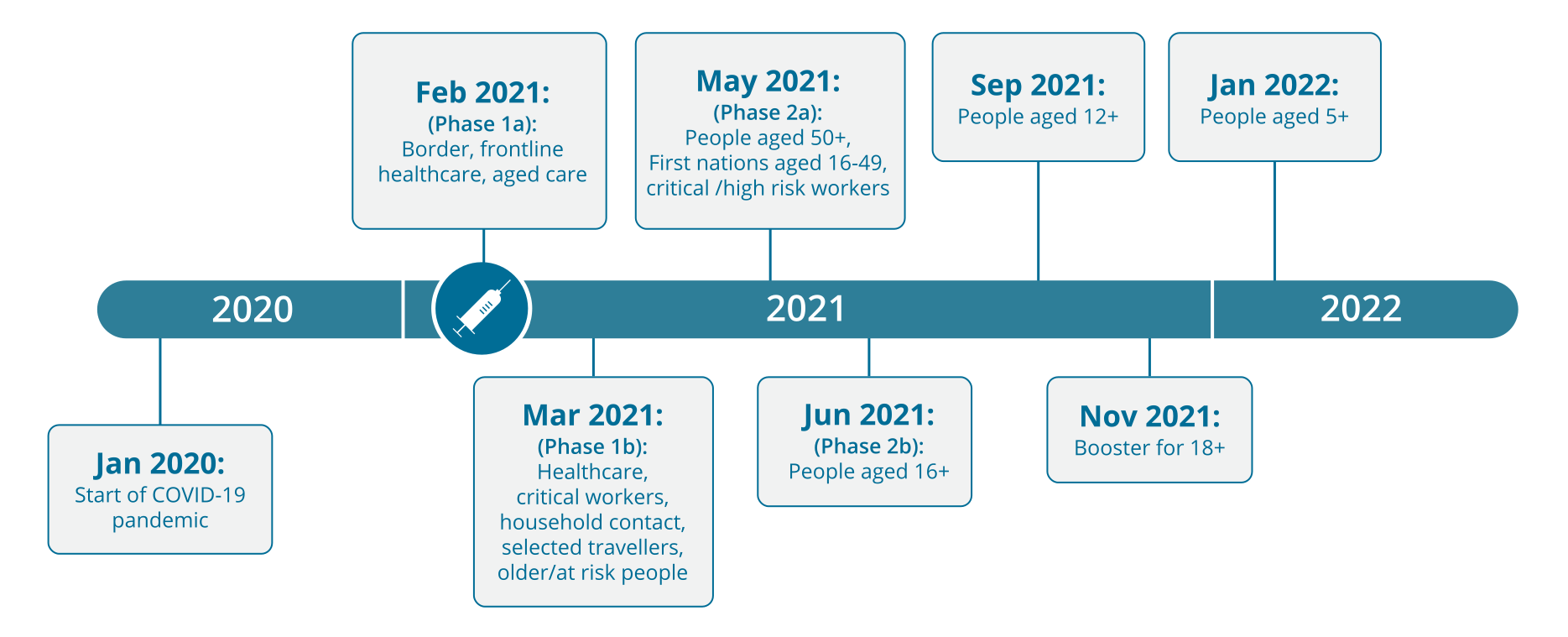
The rollout was carried out in phases and might have differed across states and territories, as vaccines were allocated based on the proportion of the eligible population in the state or territory and vaccine supply (Australia National Audit Office (ANAO) 2022). Figure A4 below shows key phases of the COVID-19 vaccination rollout which started from February 2021.
Figure A4: Key phases of the COVID-19 vaccination rollout between 2020 and 2022
Note: This figure is a schematic representation of key phases of the COVID-19 vaccination rollout. It does not include all Australian Government advice and recommendations at each key phase.
Source: ANAO 2022, National Centre for Immunisation Research and Surveillance (NCIRS) 2024, Department of Health and Aged Care 2022.
Diagram shows a timeline of the COVID-19 vaccination rollout from 2020 to 2022 in stages. February 2021 was when the vaccine rollout was introduced to critical workers. Older people and First Nations people were prioritised from May 2021 onwards. Mass rollout to all people aged 16 and over started in June 2021. Subsequently those aged 12 and over (in September 2021) and those aged 5 and over (in January 2022) could get a vaccine. November 2021 was when a booster program was introduced for those 18 and over.
It should be noted that the COVID-19 vaccination program and recommendations were dynamic and have evolved over time. For more information on how the COVID-19 vaccination program has changed over time, see Immunisation and vaccination and ATAGI COVID-19 pandemic statements.
As at May 2024, COVID-19 vaccination is recommended for:
- all people aged 18 years and older
- children aged 6 months to less than 18 years with medical conditions that may increase their risk of severe disease or death due to COVID-19.
Most people require 1 dose for their primary course. However, people with severe immunocompromising conditions are recommended 2 primary doses and can consider a 3rd. Further doses every 6 or 12 months are recommended, or can be considered, based on an individual’s age and presence of risk factors for severe disease (Department of Health and Aged Care 2024b).
COVID-19 vaccination data source and coverage
The data on COVID-19 vaccination status in this report was based on data from the Australian Immunisation Register (AIR) in the COVID-19 Register. The AIR is a national register that records vaccines given to all people in Australia, including people enrolled in Medicare or people who had a vaccination record transferred from recognised vaccination providers (such as a general practitioner or community health centre).
COVID-19 vaccination status
This report considered COVID-19 vaccination status based on the total number of COVID-19 vaccination doses recorded 14 days or more prior to a COVID-19 diagnosis. This is to account for a vaccination taking 14 days to become effective, based on studies showing that a single dose of vaccine offers some protection around 2 weeks after vaccination (Polack P F et al. 2020, Folegatti M P et al. 2020, Kalimuddin S et al. 2021, Vasileiou E et al. 2021).
Time since last vaccine dose before a hospitalisation or death was also explored in this report. Vaccine effectiveness has been shown to be lower at 6 months from primary dose and at 9 months from booster doses (Menegale F et al. 2023).
Australia National Audit Office (ANAO) (2022) Australia’s COVID-19 Vaccine Rollout, ANAO website, accessed 13 August 2024.
Department of Health and Aged Care (2022) COVID-19 vaccination for children aged 5 to 11, Department of Health and Aged care website, accessed 26 August 2024.
Department of Health and Aged Care (2023a) COVID-19 vaccination daily rollout update – 24 February 2023, Department of Health and Aged care website, accessed 13 August 2024.
Department of Health and Aged Care (2024b) COVID-19 vaccine advice and recommendations for 2024, Department of Health and Age Care website, accessed 5 August 2024.
Folegatti M P et al. (2020), Safety and immunogenicity of the ChAdOx1 nCoV-19 vaccine against SARS-CoV-2: a preliminary report of a phase 1/2, single-blind, randomised controlled trial, The Lancet, 2020;396(10249):467-478, doi: 10.1016/S0140-6736(20)31604-4.
Kalimuddin S et al. (2021), Early T cell and binding antibody responses are associated with COVID-19 RNA vaccine efficacy onset, The Cell Press, 2021;2(6): 682-688.e4, doi: 10.1016/j.medj.2021.04.003.
Menegale F, Manica M, Zardini A, et al. (2023), Evaluation of Waning of SARS-CoV-2 Vaccine–Induced Immunity A Systematic Review and Meta-analysis, JAMA Netw Open, 2023;6(5):e2310650, doi: 10.1001/jamanetworkopen.2023.10650.
National Centre for Immunisation Research and Surveillance (NCIRS) (2024) Significant events in COVID-19 vaccination practice in Australia, NCIRS website, accessed 12 August 2024.
Parliament of Australia (2022) Appendix 2 Timeline of key decisions and milestones, Parliament of Australia website, accessed 12 August 2024.
Polack P F et al. (2020), Safety and Efficacy of the BNT162b2 mRNA Covid-19 Vaccine, The New England Journal of Medicine, 2020;383:2603-2615, doi: 10.1056/NEJMoa2034577.
Vasileiou E et al. (2021), Interim findings from first-dose mass COVID-19 vaccination roll-out and COVID-19 hospital admissions in Scotland: a national prospective cohort study, The Lancet, 2021;397(10285):1646-1657, doi: 10.1016/S0140-6736(21)00677-2.