


Spending on disease by area of spending
There are three broad areas of health spending included in the disease expenditure analysis: hospitals, primary health care and referred medical services. The estimated total attributable spending across disease groups in 2023–24 was $180.4 billion and can be disaggregated as follows:
- hospital services $114.1 billion (63%) (public and private admitted patient services, public hospital emergency departments, and public hospital outpatient clinics)
- primary health care services $50.0 billion (28%) (general practitioner services, allied health services, benefit paid pharmaceuticals and dental expenditure)
- referred medical services $16.3 billion (9%) (specialist services, medical imaging, and pathology).
Public health and community health have not been included as part of primary health care services in the Disease Expenditure database due to the difficulty in allocating spending to specific burden of disease conditions within the disease groups however spending on the national cancer screening programs has been included in the cancer screening section. Research is also excluded from the database, however there is a separate research section in this report that reflects on the National Health and Medical Research Council (NHMRC) expenditure for disease, research and health areas presented according to the International Classification of Diseases (ICD) and a reference to spending through the Medical Research Future Fund (MRFF).
Figure 1 below shows how total health spending for 2023–24 as reported in Health expenditure Australia 2023–24 relates to disease expenditure reporting for 2023–24.
Figure 1: Areas of health spending included in the disease expenditure study 2023–24
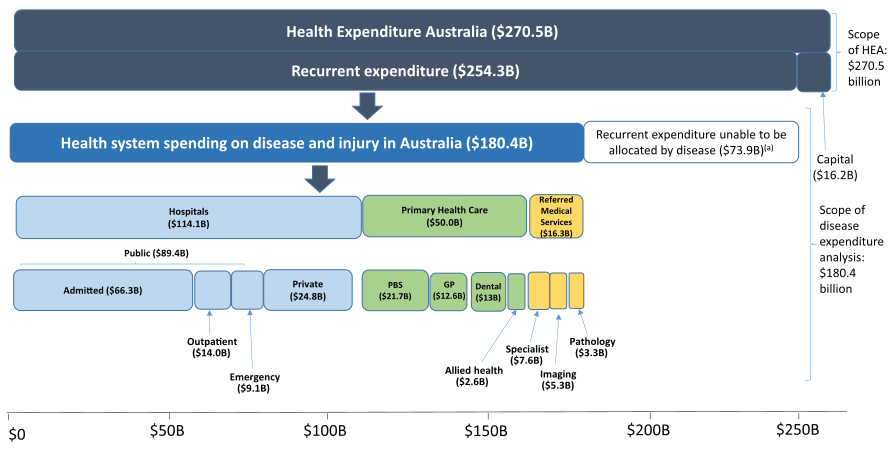
- Recurrent spending unable to be allocated by disease includes for example, administration expenditure, community and public health programs.
Source: Health expenditure Database; Disease Expenditure Database.
There are some key differences between recurrent health spending in the Health Expenditure database, and the Disease Expenditure database.
In the Disease Expenditure database:
- Public hospitals spending is further reported as emergency department, admitted patient, and outpatient clinic spending.
- Section 100 drugs dispensed in hospitals are reported as PBS spending, which is a component of primary health care, while the health expenditure database reports this as hospital spending.
- Out-of-pocket spending on in hospital medical services is counted in hospitals spending whereas in the health expenditure database these services are counted mostly as referred medical services. This is a key reason that hospitals spending is higher in the Disease expenditure database than in the Health expenditure database.
The visualisation below (Figure 2) shows spending for the broad areas of expenditure in the Disease Expenditure database for 2023–24 compared to recurrent health spending for 2023–24 reported in Health Expenditure database. Data used to create the visualisation is available to download from the data tables. For further information on methods used to derive the expenditure reported, please refer to the Technical notes in this web report and to Health system spending on disease and injury in Australia 2023–24: Overview of analysis and methodology which is available from the Related material section.
Figure 2: Disease expenditure and recurrent health expenditure by broad area of expenditure, 2023–24
This bar chart compares 2023–24 Health Expenditure and Disease Expenditure data. It shows that disease expenditure is slightly higher in hospitals, while health expenditure exceeds disease expenditure in primary health care, referred medical services, other services, and research.

Figure 3: Disease Expenditure by broad area of expenditure, 2023–24
This stacked bar chart shows disease expenditure by broad area of expenditure showing that $114.1 billion was spent on disease groups in hospitals, $50.0 billion in primary health care, and $16.3 billion in referred medical services. Each bar represents a different broad area of spending, with the total disease expenditure distributed across these three broad categories.

Figure 4: Disease Expenditure by sex, age group and area of expenditure, 2023–24
The bar chart shows total disease spending by sex and age group across broad and detailed areas of expenditure in total expenditure and expenditure per 100,000 population. The highest share of spending tends to be within hospitals.
