

Summary

The COVID-19 pandemic represented an unprecedented health emergency in Australia and around the world, with substantial individual and health system impacts (Moynihan et al 2021). Australian and international studies have found that people living in residential aged care, and particularly those living with dementia, had an increased risk of poor outcomes from COVID-19 (Mok et al. 2020; Damayanthi et al. 2021; Chung et al. 2022; Department of Health, Disability and Ageing 2022; Ellis et al. 2022; Kostev et al. 2023; Johnson et al. 2024). 

This study examined health outcomes of COVID-19 among aged care residents at the national level (excluding Western Australia) using the COVID-19 Register, Australia's largest source of COVID-19 case information linked to aged care, health and mortality data. This report focuses on the first 3 years of the COVID-19 pandemic (2020 to 2022) and presents findings among aged care residents with and without a dementia record in the COVID-19 Register by:

  1. changes in Medicare-subsidised general practitioner (GP) and specialist attendances by mode of delivery (face-to-face and telehealth)
  2. changes in psychotropic medicine dispensing
  3. hospitalisation and mortality outcomes
  4. the role of COVID-19 vaccination and antiviral medications.

There are several considerations to note when interpreting information in this report. For example, not all people living with dementia in residential aged care had a data record of dementia in the COVID-19 Register. See A guide to the data used in this report and the Technical notes for more information.

One in 3 residents with a dementia record had a telehealth GP attendance early in the COVID-19 pandemic

COVID-19 telehealth items were introduced into Medicare at different stages from 13 March 2020, with the aim of reducing the risk of transmission of COVID-19 by providing telephone and video conferencing options for consultations (AIHW 2022).

Early in the pandemic, 33% of aged care residents with a dementia record and 37% of residents with no dementia record had a telehealth GP attendance in the June 2020 quarter.

Face-to-face GP attendance remained steady at about 90% of residents per quarter for people with and without a dementia record.

See GP services for aged care residents for more information.

Specialist attendances for aged care residents decreased early in the pandemic

Between the December 2019 and June 2020 quarters, there was a decrease in the percentage of aged care residents who had at least one specialist attendance:

  • from 18% to 14% for people with a dementia record
  • from 24% to 19% for people with no dementia record.

During this time, there was a steep decrease in face-to-face specialist attendances, which was somewhat offset by the uptake of telehealth attendances. The percentage of residents with a telehealth specialist attendance peaked in the June 2020 quarter at 4.3% of residents with a dementia record and 8.7% of residents with no dementia record.  

See Specialist services for aged care residents for more information.

Dispensing of antipsychotics to residents with a dementia record

Medical professionals may prescribe antipsychotic medicines to people with behavioural and psychological symptoms of dementia (BPSD) as a last resort if non-pharmacological approaches are not successful (ACSQHC 2025). Regulatory changes have been introduced to try to address inappropriate prescribing of antipsychotics (Royal Commission 2021). However, older adults were at high risk of worsening psychiatric symptoms and severe behavioural disturbances as a result of social isolation during the COVID-19 pandemic (Manca et al. 2020; Numbers et al. 2021).

In 2019, the percentage of residents with a dementia record who were dispensed an antipsychotic through the Pharmaceutical Benefits Scheme (PBS) had decreased from 23% to 19%. In 2020, this trend plateaued, with a slight increase from 19% to 20% between the March and September 2020 quarters, followed by a gradual decrease to 18% by the December 2022 quarter. These findings align with an international systematic review suggesting a slight increase in antipsychotic prescribing during the pandemic (Yoon et al. 2024), but more detailed analyses are required to understand the underlying factors.

The percentage of residents with no dementia record who were dispensed an antipsychotic was lower overall (about 10%) and remained comparatively steady over the same period.

Rates of antipsychotic dispensing were higher for younger residents than for older residents, and were higher for residents in lower socioeconomic areas than those in higher socioeconomic areas.

See Dispensing of psychotropic medication to aged care residents for more information.

Defining the pre-Omicron and Omicron periods

There have been several COVID-19 ‘waves’ corresponding to the emergence of different variants and sub-variants of the virus as it adapts and changes over time. 

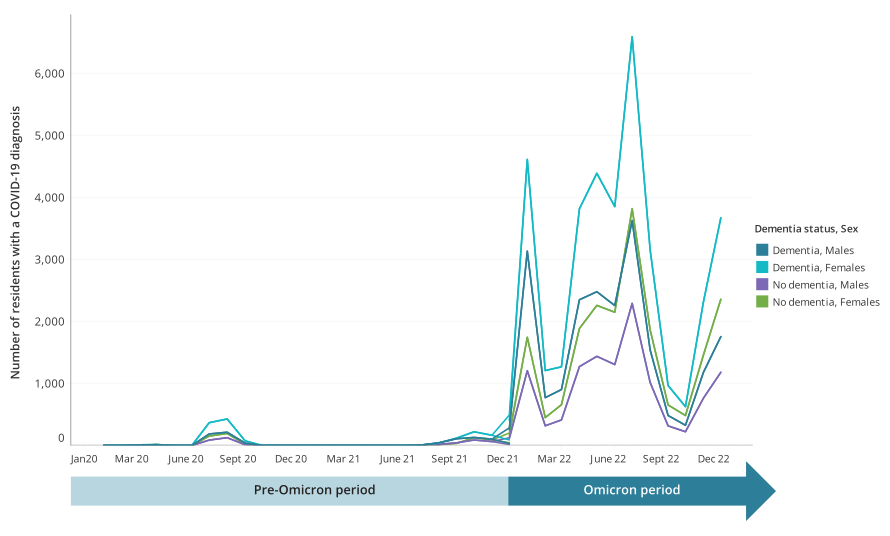
A range of public health and social measures were implemented to assist in containing the spread of COVID-19 during the first 2 years of the pandemic (25 January 2020 to 14 December 2021). Case numbers during this time were relatively low (Figure A1). In this report, this is referred to as the "pre-Omicron" period.

The Omicron variant emerged in late 2021. It was more transmissible than previous variants, and its emergence coincided with the relaxation of a number of public health measures following attainment of high rates of vaccine coverage in the population (AIHW 2025). As a result, the number of COVID-19 cases increased rapidly (Figure A1). In this report, this is referred to as the “Omicron period” (15 December 2021 to 31 December 2022).

See Profile of aged care residents with a COVID-19 diagnosis for more information.

Figure A1: Number of aged care residents with a COVID-19 diagnosis, by dementia status, sex, month and year of diagnosis, January 2020 to December 2022
See extended description following this image.

Source: AIHW analysis of COVID-19 Register (version 2.6)

Data tables: Profile of aged care residents with a COVID-19 diagnosis (Table S2.1).

Aged care residents with a dementia record were more likely to have a COVID-19 diagnosis than those with no dementia record 

The percentages shown in this section are based on anyone who had a residential aged care episode recorded in the COVID-19 Register at some time during each study period, representing people who were theoretically at risk of infection while living in residential aged care. However, it should be noted that the number of facilities with a COVID-19 outbreak during the pre-Omicron period was smaller than during the Omicron period (see COVID-19 outbreaks in residential aged care facilities). 

During the pre-Omicron period, while living in residential aged care:

  • 2,210 people with a dementia record had a COVID-19 diagnosis - this represents 1.2% of all people who had a dementia record and lived in residential aged care at some time during the pre-Omicron period
  • 1,180 people (1.0%) with no dementia record had a COVID-19 diagnosis.

During the Omicron period, while living in residential aged care: 

  • 56,830 people (43%) with a dementia record had a COVID-19 diagnosis 
  • 31,790 people (37%) with no dementia record had a COVID-19 diagnosis.

See Profile of aged care residents with a COVID-19 diagnosis for more information.

Among residents with COVID-19, hospitalisations related to COVID-19 were higher in the pre-Omicron period than in the Omicron period

Among aged care residents with a COVID-19 diagnosis:

  • In the pre-Omicron period, 29% (630) of people with a dementia record and 27% (315) of people with no dementia record had a COVID-19 related hospitalisation. Of those hospitalised, about 1 in 3 people died in hospital (30% of those with a dementia record, 28% with no dementia record).
  • In the Omicron period: 7.9% (2,500) of those with a dementia record and 7.3% (1,100) of those with no dementia record had a COVID-19 related hospitalisation. Of those hospitalised, 18% of people with a dementia record and 15% with no dementia record died in hospital.

See COVID-19 related hospitalisations among aged care residents for more information.

The percentage of aged care residents with a COVID-19 diagnosis who died due to COVID-19 was 6 times higher in the pre-Omicron period (26%) than the Omicron period (4.4%)

A higher percentage of residents with a dementia record died due to COVID-19 than residents with no dementia record (28% and 23% in the pre-Omicron period, and 4.9% and 3.5% in the Omicron period, respectively).

See Deaths due to COVID-19 among aged care residents for more information.

Men with dementia had higher rates of COVID-19 hospitalisations and deaths than women with dementia and people without dementia

Among aged care residents with a COVID-19 diagnosis, men with a dementia record had the highest rates of COVID-19 related hospitalisations and deaths in hospital.

A higher percentage of men with a dementia record died due to COVID-19 in the pre-Omicron (36%) and Omicron (6.7%) periods than women with a dementia record (23% and 3.9%, respectively) and people with no dementia record (23% and 3.5%, respectively). 

The increased risk of adverse outcomes from COVID-19 among older men has also been reported internationally and may be related to higher rates of age-related disease and 'inflammaging' (Bonafè et al 2020; Mok et al. 2020).

See COVID-19 related hospitalisations among aged care residents and Deaths due to COVID-19 among aged care residents for more information.

Vaccinated aged care residents with and without dementia had lower rates of COVID-19 hospitalisations and deaths 

During the Omicron period, among aged care residents with a COVID-19 diagnosis:

  • the percentage who had a COVID-19 related hospitalisation was around 3 times lower for residents who received 3 or more COVID-19 vaccine doses (5.6% of those with a dementia record, 5.2% with no dementia record) than for unvaccinated residents (16% and 14%, respectively).
  • the percentage who died due to COVID-19 was about 4 times lower for residents who received 3 or more COVID-19 vaccine doses (3.5% of those with a dementia record, 2.6% with no dementia record) than for unvaccinated residents (14% and 10%, respectively).

See COVID-19 vaccination and health outcomes for more information.

One in 2 aged care residents with a COVID-19 diagnosis were dispensed antiviral medication when it was available

COVID-19 antiviral treatments were made available through the PBS from March 2022 for people aged 70 or over, and other groups at higher risk of severe illness. Among aged care residents who had a COVID-19 diagnosis in the time when antivirals were available:

  • 49% of those with a dementia record and 52% of those with no dementia record were dispensed antiviral medication
  • the percentage of residents dispensed antivirals was higher for those who had received 3 or more COVID-19 vaccine doses (51% of people with a dementia record) compared with those who had received 0, 1 or 2 doses (36%–37%)
  • the percentage of residents who died due to COVID-19 was lower among those dispensed antiviral medications than those not dispensed antivirals:
    • 3.0% compared with 4.9% among people with a dementia record
    • 2.3% compared with 3.8% among people with no dementia record. 

See COVID-19 antiviral use for more information.

Health service use and outcomes varied by remoteness and socioeconomic area

Most aged care residents with a COVID-19 diagnosis lived in Major cities: 73% of residents with a dementia record and 69% of residents with no dementia record. This may be partly related to the increased number of residential aged care and dementia-specific services in metropolitan areas (see People using aged care).

There was little variation across remoteness areas in the percentage of people with a COVID-19 related hospitalisation in the Omicron period. However, of those hospitalised, people in regional and remote areas had a lower percentage of deaths in hospital.

Among aged care residents with a COVID-19 diagnosis, those living in the lowest socioeconomic areas had:

  • a higher percentage of COVID-19 related hospitalisations (11% with a dementia record, 9.6% with no dementia record) than those living in the highest socioeconomic areas (5.9% and 5.5%, respectively)
  • a lower percentage of residents dispensed antivirals (46% of people with a dementia record) than those living in the highest socioeconomic areas (52%). 

Future opportunities for research

At the time of writing, the COVID-19 Register is in the process of being transitioned into the AIHW’ National Health Data Hub (NHDH) as a module to allow the data to be used to inform future public health investigation of pandemic responses and health system planning, and to assess the long-term impacts of COVID-19 on the Australian population.