


Methods
Defining non-DVA clients and DVA client types
AIHW used Defence personnel data and Department of Veterans’ Affairs (DVA) client data to identify whether people were a veteran and whether they were a DVA client. Non-DVA clients are veterans who have not received any DVA support services based on data available between 1 January 1985 and 31 December 2021 (the reference date of this report).
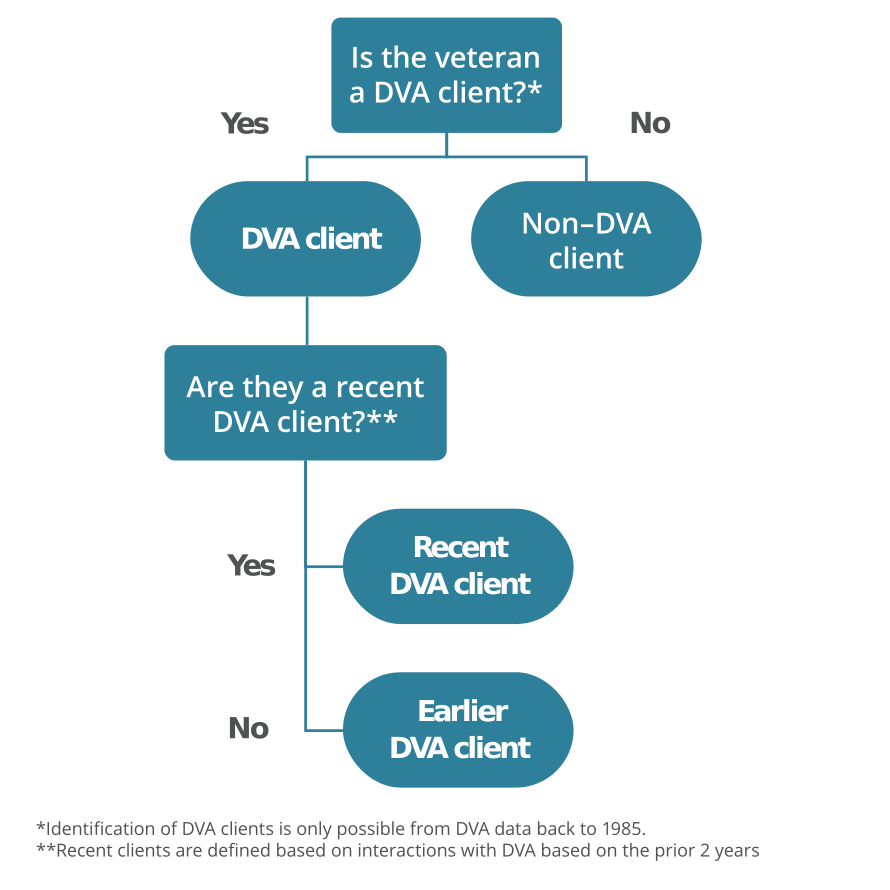
Earlier DVA clients were identified as a subgroup of DVA clients. These were veterans who have not received a DVA funded support service and/or regular DVA income or payments that would be considered a primary source of income within the 2 years prior to a reference date or death. Figure 7 outlines the process used to identify DVA clients and non-DVA clients as well as earlier and recent DVA clients.
Figure 7: Defining categories of DVA clients and non-DVA clients
More information on the earlier defined groupings of DVA clients and recent DVA clients is available at Serving and ex-serving Australian Defence Force members who have served since 1985: suicide monitoring 1997 to 2021, Technical notes.
Statistical methods
The demographic and ADF service characteristics of veterans by DVA client status (including earlier DVA clients and non-DVA clients are summarised descriptively using counts, proportions and measures of central tendency such as medians.
Age-standardised rates were also calculated to provide information on ex-serving ADF members living with selected chronic conditions. Other research from the series of reports on Health services use by ex-serving Australian Defence Force members employed different statistical measures including proportions of ex-serving members accessing health services, rates of health service use as well as odds ratio and rate ratio of relative health service use in comparison to ex-serving members in other groups.
To understand deaths by suicide, the report presented suicide incidence rates (explained below) as well as counts and proportions. The report also highlighted findings from previous research including welfare of non-DVA clients.
Suicide incidence rates
This report includes incidence rates to measure how often suicide occurs among ADF service groups by DVA client status. The incidence rate is the total number of deaths by suicide in a population over a specific period of time, divided by population time at risk during this time. In this study, the sum of the population at 30 June 2021 is used as a proxy for population time at risk. Suicide incidence rates are expressed as the number of deaths per 100,000 population per year.