In 2023–24:
- the majority of active orders in New South Wales (70%) and the Australian Capital Territory (63%) were detention orders
- South Australia (53%) and the Western Australia (52%) had the largest proportions of active orders that were community-based (Table 25).
About two-thirds (67%) of young people under supervision during 2023–24 had multiple supervision orders during the year, with more than one-third (36%) having both community‑based supervision and detention orders (tables S26a, S26b and S26c).
During 2023–24, there were:
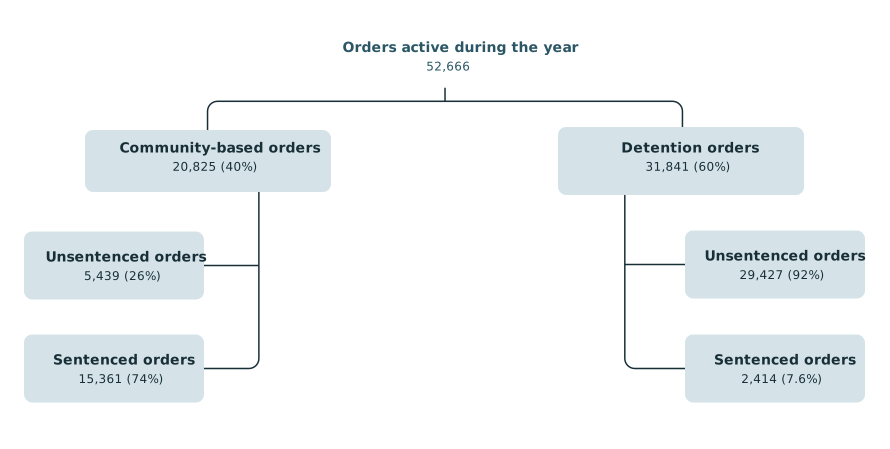
- 52,666 active orders for the 9,224 young people under supervision, an average of 5.7 orders per young person
- 20,825 community orders for the 8,031 young people under community-based supervision, an average of 2.6 community orders per young person
- 31,841 detention orders for the 4,578 young people in detention, an average of 7.0 detention orders per young person (tables 2.1 and S25).
Of those under supervision, First Nations young people were more likely to have multiple supervision orders (71%) than their non-Indigenous counterparts (64%) (Table S26c).
Young people under community-based supervision were more likely than those in detention to have had only one order (44% compared with 20%). About 2 in 5 (39%) young people in detention had 6 or more detention orders within the year, and about 1 in 8 (12%) young people under community-based supervision had 6 or more community-based orders (tables S26a and S26b).
Periods of supervision
In this report, a period of supervision refers to an amount of time spent under continuous supervision of any type. A period of supervision may be made up of one or more community and/or detention orders. A period of community-based supervision or detention may be made up of one or more orders of that specified type.
Young people may be on any number and type of orders at any time, but they might not serve the originally specified duration of these orders for several reasons. For example, a community order might not be served entirely in the community when there is a concurrent detention order – in which case, the young person may be supervised in detention.
The original duration of a sentenced detention order might also not be served in a detention facility – for example, where the young person is released on parole or supervised release. This report looks at the actual time spent under each type of supervision.
In 2023–24, the 9,224 young people under supervision received 11,550 periods of supervision (continuous supervision of any type), an average of about 1.3 periods per person (tables 2.1 and S27).
Among the 5,568 young people who completed a period of supervision in 2023–24, most (81%) completed only one period (Table S28).
About 2 in 3 (67%, or 5,343 of 8,031) young people who were under community-based supervision during the year completed at least one period of community-based supervision (tables S34b and S61). Of the young people who completed a period of community-based supervision in 2023–24, about 7 in 10 (72%) young people completed only one period of community-based supervision (Table S61).
More than 9 in 10 (96%, or 4,378 of 4,578) young people who were in detention during the year completed at least one period of detention, and 46% (or 2,019 of 4,578) completed at least 2 periods of detention. Of those young people who completed a period of detention, more than half (54%) completed only one period of detention (Table S100). Of young people in detention, just over 1 in 7 (15%) completed at least one period of sentenced detention and most (94%) completed a period of unsentenced detention (Table 7.1).
Table 7.1: Proportion of young people who completed only one or at least one period of youth justice supervision, by supervision type| Type of supervision | Completed only 1 period(a) | Completed at least 1 period(b)(c) |
|---|
| All supervision | 81% | 60% |
|---|
| Community | 72% | 67% |
|---|
| Detention | 54% | 96% |
|---|
| 74% | 15% |
| 53% | 94% |
- Denominator is all young people who completed a period of youth justice supervision of that type.
- Denominator is all young people in that supervision type
- For young people in sentenced and unsentenced detention the denominator is all young people in detention
Note: Completed supervision periods for all supervision and community-based supervision are not available for the Northern Territory in 2023–24.
Source: tables S1b, S28, S34b, S61, S72b, S100, S115 and S121.
Young people who completed a period of unsentenced detention during the year completed 2.1 periods of unsentenced detention on average. Those who completed a period of sentenced detention, completed 1.4 periods of sentenced detention on average (tables S116 and S122).
First Nations young people (23%) were more likely than non-Indigenous young people (16%) to have completed multiple periods of supervision (Table S28). This was the case for completed periods in both community-based supervision and detention (tables S61 and S100).