


Returns to sentenced youth justice supervision within 6 and 12 months
Northern Territory data availability for young people released from youth justice supervision in 2022–23
Northern Territory orders data was not available for young people who were under youth justice supervision in 2023–24.
For the supervision cohort, Northern Territory data was unavailable for young people aged 10–16 who were released from a supervised sentence during 2022–23. This is because returns to youth justice supervision for young people released in 2022–23 would occur during 2023–24 (when data was unavailable).
As a result, the Northern Territory is not included in national and state/territory totals for 2022–23 for the supervision cohort.
One way to explore the effectiveness of services provided by youth justice departments is to measure how soon young people return to sentenced supervision (see Glossary), although a range of other factors beyond the control of these departments will also influence returns.
This chapter looks at the rate of return for young people aged 16 or under who were released from a supervised sentence during 2022–23 (see the Appendix for more information on data and methods) who returned within 6 and 12 months, regardless of their supervision history.
Data are presented for returns within 6 and 12 months of release. For information on the selection of these timeframes see Using the Juvenile Justice National Minimum Data Set to measure returns to sentenced youth justice supervision: stage 2 (AIHW 2015). The rate of return is calculated as the proportion of the released population returning to any form of youth justice supervision within the specified period.
The return timeframes of 6 and 12 months are unlikely to directly reflect the time to reoffend. Administrative processes, such as court proceedings, occur before a young person can return to sentenced supervision, which can take time, and affect the rate of return. In 2023–24, about 2 in 5 (41%) cases heard in children’s courts where the defendant was found guilty took longer than 3 months to be finalised, and 1 in 5 (20%) took more than 6 months (ABS 2025).
Figure 2: Key findings for young people aged 10–16 who were released in 2022–23
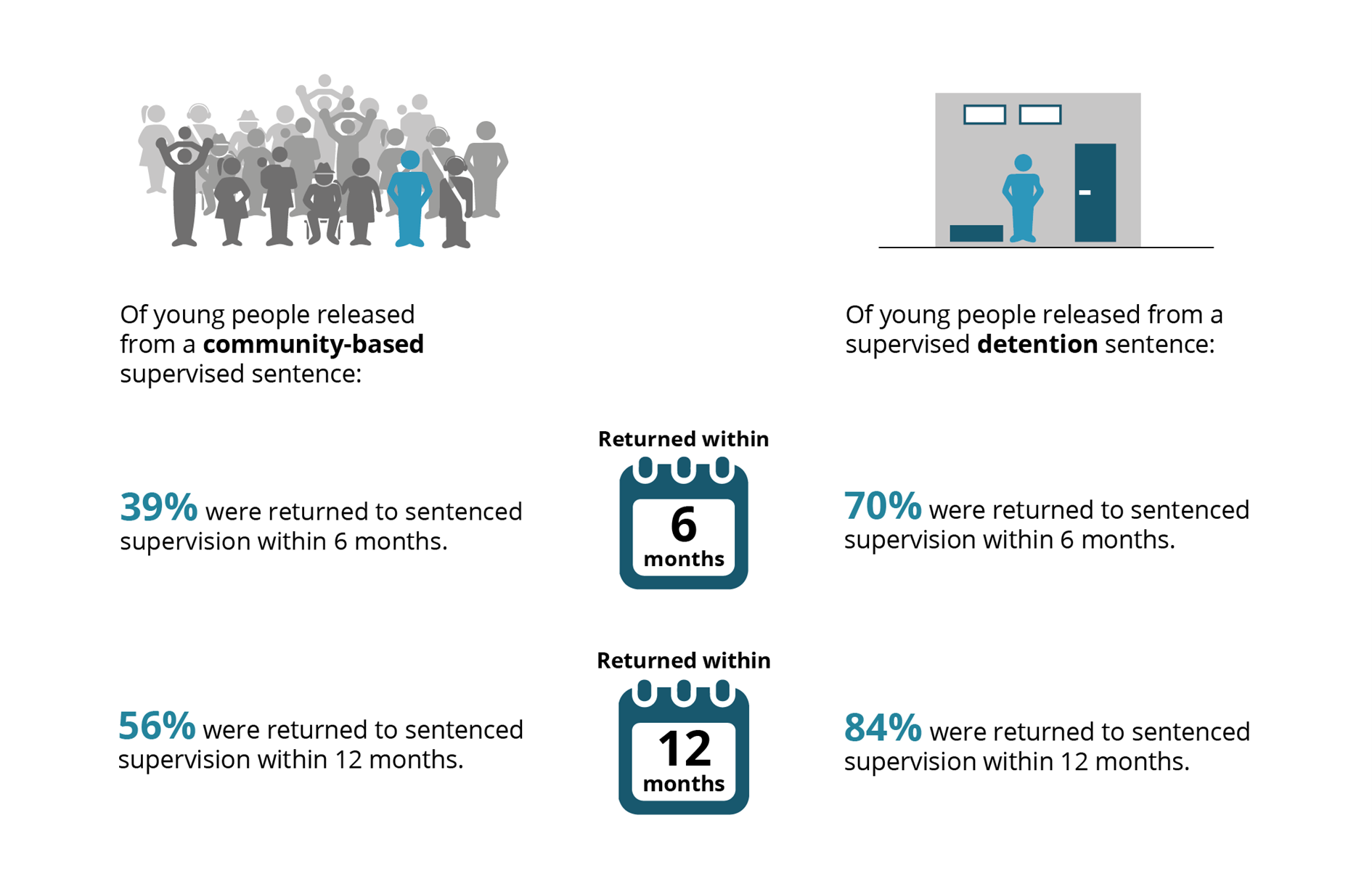
Notes:
- Data for young people who were returned within 12 months includes young people who were returned within 6 months.
- Northern Territory data was not available for young people released from sentenced supervision in 2022–23.
Source: Supplementary table S8.