

Asthma
Citation
AIHW (Australian Institute of Health and Welfare) (2026) Asthma, AIHW, Australian Government, accessed 5 June 2026.
This article is part of Chronic respiratory conditions
Asthma
- Asthma This page
- First Nations people with asthma 2023
- National asthma indicators
Chronic obstructive pulmonary disease
Bronchiectasis
Allergic rhinitis
Main findings
-
Around 2.8 million (11%) people in Australia were estimated to be living with asthma in 2022.
-
In 2024, asthma accounted for 2.5% of total disease burden in Australia.
-
In 2024, asthma was the leading cause of disease burden in children aged 1–9 years.
-
In 2023–24, an estimated $1.3 billion was spent on asthma (22% of all respiratory condition expenditure).
-
In 2023−24, 43% of asthma hospitalisations (principal diagnosis) were for children and young people aged 0–14.
-
Asthma was more common among boys than girls aged 0–14 (10% and 6.3%, respectively) in 2022.
What is asthma?
Asthma is a common chronic condition that affects the airways (the breathing passage that carries air into our lungs). People with asthma experience episodes of wheezing, shortness of breath, coughing, chest tightness and fatigue due to widespread narrowing of the airways (NACA 2022).
The National Asthma Indicators
In 2018, the National Asthma Strategy was released, outlining Australia’s national response to asthma. It includes 10 national asthma indicators designed to provide valuable information for policymakers about the status of asthma in Australia (NACA 2018).
National asthma indicators was first published in 2019 and is updated regularly. Detailed information and data on these indicators are also included throughout this article.
How common is asthma?
-
In 2022, around 2.8 million people (11%) in Australia were estimated to be living with asthma, similar to 2001 (12%).
Around 2.8 million (11%) people in Australia were estimated to be living with asthma, according to self-reported data in the 2022 Australian Bureau of Statistics (ABS) National Health Survey (NHS) (ABS 2023a).
In 2022, the prevalence of asthma was:
- higher for boys compared with girls aged 0–14 (10% and 6.3%, respectively)
- higher for females compared with males over the age of 15 (ABS 2023a) (Figure 1).
This change in prevalence for males and females over the age of 15 is likely to be due to a complex interaction between changing airway size and hormonal changes that occur during adolescent development, as well as differences in environmental exposures (Dharmage et al. 2019).
Trends over time
After adjusting for different population age structures over time, the prevalence of asthma has declined slightly from 12% in 2001 to 11% in 2022 (ABS 2023a) (Figure 1).
Figure 1: Prevalence of asthma, 2001 to 2022
Line chart shows the prevalence of asthma declined slightly between 2001 and 2022 after adjusting for differences in age structure.
Remoteness and socioeconomic areas
Based on the 2022 NHS, there was little difference in the prevalence of asthma by remoteness area or level of socioeconomic disadvantage (also known as socioeconomic area) (ABS 2023a):
- Prevalence varied between 10% in Major cities of Australia and 12% in both Inner regional Australia and Outer regional and Remote Australia.
- Prevalence varied between 13% in areas of most socioeconomic disadvantage and 10% in areas of least socioeconomic disadvantage.
Additional data on asthma prevalence by country of birth and other culturally and linguistically diverse measures are also reported using the ABS 2021 Census in Chronic health conditions among culturally and linguistically diverse Australians, 2021 (AIHW 2021c).
Treatment and management of asthma
In general, symptoms of asthma are easily controlled in most people by making lifestyle changes and using medications. The main aims of asthma treatments are:
- to stop asthma from interfering with school, work, or play
- to prevent flare-ups or ‘attacks’
- to keep symptoms under control
- to keep lungs as healthy as possible (NACA 2022).
Primary care for asthma
General practitioners (GPs) and other primary care health professionals play an important role in the management of asthma in the community. This role includes assessment, diagnosis, prescription of regular medications, education, provision of written action plans, and regular review as well as managing asthma flare-ups (Chung et al. 2018).
There is currently no nationally consistent primary health care data collection to monitor provision of care by GPs. See General practice, allied health and other primary care services.
Asthma cycle of care
-
In 2021–22, less than 0.1% (13,000) of people in Australia made an asthma cycle of care claim.
The asthma cycle of care initiative includes at least two asthma related consultations within 12 months for a patient with moderate to severe asthma (noting that the review visit must be planned) (NACA 2025).
Analysis of MBS data shows that around 13,000 (0.1%) people made an asthma cycle of care claim in 2021–22, with little difference observed by sex after adjusting for age differences.
From 2017–18 to 2021–22, the proportion of people making asthma cycle of care claims decreased from 0.3% to 0.1%.
Whilst the use of the asthma cycle of care initiative is relatively low, it is not necessarily indicative of all general practice care for asthma. Patients can access similar general practice care in a range of ways, for example through standard GP consults.
Data note: MBS asthma cycle of care
As of 1 November 2022, the asthma cycle of care items were removed from the MBS.
Asthma action plans
-
In 2022, 32% of people with asthma had a written asthma action plan, this was similar to 2017–18 (31%).
An asthma action plan is a written self-management plan, prepared for patients by a health care professional to help them manage their asthma and reduce the severity of acute asthma flare-ups (NACA 2022). According to the 2022 NHS, 32% of people with asthma had a written asthma action plan. This was similar to the proportion in 2017–18 (31%) (ABS 2023b).
Over two-thirds (71%) of children with asthma aged 14 and under had an asthma action plan in 2022, a higher proportion than all other age groups. This is likely due to schools and childcare facilities requiring that children with asthma have a health care provider issued-asthma action plan (Asthma Australia 2022).
Medicines used for asthma treatment
-
Data on asthma medications covered by the PBS show that in 2022–23:
- around 939,000 people aged 40 and under were dispensed at least one reliever medicine
- around 898,000 people aged 50 and under were dispensed at least one preventer medicine.
There are several types of medicines available to treat asthma. It is important to note that some asthma medications, for example Salbutamol (puffers), are available over the counter, meaning they do not require a prescription from a GP (NACA 2023). When these medications are sold over the counter, it is not possible to report data on their usage as they are not captured in the Pharmaceutical Benefits Scheme (PBS) database.
Asthma medications covered by the PBS include:
- Relievers are used for the rapid relief of asthma symptoms. Short-acting beta agonist medications (SABA) are the most used relievers (NACA 2022). In 2022–23, around 939,000 people aged 40 and under were dispensed at least one reliever medicine. Of these people, 27% can be considered to have poor asthma control based on their use of reliever medication.
- Preventers are used every day in asthma control to minimise symptoms and reduce the likelihood of episodes or flare-ups. Inhaled corticosteroids are the most used preventers. In 2022–23, around 898,000 people aged 50 and under were dispensed at least one preventer medicine. Of these people, 31% can be considered to have good adherence to their preventer medication.
- Other medicines such as long-acting bronchodilators and biologics are used for management of difficult-to-treat asthma or as add-on options for management of severe asthma flare-ups. In 2022–23, 2,900 people aged 50 and under were dispensed biologics 3 or more times. Of these people, 70% of people can be considered to have good adherence to their biologics.
For further information on asthma medication usage and trends, see National Asthma Indicators.
Hospitalisations for asthma
-
In 2023–24, around 13,600 (43%) of hospitalisations with a principal diagnosis of asthma in Australia were for children and young people aged 0–14.
People with asthma require admission to hospital when flare ups or ‘attacks’ are potentially life-threatening or when they cannot be managed at home or by a GP.
Data from the National Hospital Morbidity Database (NHMD) show that in 2023–24, there were around 47,200 hospitalisations with a principal or additional diagnosis (any diagnosis) of asthma, representing 0.4% of all hospitalisations.
The rest of this section discusses hospitalisations with a principal diagnosis of asthma, unless otherwise stated. However, charts and tables also include statistics for any diagnosis of asthma.
In 2023–24:
- there were 32,000 hospitalisations with a principal diagnosis of asthma, representing 0.3% of all hospitalisations in Australia, and 119 hospitalisations per 100,000 population
- asthma accounted for 64,600 bed days, representing 0.2% of all bed days
- 65% of asthma hospitalisations were overnight stays, with an average length of 2.6 days
- the median age of asthma hospitalisations was 23.
In 2023–24, around 13,600 (43%) of hospitalisations with a principal diagnosis of asthma in Australia were among children and young people aged 0–14. The age profile of hospitalisations for asthma was much younger compared with hospitalisations for all causes in the same year.
In 2023–24, for asthma:
- the hospitalisation rate was highest among children aged 5–9 (around 405 per 100,000 population)
- boys aged 0–4, 5–9, and 10–14 had higher rates of hospitalisation than girls of the same age. For example, boys aged 0–4 were 1.8 times as likely as girls of the same age to be admitted to hospital (Figure 2).
Childhood asthma is the result of an interaction between genetics and environmental exposures. Other factors which have been shown to be linked to childhood asthma include pet ownership, number of siblings, attendance at day care, tobacco smoke exposure, socioeconomic status, remoteness of residence and Indigenous status (AIHW 2022a).
Differences in hospitalisation by age and sex reflect in part the difference in the prevalence of asthma – which tends to be more common in boys compared with girls for those aged under 15, and generally more common in females compared with males for those aged over 15.
Trends over time
From 2014–15 to 2023–24:
- the rate of hospitalisations decreased, from around 165 to 120 per 100,000 population
- the proportion of overnight hospitalisations decreased from 69% to 65%, while the average length of overnight stays remained relatively stable over the period, and was 2.6 days in 2023–24 (Figure 2).
It should be noted that the rate of hospitalisations over the past few years has been affected by the COVID‑19 pandemic. For more information on this, see Chronic respiratory conditions COVID-19 impact.
Figure 2: Asthma hospitalisations, age and sex (2023–24), trends over time (2014–15 to 2023–24)
Line chart shows the crude rate of hospitalisations due to asthma decreased between 2014–15 and 2023–24.
Remoteness and socioeconomic areas
In 2023–24 the age-standardised rate of hospitalisation due to asthma (as the principal diagnosis):
- was highest in Remote and Very remote areas (173 per 100,000 population) and lowest in Outer regional areas (108 per 100,000 population)
- was highest in areas of most socioeconomic disadvantage (156 per 100,000 population) and lowest in areas of least disadvantage (98 per 100,000 population).
Emergency department presentations for asthma
-
ED presentations due to asthma (principal diagnosis) decreased between 2018–19 and 2024–25, from 285 to 220 per 100,000 population.
People with asthma may present to the Emergency Department (ED) when flare ups or ‘attacks’ are potentially life-threatening or when they cannot be managed at home or by a GP.
Data from the National Non-Admitted Patient Emergency Department Care Database (NAPEDC) show that in 2024–25:
- there were 60,300 ED presentations for asthma as the principal diagnosis, about 220 presentations per 100,000 population
- ED presentation rates were slightly higher for females compared with males overall (235 and 205 per 100,000 population, respectively)
- rates for boys aged 0–14 were 1.5 times as likely as girls of the same age to present to the ED for asthma.
Trends over time
The rate of ED presentations due to asthma as the principal diagnosis decreased between 2018–19 and 2024–25, from 285 to 220 per 100,000 population (Figure 3).
Figure 3: Emergency department presentations due to asthma, age and sex (2024–25), trends over time (2018–19 to 2024–25)
Line chart shows the rate of ED presentations due to asthma as the principal diagnosis decreased between 2018–19 and 2024–25.
Remoteness and socioeconomic areas
In 2024–25, the age-standardised rate of ED presentations due to asthma as the principal diagnosis:
- was higher for people living in Remote and Very remote areas compared to people living in Major cities (455 and 205 per 100,000 population, respectively)
- was higher for people living in areas of most disadvantage compared to people living in areas of least disadvantage (315 and 150 per 100,000 population, respectively).
Impact of asthma
Asthma has varying degrees of impact on the physical, psychological, and social wellbeing of people living with the condition, depending on disease severity and their level of control. People with asthma are more likely to report poor quality of life, especially those with severe asthma (Kharaba et al. 2022).
The natural environment has the ability to affect health outcomes, particularly for people living with chronic respiratory conditions due to the impact on air quality. In Australia, bushfires and thunderstorm asthma epidemics are common events of concern. For more information, see The natural environment and chronic respiratory conditions.
Quality of life for people with asthma
-
In 2022, 19% of people aged 18 and over reported that asthma interfered with daily activities 2 or more times in the past 4 weeks.
Asthma can impact a person’s physical, psychological and social wellbeing in a number of ways, and to varying degrees.
According to self-reported data from the 2022 NHS, of people aged 18 and over with asthma:
- 9.4% considered themselves to be in poor health, compared with 7.6% in 2017–18
- 8.8% experienced very high levels of psychological distress in the past 4 weeks, compared with 11% in 2017–18
- 19% reported that asthma interfered with daily activities 2 or more times in the past 4 weeks, compared with 23% in 2017–18. Daily activities include going to school, playing with friends, going to work and exercising (AIHW analysis of ABS 2019 and 2023a).
Burden of disease due to asthma
-
In 2024, asthma accounted for 2.5% of total disease burden, 4.3% of non-fatal burden and 0.3% of fatal burden.
In 2024, asthma accounted for 2.5% of total disease burden (also known as disability adjusted life years or DALY), 4.3% of non-fatal burden (also known as ‘years lived with disability’ or YLD) and 0.3% of fatal burden (also known as years of life lost, or YLL).
Within the respiratory disease group, asthma accounted for:
- 35% of total burden (DALY)
- 51% of non-fatal burden (YLD)
- 5.3% of fatal burden (YLL) (AIHW 2023a).
In 2024:
- the overall rate of burden from asthma was 1.2 times as high for females compared with males (5.8 and 4.9 DALY per 1,000 population, respectively).
- asthma was the leading cause of burden for children aged 1–4 and 5–9 years (11%, and 13% of total burden (DALY), respectively).
- 24% of asthma burden could be attributed to overweight and obesity, 7% to occupational exposures and hazards, and 7% to tobacco use.
Trends over time
After adjusting for different population age structures over time, the rate of asthma burden increased from 4.9 to 5.3 DALY per 1,000 population between 2003 and 2024. This increase was driven by non-fatal burden (YLD) (Figure 4).
For more information, see the Australian Burden of Disease Study 2024.
Figure 4: Burden of disease due to asthma, 2003 to 2024
Line chart shows the age-standardised disease burden rate due to asthma increased between 2003 and 2024.
Remoteness and socioeconomic areas
In 2018, after adjusting for age differences, the rate of burden from asthma was highest for people living in:
- Remote and Very remote areas and lowest for people living in Major cities (7.3 and 5.0 DALY per 1,000 population, respectively)
- areas of most disadvantage (lowest socioeconomic areas) and lowest for people living in the least disadvantaged areas (highest socioeconomic areas) (6.9 and 3.7 DALY per 1,000 population, respectively) (AIHW 2021a).
For more information, see the Australian Burden of Disease Study 2018: Interactive data on disease burden.
Health system expenditure for asthma
-
In 2023–24, an estimated $1.3 billion of expenditure in the Australian health system was attributed to asthma, representing 0.7% of health system expenditure that could be allocated by disease.
In 2023–24:
- asthma represented 22% of all respiratory condition expenditure in the Australian health system
- around 20% of spending on asthma was attributed to children aged under 15 years
- asthma expenditure was higher in females ($740.7 million or 58%) compared with males ($538.1 million or 42%), with the remaining $3.8 million (0.3%) unattributed to any sex (AIHW 2025a).
Where is the money spent?
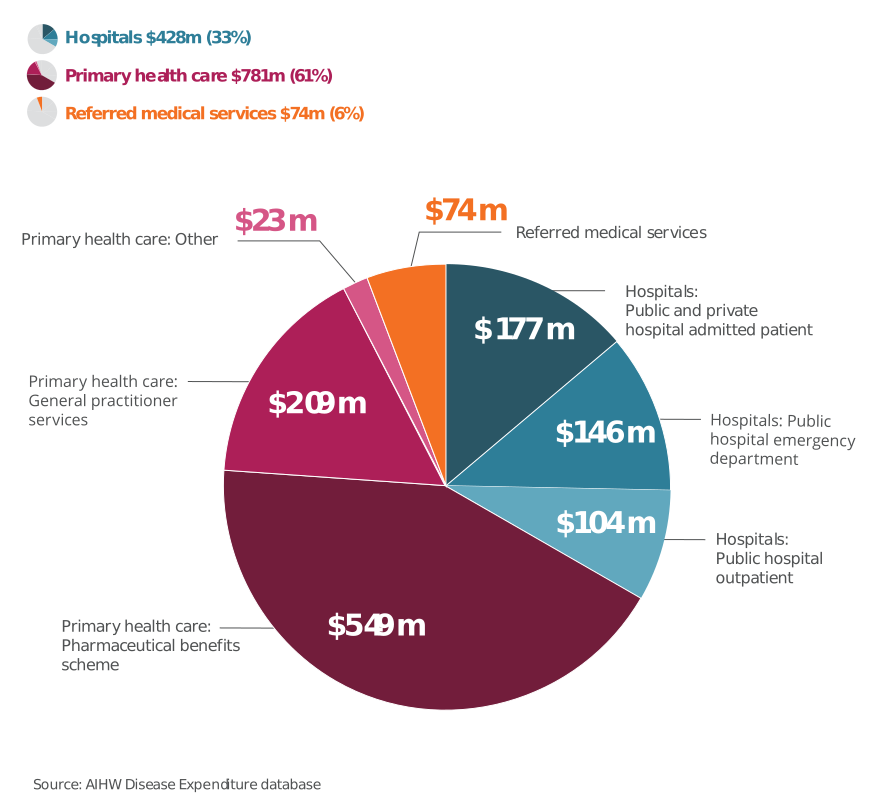
Figure 5 shows the breakdown of expenditure due to asthma with the highest category being for primary health care, in particular the Pharmaceutical Benefits Scheme (PBS) ($549m).
Figure 5: Asthma spending breakdown, 2023–24
In 2023–24:
- Primary health care represented 61% ($780.8 million) of asthma expenditure, around 2.2 times the primary health care proportion for all disease groups (28%). The PBS proportion of asthma expenditure was especially large in comparison to the average, 3.6 times the proportion for all disease groups (43% and 12%, respectively).
- Hospital services accounted for 33% ($427.5 million) of asthma spending, which was 1.9 times lower than the hospital proportion for all disease groups (63%). The public hospital emergency department proportion of asthma expenditure was especially large in comparison to the average, 2.2 times the proportion for all disease groups (11% and 5.0%, respectively).
- Referred medical services represented 5.8% ($74.3 million) of asthma expenditure, which was less than the proportion for all disease groups (9.0%).
Trends over time
Over the period 2013–14 to 2023–24:
- total spending on asthma increased from $0.7 billion to $1.3 billion (in current prices – unadjusted for inflation) (an increase of $533 million)
- after adjusting for the effects of inflation, real expenditure on asthma grew $261 million (constant prices) (Figure 6).
Figure 6: Health system expenditure for asthma, 2013–14 to 2023–24
Line chart shows the increase in health system expenditure for asthma between 2013–14 and 2023–24, with one line showing constant prices and the other line showing current prices.
| Year | Constant prices | Current prices |
|---|---|---|
| 2013–14 | 1 | 0.7 |
| 2014–15 | 1.1 | 0.8 |
| 2015–16 | 1.1 | 0.8 |
| 2016–17 | 1 | 0.9 |
| 2017–18 | 1.1 | 0.9 |
| 2018–19 | 1.1 | 0.9 |
| 2019–20 | 1.2 | 1 |
| 2020–21 | 1.2 | 1 |
| 2021–22 | 1.2 | 1 |
| 2022–23 | 1.2 | 1.2 |
| 2023–24 | 1.3 | 1.3 |
Note: Current price expenditure is unadjusted and reflects changes in both price and volume. Constant price expenditure has been adjusted to remove the effects of inflation.
Source:
AIHW Disease Expenditure database
In 2023–24:
- asthma health spending per case was higher for females compared with males ($440 and $390 per case, respectively)
- almost half (43%) of asthma spending was attributed to the PBS ($180 per case), followed by general practitioner services, 16% of asthma spending ($68 per case)
- after adjusting for inflation, average health spending on asthma per case remained stable between 2015–16 ($415) and 2023–24 ($420) (AIHW 2025c).
For more information, see:
- Health system spending on disease and injury in Australia 2023–24
- Health system spending per case of disease and for certain risk factors
Remoteness and socioeconomic areas
In 2023–24, the rate of health spending for asthma was highest for Remote areas ($5.7 million per 100,000 population) and lowest for Major cities ($4.3 million per 100,000 population) (AIHW 2025b).
There were no data on health spending disaggregated by socioeconomic areas.
Deaths due to asthma
-
In 2023, asthma was recorded as the underlying cause of death for 0.3% of all deaths and 3.2% of all respiratory deaths. This has remained consistent since 2013.
Asthma was recorded as the underlying cause of death for 480 deaths or 1.8 deaths per 100,000 population in Australia in 2023. This represented 0.3% of all deaths and 3.2% of all respiratory deaths in 2023.
In 2023, asthma mortality rates (as the underlying cause of death):
- Increased with increasing age and were highest for people aged 75 and over (13.2 per 100,000 population).
- Were higher for females compared with males for most age groups. Differences by sex were more pronounced with age (with females aged 75 and over having the highest mortality rate, 18 per 100,000 population, compared with males of the same age, 7.3 per 100,000 population).
Trends over time
After adjusting for different population age structures over time, mortality rates for asthma (as the underlying cause of death) between 2013 and 2023:
- changed little over time, ranging between a high of 1.6 per 100,000 population in 2016 and 2017, and a low of 1.1 per 100,000 population in 2021
- were consistently higher for females compared with males (Figure 7).
Figure 7: Trends over time for asthma mortality, 2013 to 2023
Line chart shows the age-standardised rate of death due to asthma as the underlying cause remained stable between 2013 and 2023.
Remoteness and socioeconomic areas
In 2023, after adjusting for age differences, mortality rates for asthma (as the underlying cause of death) were:
- highest for people living in Inner regional areas (1.8 per 100,000 population)
- highest for people living in areas of most disadvantage (lowest socioeconomic areas) and lowest for people living in the least disadvantaged areas (highest socioeconomic areas) (2.1 and 0.9 per 100,000 population, respectively).
Comorbidities of asthma
Some people living with asthma also live with other long-term conditions, known as ‘comorbidity’. Having a comorbid chronic condition can mean that people have complex health needs and poorer overall quality of life (AIHW 2021b).
Understanding which conditions commonly occur together can help identify associations between conditions and could be used to inform approaches to management and treatment (AIHW 2025d).
According to the NHS, in 2022, an estimated 1.8 million (65%) people who were living with asthma also had one or more other chronic conditions – the top 3 comorbidities were mental and behavioural conditions (41%), back problems (25%) and arthritis (23%) (ABS 2023a).
For more information on chronic condition multimorbidity, see Multimorbidity in Australia.
First Nations people
Asthma is a major cause of poor health and death for Aboriginal and Torres Strait Islander (First Nations) people.
For information on risk factors for asthma and the impact of asthma on First Nations people, see First Nations people with asthma 2023.
How common is asthma among First Nations people?
In 2022–23, around 165,000 (17%) First Nations people were estimated to be living with asthma, based on the latest National Aboriginal and Torres Strait Islander Health Survey (NATSIHS), up from 15% in 2004–05 (ABS 2024a).
Based on the 2022–23 NATSIHS, the prevalence of asthma:
- was higher among females compared with males (18% and 16%, respectively)
- increased with age, from 12% in children aged 0–14 to 26% in those aged 45–55 (ABS 2024a).
For more information about First Nations people with respiratory conditions, see Aboriginal and Torres Strait Islander Health Performance Framework Measure 1.04 (AIHW 2025a).
Primary care treatment among First Nations people
According to the 2022–23 NATSIHS, 32% of First Nations people had a written asthma action plan, with those living in non-remote areas (Major cities, Inner regional, Outer regional) more likely to have a plan compared with those living in remote areas (Remote, Very remote) (33% and 23%, respectively) (AIHW analysis of ABS 2024b).
Hospitalisations among First Nations people
In 2023–24:
- there were around 2,300 hospitalisations where asthma was recorded as the principal diagnosis for First Nations people, a rate of 220 per 100,000 population
- after adjusting for differences in age, the hospitalisation rate among First Nations people was 1.8 times the rate among non-Indigenous Australians.
Emergency department presentations among First Nations people
In 2024–25:
- there were around 6,200 Emergency Department (ED) presentations where asthma was the principal diagnosis among First Nations people, a rate of 590 per 100,000 population
- the rate of asthma ED presentations was higher among First Nations women than men (720 and 460 per 100,000 population, respectively)
- after adjusting for age differences, the rate among First Nations people was 2.7 times the rate among non-Indigenous Australians.
Burden of disease among First Nations people
In 2018, asthma was the 7th leading cause of total disease burden among First Nations people. Asthma accounted for 3.3% of total disease burden (DALY) and 5.7% of non-fatal burden (YLD).
Asthma was the 3rd leading cause of total disease burden for First Nations children aged 5–14 (AIHW 2022b).
Deaths among First Nations people
In 2023:
- there were 31 deaths where asthma was recorded as the underlying cause of death among First Nations people, a rate of 3.1 per 100,000 population
- after adjusting for age differences, the rate among First Nations people was 3.3 times the rate among non-Indigenous Australians.
ABS (Australian Bureau of Statistics) (2019) Microdata: National Health Survey 2017–18, AIHW analysis of detailed microdata, accessed 5 July 2024.
ABS (2023a) National Health Survey, ABS website, accessed 21 November 2025.
ABS (2023b) Microdata: National Health Survey 2022, AIHW analysis of detailed microdata, accessed 5 July 2024.
ABS (2024a) National Aboriginal and Torres Strait Islander Health Survey, 2022–23, Canberra, ABS, accessed 22 September 2025.
ABS (2024b) Microdata: National Aboriginal and Torres Strait Islander Health Survey 2022–23, AIHW analysis of TableBuilder, accessed 9 December 2025.
AIHW (Australian Institute of Health and Welfare) (2021a) Australian Burden of Disease Study 2018: Interactive data on disease burden, AIHW, Australian Government, accessed 22 May 2023.
AIHW (2021b) Chronic condition multimorbidity 2021, AIHW, Australian Government, accessed 5 December 2025.
AIHW (2021c) Chronic health conditions among culturally and linguistically diverse Australians, AIHW, Australian Government, accessed 9 March 2023.
AIHW (2022a) Australia's children, AIHW, Australian Government, accessed 15 December 2025.
AIHW (2022b) Australian Burden of Disease Study: impact and causes of illness and death in Aboriginal and Torres Strait Islander people 2018, AIHW, Australian Government, accessed 27 November 2025. doi:10.25816/xd60-4366.
AIHW (2023a) Australian Burden of Disease Study 2023, AIHW, Australian Government, accessed 15 December 2023.
AIHW (2025a) Aboriginal and Torres Strait Islander Health Performance Framework, Indicator 1.04 respiratory disease (Data table D1.04.1)/ Data - AIHW Indigenous HPF, accessed 15 December 2025.
AIHW (2025b) Health system spending on disease and injury in Australia 2023–24, AIHW, Australian Government, accessed 20 November 2025.
AIHW (2025c) Health system spending per case of disease and for certain risk factors, AIHW, Australian Government, accessed 24 November 2025.
Asthma Australia (2022) Asthma Guidelines for Australian Schools, accessed 27 April 2023.
Chung LP, Johnson P and Summers Q (2018) Models of care for severe asthma: the role of primary care, Medical Journal of Australia, (2): S34-S40, doi: 10.5694/mja18.00119.
Dharmage SC, Perret JL and Custovic A (2019) ‘Epidemiology and asthma in children and adults’, Frontiers in Pediatrics, 7:246, doi:10.3389/fped.2019.00246.
Kharaba Z, Feghali E, Husseini FEI, Sacre H, Selwan CA, Saadeh S, Hallit S, Jirjees F, Obaidi HAI, Salameh P and Malaeb D (2020) ‘An assessment of quality of life in patients with asthma through physical, emotional, social, and occupational aspects: A cross-sectional study’, Frontiers in Public Health, 10: 883784, doi:10.3389/fpubh.2022.883784.
NACA (National Asthma Council Australia) (2018) National Asthma Strategy, National Asthma Council Australia, Melbourne, accessed 9 March 2023.
NACA (2022) Australian Asthma Handbook, Version 2.2. National Asthma Council Australia, Melbourne, accessed 3 March 2023.
NACA (2023) Medicines and treatment. National Asthma Council Australia, Melbourne, accessed 18 February 2026.
NACA (2025) Asthma Cycle of Care. National Asthma Council Australia, Melbourne, accessed 28 November 2025.