


The distribution of injuries varies by sex and age
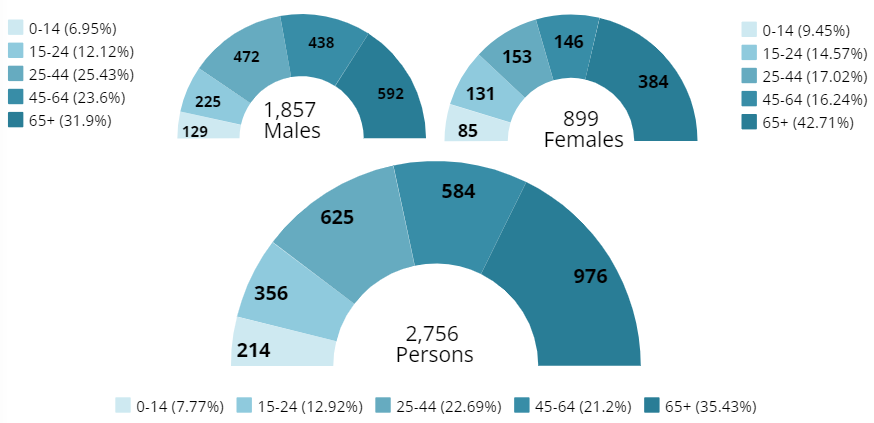
Males were hospitalised in two out of three (67%) extreme weather-related injury hospitalisations between 2019–20 and 2021–22. This is higher than the proportion of males in all injury hospitalisations, which was 54% (Injury in Australia).
Age increased injury hospitalisations – the highest numbers and proportions of cases hospitalised with extreme weather related injuries were aged 65 years or older (Figure 5).
Figure 5: Extreme weather-related injury hospitalisations by age and sex, Australia, 2019–20 to 2021–22
Source: National Hospital Morbidity database (NHMD)
For more information see Supplementary Data Table 2
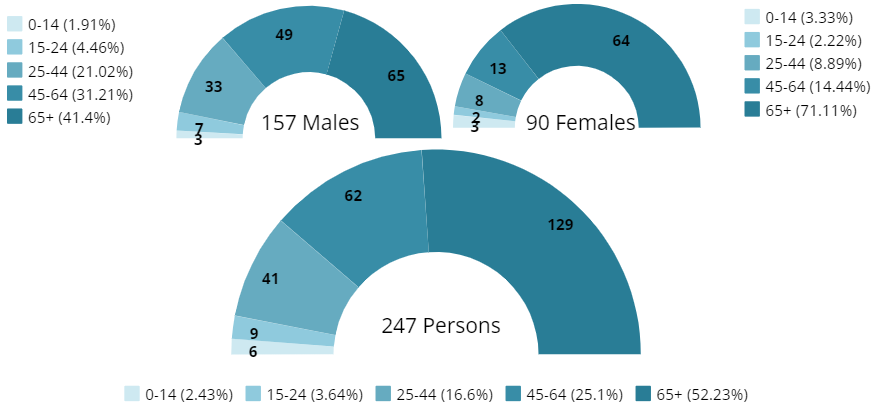
About 3 in 5 (64%) extreme weather-related injury deaths between 2018–19 and 2020–21 were for males, similar to the proportion of males in injury deaths overall (Injury in Australia 2021-22). While deaths increased with age for both sexes, over three times the proportion of males aged 25-44 and 45-64 years died from extreme weather-related injuries as did females in comparable age groups (Figure 6).
Figure 6: Extreme weather-related injury deaths were predominantly among people aged 45 years and over, Australia 2018–19 to 2020–21
Source: National Hospital Morbidity database (NHMD)