


Adolescents and young adults aged 15–24
Figure 1: Contribution of disease groups to total (DALY), non-fatal (YLD) and fatal (YLL) burden, First Nations people aged 15–24, 2022
Stacked bar chart showing proportions of burden by disease group. For this age group, most YLL comes from injuries, while most YLD comes from mental health conditions and substance use disorders.

Almost three-quarters of the burden (71% or 26,400) among First Nations people aged 15–24 was due to living with disease or injury (non-fatal burden) (figures 2 and 5). Mental health conditions & substance use disorders contributed nearly two-thirds of the non-fatal burden in this age group (63%), with smaller contributions from musculoskeletal conditions (6.1%) and respiratory diseases (4.8%) (Figure 1).
The remaining burden (29% or 10,843 YLL) was due to premature death (fatal burden) (figures 2 and 5). Injuries contributed over three-quarters of the fatal burden in this age group (77%), followed by cardiovascular diseases (6.5%) (Figure 1).
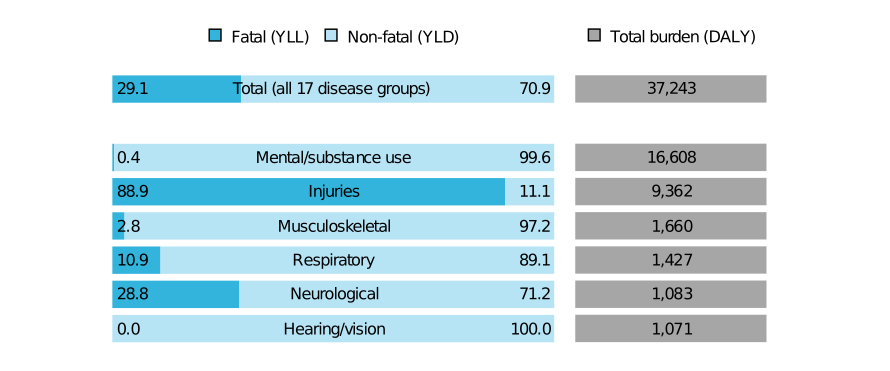
Among First Nations people aged 15–24, the contribution of fatal burden and non-fatal burden to total burden differed greatly for each disease group (Figure 2). Among the highest burden disease groups:
- The burden from mental health conditions & substance use disorders, musculoskeletal conditions and respiratory diseases was mostly non-fatal.
- The burden from injuries was mostly fatal.
Figure 2: Fatal (YLL) and non-fatal (YLD) burden as a proportion (%) of total burden (DALY), leading 6 disease groups, First Nations people aged 15–24, 2022
Source: AIHW First Nations Burden of Disease Database
How does burden differ by sex?
Among First Nations people aged 15–24, males experienced a higher proportion of the total burden (54% compared with 46%) and fatal burden (69% compared with 31%) than females. First Nations females experienced a slightly higher proportion of the non-fatal burden than males (52% compared with 48%).
In this age group, mental health conditions & substance use disorders was the greatest disease group contributor to total and non-fatal burden for both First Nations males and females. Injuries was the leading disease group contributor to fatal burden for both males and females, but was responsible for a slightly higher proportion of the fatal burden in males than in females (79% compared with 71%) (Figure 3).
Figure 3: Contribution of disease groups to total (DALY), non-fatal (YLD) and fatal (YLL) burden, by sex, First Nations people aged 15–24, 2022
Stacked bar chart showing proportional burden splits by sex. For both males and females, mental health conditions and substance use disorders use was the leading contributor to DALY, followed by injuries.

Figure 4: Top 5 specific causes of total (DALY), non-fatal (YLD) and fatal (YLL) burden, First Nations people aged 15–24, 2022
Tile map showing the top specific causes by sex and burden type. For males suicide & self-inflicted injuries was the largest contributing individual cause of total burden, while for females, it was anxiety disorders.

To further explore the top specific causes across all stages of life, see the following interactive data visualisation:
- Dashboard 8: Top specific causes across the stages of life: This visualisation provides the top 5 causes contributing to burden for each age group, by sex.
Changes over time
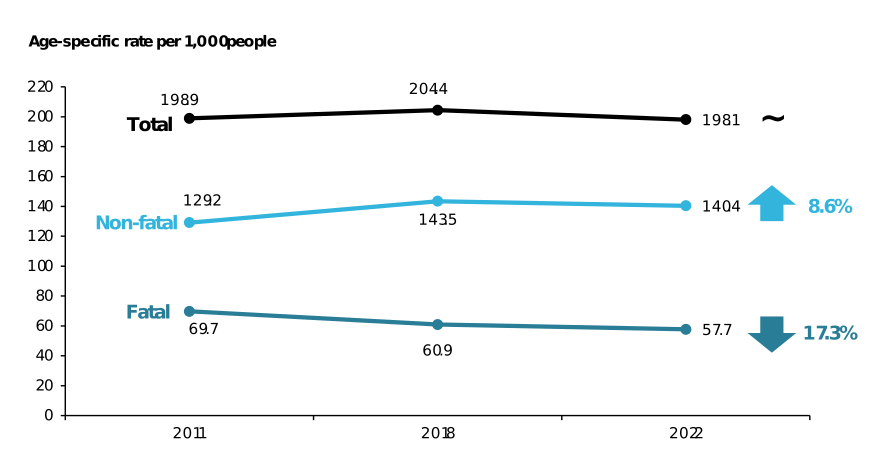
Overall, there was no substantial change in the health of First Nations people aged 15–24 over the period 2011 to 2022 (Figure 5).
There was no substantial change in the age-specific rate of total burden between 2011 and 2022 among First Nations people aged 15–24. There was a 17% decline in the rate of fatal burden over this period, but this was offset by an 8.6% increase in non-fatal burden (Figure 5).
Figure 5: Change between 2011 and 2022 in the age-specific total (DALY), non-fatal (YLD) and fatal (YLL) burden rates (per 1,000 people), First Nations people aged 15–24
Source: AIHW First Nations Burden of Disease Database
Changes by disease group
Over the period 2011 to 2022, among First Nations people aged 15–24, there was a decrease in the age-specific total burden rates from injuries (decrease of 9.7 DALY per 1,000 people, or 16%) and hearing and vision disorders (decrease of 2.3 DALY per 1,000 people, or 29%).
An increase in burden was observed for mental health conditions & substance use disorders (increase of 11 DALY per 1,000 people, 14%).
Changes by specific causes
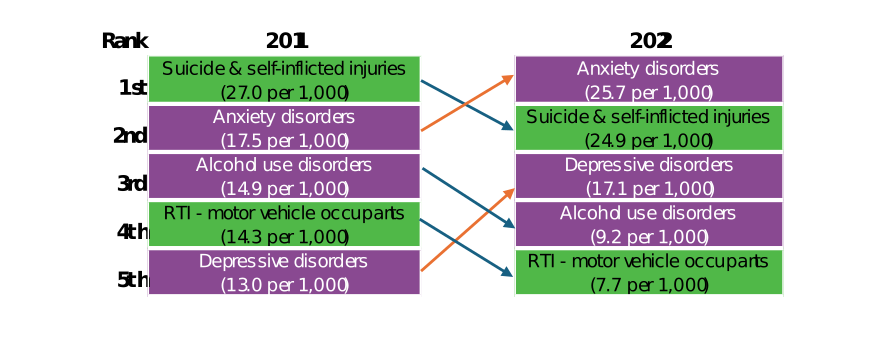
In both 2011 and 2022, the same 5 diseases were the leading causes of burden among First Nations people aged 15–24, although there were changes in the rankings and age-specific burden rates for each cause (Figure 6).
There were decreases in the age-specific burden rate and ranking for:
- road traffic injuries (motor vehicle occupants) (46% decrease)
- alcohol use disorders (39% decrease)
- suicide & self-inflicted injuries (7.7% decrease).
There were increases in the burden rate and ranking for:
- anxiety disorders (47% increase)
- depressive disorders (31% increase).
Figure 6: Changes in ranking and age-specific DALY rate (DALY per 1,000 people), leading specific causes of burden, First Nations people aged 15–24, 2011 and 2022
RTI road traffic injuries.
Notes
- An increase in rank over time does not always mean the disease or injury has increased in the population, and vice versa. Therefore, changes in ranking of causes of deaths and disease burden over time should be interpreted with caution.
- Causes are presented in descending order, from highest age-specific rate to lowest age-specific rate, with arrows indicating either an increase (orange) or decrease (blue) in the age-specific rate over time.
- Cause rankings exclude ‘other‘ residual conditions from each disease group; for example, ‘other musculoskeletal conditions’.
- For information on colours used for each specific cause, see disease group colours for FNBDS 2022 colour legend.
Source: AIHW First Nations Burden of Disease Database
How big is the gap, and what causes it?
First Nations people aged 15–24 experienced disease burden at 1.9 times the rate for non-Indigenous people of this age in 2022 (198 compared with 105 per 1,000 people).
For people aged 15–24, mental health conditions & substance use disorders and injuries were the main disease group contributors to the gap (representing 45% and 33% of the gap among people aged 15–24, respectively) (see Figure 5 in Gap in disease burden section).