


Cardiovascular diseases
How much burden does CVD contribute?
Overall, CVD was the third leading cause of total burden and fatal burden among First Nations people and the eighth leading cause of non-fatal burden in 2022.
In 2022, CVD accounted for 11% (34,796 DALY) of total burden, 19% (29,664 YLL) of fatal burden and 3.2% (5,132 YLD) of non-fatal burden for First Nations people.
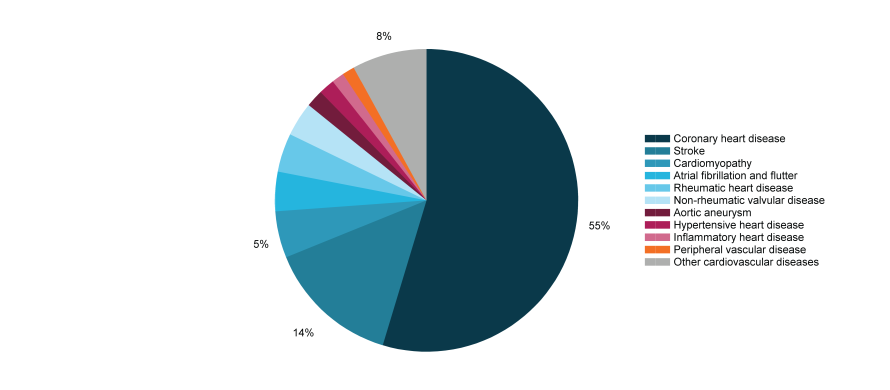
The main causes of CVD burden were CHD (55%) and stroke (14%) (Figure 1).
Figure 1: Contribution of individual causes to CVD total burden (DALY), First Nations people, 2022
Notes
- Percentage labels are not shown for disease groups contributing less than 4.5% of burden.
- Rheumatic heart disease includes acute rheumatic fever.
- The residual cause ‘Other cardiovascular diseases’ includes diseases such as secondary hypertension, pulmonary heart disease, ventricular fibrillation and flutter, diseases of capillaries and hypotension. See the Australian Burden of Disease Study: methods and supplementary material 2018 for a full list of ICD-10 codes.
Source: AIHW First Nations Burden of Disease Database
To explore the contribution of total, non-fatal and fatal burden for each disease group, see the interactive data visualisation: Dashboard 1: Burden of disease in Australia.
What are the differences between fatal and non-fatal burden?
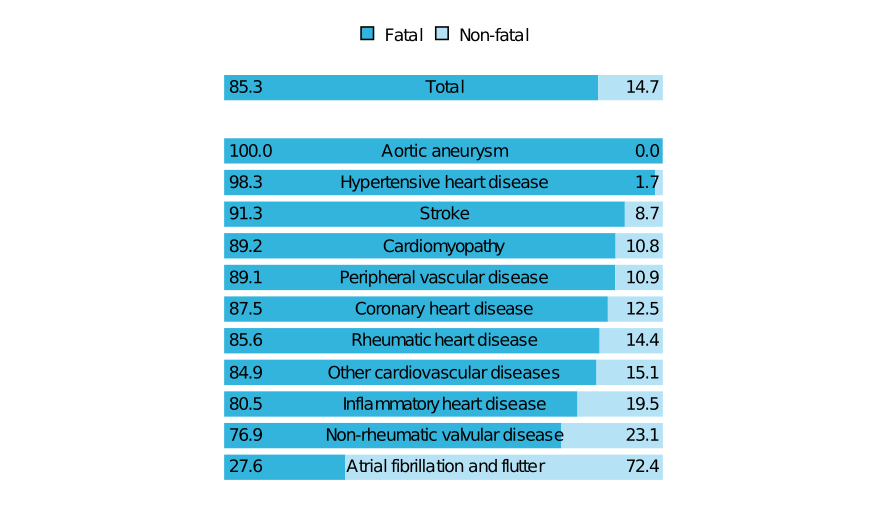
Overall, 85% of the CVD burden was fatal (Figure 2a), the majority of which was due to CHD (56% of fatal burden for CVD) and stroke (15%).
The remaining 15% of the CVD burden was non-fatal (Figure 2a), with CHD (46% of non-fatal burden for CVD) and atrial fibrillation and flutter (21%) the main contributors.
Figure 2a: Cardiovascular diseases burden (DALY), diseases by burden type and sex, First Nations people, 2022
Note: Rheumatic heart disease includes acute rheumatic fever.
Source: AIHW First Nations Burden of Disease Database
How does burden differ by sex?
There were differences in burden due to CVD between males and females, with DALY, YLD and YLL rates higher among First Nations males than females (Table 1).
Sex | DALY | YLD | YLL |
|---|---|---|---|
Males | 39.3 | 5.2 | 34.1 |
Females | 28.9 | 4.8 | 24.0 |
Persons | 34.1 | 5.0 | 29.1 |
Source: AIHW First Nations Burden of Disease Database
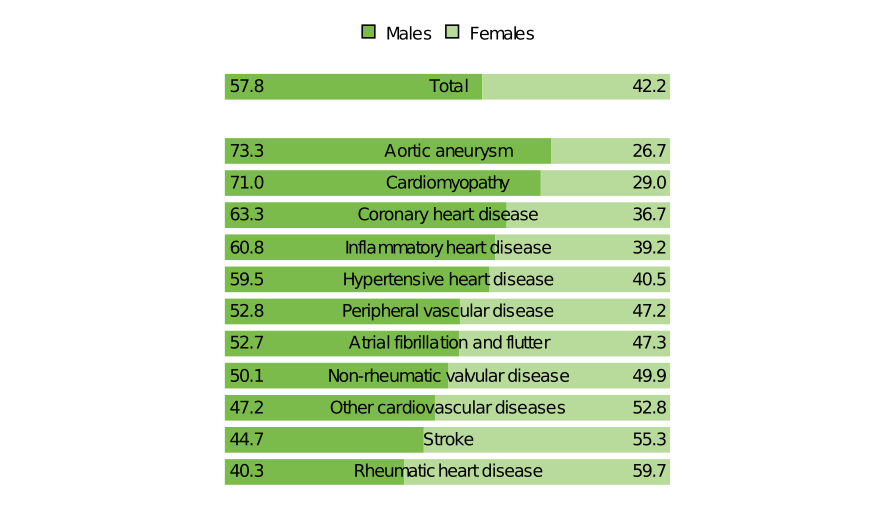
A larger proportion of burden due to CVD was experienced by First Nations males (58%) than by First Nations females (42%) (Figure 2b).
This proportion differed by the type of CVD. First Nations males experienced a higher proportion of CVD burden than First Nations females across most causes, except for non-rheumatic valvular disease (50% females), stroke (55%) and rheumatic heart disease (60%).
Figure 2b: Cardiovascular diseases burden (DALY), diseases by sex, First Nations people, 2022
Note: Rheumatic heart disease includes acute rheumatic fever.
Source: AIHW First Nations Burden of Disease Database
How does burden differ by age?
The number of DALY due to CVD were highest among those aged 45–64, while the age-specific DALY rates were highest among those aged 75 and over, and 65–74. The numbers and rates of DALY were lowest for those aged under 25. A similar pattern was evident for age-specific YLL and YLD rates (Table 2).
Age group | Number of DALY | DALY rate | YLD rate | YLL rate |
|---|---|---|---|---|
Under 5 | 78 | 0.7 | 0.2 | 0.6 |
5–14 | 181 | 0.8 | 0.1 | 0.6 |
15–24 | 811 | 4.3 | 0.6 | 3.8 |
25–44 | 6,662 | 25.5 | 2.6 | 22.9 |
45–64 | 16,184 | 91.0 | 13.0 | 78.0 |
65–74 | 6,178 | 151.3 | 28.8 | 122.6 |
75 and over | 4,702 | 286.9 | 49.6 | 237.3 |
Total | 34,796 | 34.1 | 5.0 | 29.1 |
Source: AIHW First Nations Burden of Disease Database
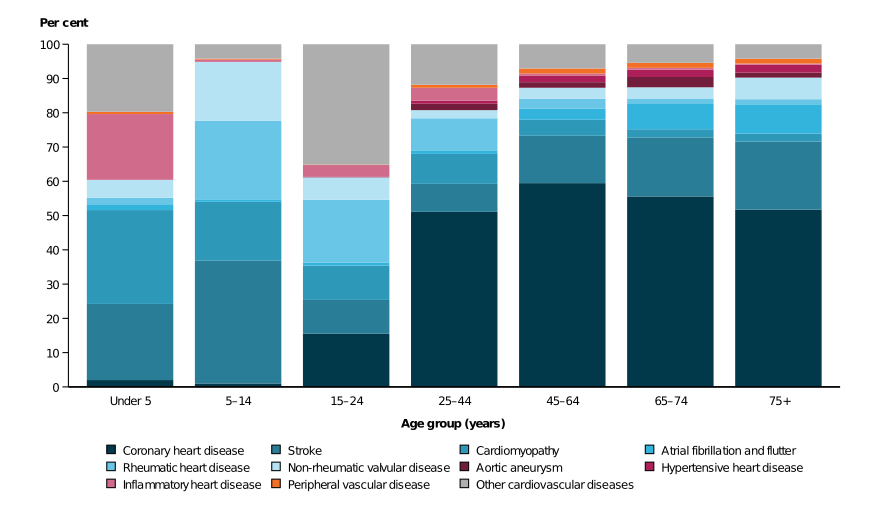
The contribution of individual diseases to total CVD burden also varied across the life course (Figure 3):
- Among First Nations infants and children aged under 5, cardiomyopathy (27%), stroke (22%), other cardiovascular diseases (20%), and inflammatory heart disease (19%) were the leading causes of CVD burden. (Note that congenital heart disease is included under the Infant & congenital conditions disease group.)
- For First Nations children aged 5–14, stroke and rheumatic heart disease were the leading causes of burden (36% and 23%, respectively).
- Other cardiovascular diseases and rheumatic heart disease were the leading causes of burden (35% and 18%, respectively) among First Nations people aged 15–24.
- CHD accounted for over half the CVD burden in those aged 25 and over (56%).
Figure 3: Contribution of individual causes to CVD total burden (DALY), by age group, First Nations people, 2022
 Notes
Notes
- Rheumatic heart disease includes acute rheumatic fever.
- The residual cause ‘Other cardiovascular diseases’ includes diseases such as secondary hypertension, pulmonary heart disease, ventricular fibrillation and flutter, diseases of capillaries and hypotension. See the Australian Burden of Disease Study: methods and supplementary material 2018 for a full list of ICD-10 codes.
- Proportions in the under 5, 5–14 and 15–24 age groups should be treated with caution, due to underlying small numbers.
Source: AIHW First Nations Burden of Disease Database
To explore the contribution of fatal and non-fatal burden to the leading causes of the top 5 disease groups see the interactive data visualisation: Dashboard 7: Top disease groups across the stages of life.
How has the burden changed over time?
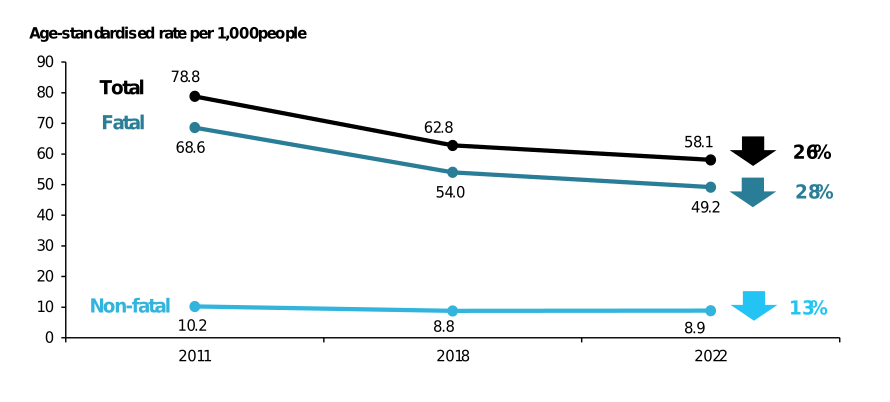
Between 2011 and 2022, the age-standardised rate of total burden due to CVD for First Nations people decreased from 79 to 58 DALY per 1,000 people, a decrease of 26% (Figure 3).
This was driven by a decrease in the fatal burden (of 28%), mainly from CHD and stroke (decreases of 13 and 4.2 YLL per 1,000, respectively; equivalent to decreases of 32% and 34%, respectively).
Rates of non-fatal burden due to CVD also decreased between 2011 and 2022 in the First Nations population (from 10 to 8.9 YLD per 1,000; decrease of 13%).
Figure 4: Change between 2011 and 2022 in the age-standardised total (DALY), fatal (YLL), and non-fatal (YLD) burden rate (per 1,000 people), cardiovascular diseases, First Nations people
Source: AIHW First Nations Burden of Disease Database
For non-Indigenous people, the age-standardised rate of total burden due to CVD also declined by 26% between 2011 and 2022 (from 32 to 24 DALY per 1,000 people). Similar declines were evident in the age-standardised non-fatal (16%, from 5.5 to 4.7 YLD per 1,000 people) and fatal (28%, from 26 to 19 YLL per 1,000 people) burden rates over the same period (see Figure 7 in Gap in disease burden section).
To explore the changes over time in the DALY, YLD, and YLL for First Nations people in each disease group, see the interactive data visualisation: Dashboard 3: Comparisons over time.
Comparisons with non-Indigenous Australians
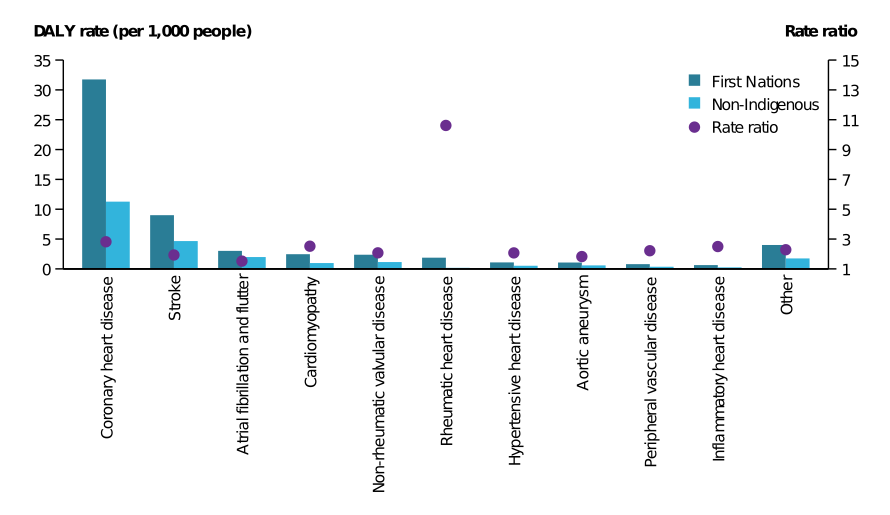
In 2022, the age-standardised rate of burden due to CVD for First Nations people was 2.5 times the rate for non-Indigenous Australians (age-standardised rates of 58.1 and 23.7 DALY per 1,000 people, respectively).
The largest absolute differences in DALY rates between First Nations people and non-Indigenous Australians were observed for CHD (rate difference of 20.5 DALY per 1,000 people) and stroke (rate difference of 4.3 DALY per 1,000) (Figure 5).
Rheumatic heart disease (including acute rheumatic fever) had the largest relative difference (based on age-standardised rate ratios) between First Nations people and non-Indigenous Australians with a rate ratio of 10.6, though contributing only 4.1% of DALY for the CVD group overall.
Figure 5: Cardiovascular diseases age-standardised total burden rates (DALY per 1,000 people) and rate ratios, First Nations people and non-Indigenous Australians, by disease, 2022
Notes
- Rheumatic heart disease includes acute rheumatic fever.
- ‘Other’ refers to the residual cause ‘Other cardiovascular diseases’, which includes diseases such as secondary hypertension, pulmonary heart disease, ventricular fibrillation and flutter, diseases of capillaries and hypotension. See the Australian Burden of Disease Study: methods and supplementary material 2018 for a full list of ICD-10 codes.
Source: AIHW First Nations Burden of Disease Database
To explore the gap in disease burden between First Nations people and non-Indigenous Australians, see the interactive data visualisation: Dashboards 6a and 6b: Gap in health outcomes.