


Kidney and urinary diseases
How much burden do kidney & urinary diseases contribute?
Overall, kidney & urinary diseases was the 13th leading cause of total burden, the 10th leading cause of fatal burden and the 15th leading cause of non-fatal burden among First Nations people in 2022.
In 2022, kidney & urinary diseases accounted 2.3% (7,179 DALY) of total burden, 3.4% (5,436 YLL) of fatal burden and 1.1% (1,743 YLD) of non-fatal burden among First Nations people.
CKD was the largest contributor to burden due to kidney & urinary diseases, accounting for 94% of the total burden.
To explore the contribution of total, non-fatal and fatal burden for each disease group, see the interactive data visualisation: Dashboard 1: Burden of disease in Australia.
What are the differences between fatal and non-fatal burden?
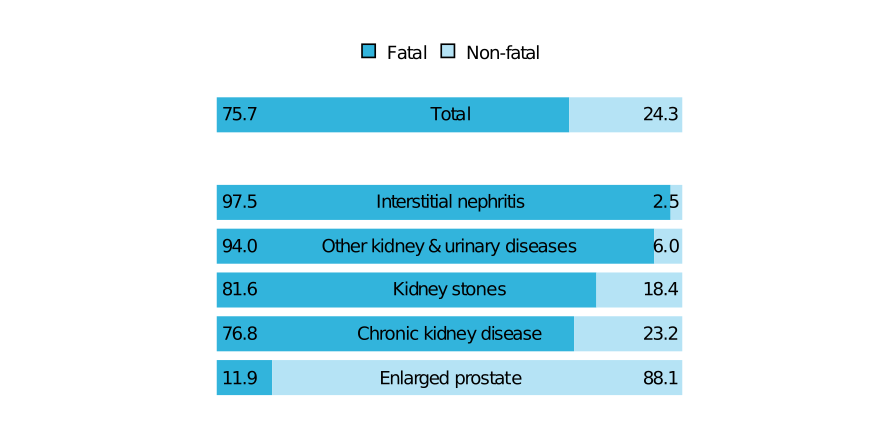
About three-quarters (76%) of burden due to kidney & urinary diseases was fatal burden (Figure 1a), the majority of which was due to CKD (96% of fatal burden for kidney & urinary diseases). Premature death was responsible for the majority of burden across all kidney & urinary diseases, except for enlarged prostate where only 12% of the burden was fatal (Figure 1a).
Figure 1a: Kidney & urinary diseases burden (DALY), diseases by burden type, First Nations people, 2022
Note: The residual cause ‘Other kidney & urinary diseases’ includes a range of diseases such as cystitis, stress incontinence and acute prostatitis. See the Australian Burden of Disease Study: methods and supplementary material 2018 for a full list of ICD-10 codes.
Source: AIHW First Nations Burden of Disease Database
How does burden differ by sex?
There were differences in burden due to kidney & urinary diseases between males and females, with DALY and YLL rates higher among First Nations females than males. YLD rates were the same for males and females (Table 1).
Sex | DALY | YLD | YLL |
|---|---|---|---|
Males | 6.5 | 1.7 | 4.8 |
Females | 7.6 | 1.7 | 5.8 |
Persons | 7.0 | 1.7 | 5.3 |
Source: AIHW First Nations Burden of Disease Database
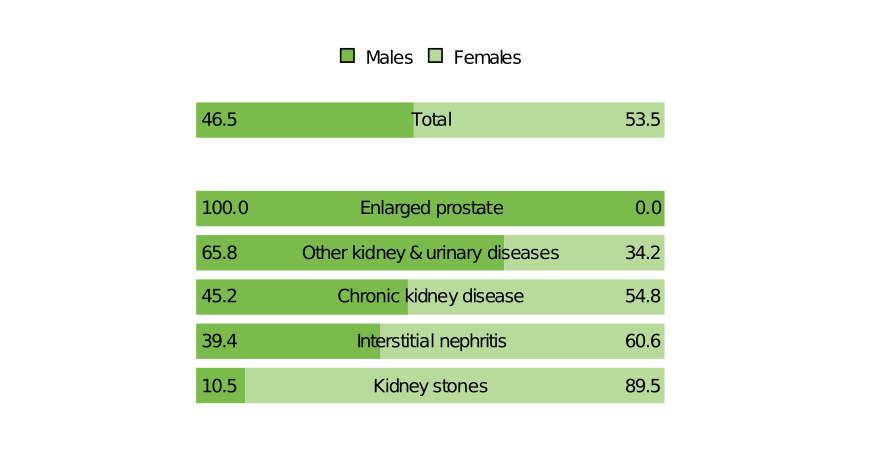
Overall, females experienced more of the burden due to kidney & urinary diseases than males (54% and 46%, respectively), but this varied by disease (Figure 1b). First Nations females experienced a larger proportion of burden due to CKD (55%), interstitial nephritis (61%), and kidney stones (90%), while First Nations males experienced a larger proportion of the burden due to other kidney & urinary diseases (66%) and all of the burden due to enlarged prostate.
Figure 1b: Kidney & urinary diseases burden (DALY), diseases by burden type and sex, First Nations people, 2022
Note: The residual cause ‘Other kidney & urinary diseases’ includes a range of diseases such as cystitis, stress incontinence and acute prostatitis. See the Australian Burden of Disease Study: methods and supplementary material 2018 for a full list of ICD-10 codes.
Source: AIHW First Nations Burden of Disease Database
How does burden differ by age?
The number of DALY due to kidney & urinary diseases was highest among those aged 45–64, while the age-specific DALY rates were highest among those aged 75 and over, and 65–74. The numbers and rates of DALY were lowest for those aged under 25. A similar pattern was evident for age-specific YLL and YLD rates (Table 2).
Age group | Number of DALY | DALY rate | YLD rate | YLL rate |
|---|---|---|---|---|
Under 5 | 32 | 0.3 | — | 0.3 |
5–14 | 7 | — | — | — |
15–24 | 46 | 0.2 | 0.1 | 0.1 |
25–44 | 1,033 | 3.9 | 1.0 | 3.0 |
45–64 | 3,268 | 18.4 | 5.0 | 13.4 |
65–74 | 1,687 | 41.3 | 9.6 | 31.7 |
75 and over | 1,105 | 67.4 | 10.8 | 56.6 |
Total | 7,179 | 7.0 | 1.7 | 5.3 |
— Zero or rounded to zero
Source: AIHW First Nations Burden of Disease Database
Non-fatal burden
CKD can be split into end-stage and non-end-stage disease. End-stage kidney disease is responsible for most (90%) of the total burden and almost all (96%) of the fatal burden due to kidney & urinary diseases. This section therefore focuses on how the non-fatal burden is distributed by disease and age.
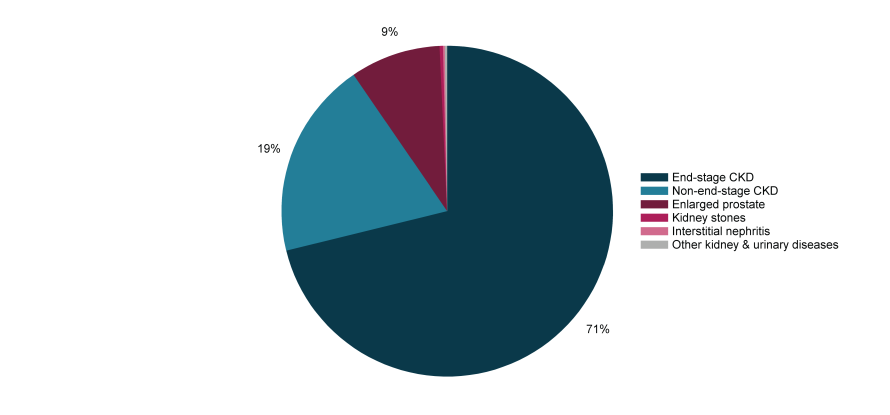
CKD accounted for 90% of the non-fatal burden due to kidney & urinary diseases experienced by First Nations people in 2022. CKD can be split into end-stage and non-end-stage disease, which, respectively, accounted for 71% and 19% of the non-fatal burden due to kidney & urinary diseases (Figure 2).
Figure 2: Contribution of individual causes to kidney & urinary diseases non-fatal burden (YLD), First Nations people, 2022
Notes
- Percentage labels are not shown for disease groups contributing less than 4.5% of burden.
- The residual cause ‘Other kidney & urinary diseases’ includes a range of diseases such as cystitis, stress incontinence and acute prostatitis. See the Australian Burden of Disease Study: methods and supplementary material 2018 for a full list of ICD-10 codes.
Source: AIHW First Nations Burden of Disease Database
How does non-fatal burden differ by age?
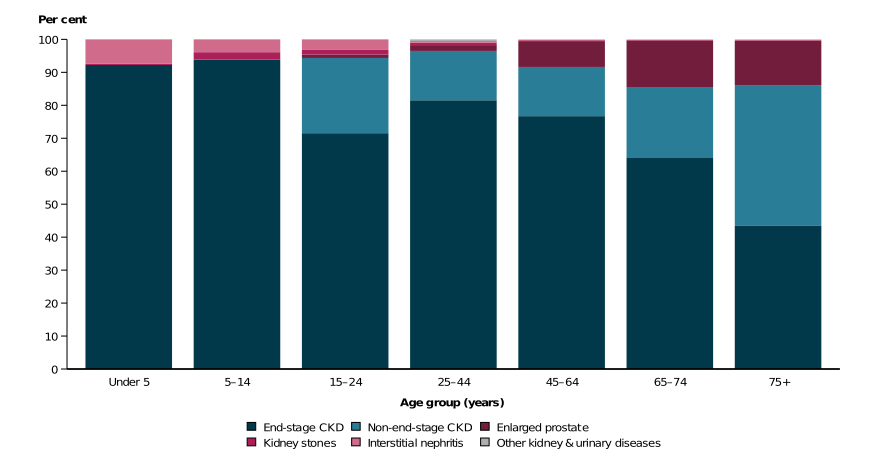
The majority (84%) of non-fatal kidney & urinary burden among First Nations people occurred in those aged 45 and over. End-stage CKD was the largest cause of non-fatal burden among those aged 45–64, accounting for more than three-quarters (77%) of the non-fatal burden. End-stage CKD was also the largest cause of non-fatal burden for those aged 65 and over, accounting for over half (58%) of the non-fatal burden.
Figure 3: Contribution of individual causes to kidney & urinary diseases non-fatal burden (YLD), by age group, First Nations people, 2022
Notes
- Proportions in the under 5, 5–14 and 15–24 age groups should be treated with caution, due to underlying small numbers.
- The residual cause ‘Other kidney & urinary diseases’ includes a range of diseases such as cystitis, stress incontinence and acute prostatitis.
Source: AIHW First Nations Burden of Disease Database
To explore the contribution of fatal and non-fatal burden to the leading causes of the top 5 disease groups see the interactive data visualisation: Dashboard 7: Top disease groups across the stages of life.
How has the burden changed over time?
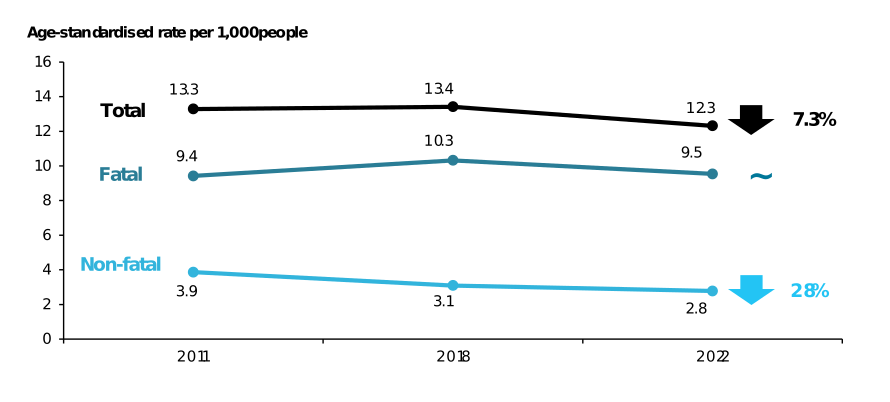
Between 2011 and 2022, the age-standardised rate of total burden due to kidney & urinary diseases for First Nations people decreased slightly from 13 to 12 DALY per 1,000 people—a reduction of 7.3% (Figure 5).
This was driven by a decrease in the non-fatal burden (a decrease of 1.1 YLD per 1,000). The decrease seen in non-fatal burden was mainly due to a decrease in the burden of CKD (of 0.8 YLD per 1,000).
Figure 4: Change between 2011 and 2022 in the age-standardised total (DALY), fatal (YLL), and non-fatal (YLD) burden rate (per 1,000 people), kidney & urinary diseases, First Nations people
Source: AIHW First Nations Burden of Disease Database
For non-Indigenous people, the age-standardised rate of total burden due to kidney & urinary diseases remained stable between 2011 and 2022 (2.6 and 2.5 DALY per 1,000 people). A similar picture was evident for the age-standardised non-fatal (1.0 and 0.9 YLD per 1,000 people) and fatal (1.6 YLL per 1,000 people, respectively) burden rates over the same period (see Figure 7 in Gap in disease burden section).
To explore the changes over time in the DALY, YLD, and YLL for First Nations people in each disease group, see the interactive data visualisation: Dashboard 3: Comparisons over time.
Comparisons with non-Indigenous Australians
In 2022, the age-standardised rate of burden due to kidney & urinary diseases for First Nations people was 4.9 times the rate for non-Indigenous Australians (age-standardised rates of 12.3 and 2.5 DALY per 1,000 people, respectively) (Table 2).
The largest absolute difference in DALY rates between First Nations people and non-Indigenous Australians was observed for CKD (rate difference of 9.7 DALY per 1,000 people). CKD also accounted for the largest relative difference in age-standardised DALY rates between First Nations people and non-Indigenous Australians (rate ratio of 5.9).
Causes | First Nations rate (DALY per 1,000 people) | Non-Indigenous rate (DALY per 1,000 people) | Rate ratio | Rate difference |
|---|---|---|---|---|
Chronic kidney disease | 11.6 | 2.0 | 5.9 | 9.7 |
Interstitial nephritis | 0.2 | — | 4.8 | 0.1 |
Kidney stones | 0.1 | — | 2.3 | — |
Enlarged prostate | 0.3 | 0.4 | 0.8 | -0.1 |
Other kidney & urinary diseases | 0.1 | 0.1 | 1.4 | — |
Total kidney & urinary | 12.3 | 2.5 | 4.9 | 9.8 |
— Zero or rounded to zero
Source: AIHW First Nations Burden of Disease Database
To explore the gap in disease burden between First Nations people and non-Indigenous Australians, see the interactive data visualisation: Dashboards 6a and 6b: Gap in health outcomes.