


Colposcopy rate for Aboriginal and Torres Strait Islander participants
Colposcopy is the examination of the cervix using a magnifying instrument called a colposcope. Colposcopy is the first step in the assessment pathway and is performed where there is a higher risk of a significant cervical abnormality. The colposcopy rate is the proportion of participants who are at higher risk of a significant cervical abnormality who have a colposcopy within 3 months.
In 2023, there were 1,257 Aboriginal and Torres Strait Islander participants aged 25–74 who, as a result of their screening episode, first follow-up episode, or second follow-up episode result, were considered higher risk and would therefore be referred for colposcopy. Of these 1,257 participants, 482 had a colposcopy within 3 months, which is a colposcopy rate of 38.3% (Figure Indigenous people 3).
This was lower than the colposcopy rate of 48.4% for non-Indigenous participants at higher risk of a significant cervical abnormality who had a colposcopy within 3 months.
Figure Indigenous people 3: Colposcopy rate, by Indigenous status, participants aged 25–74, 2023
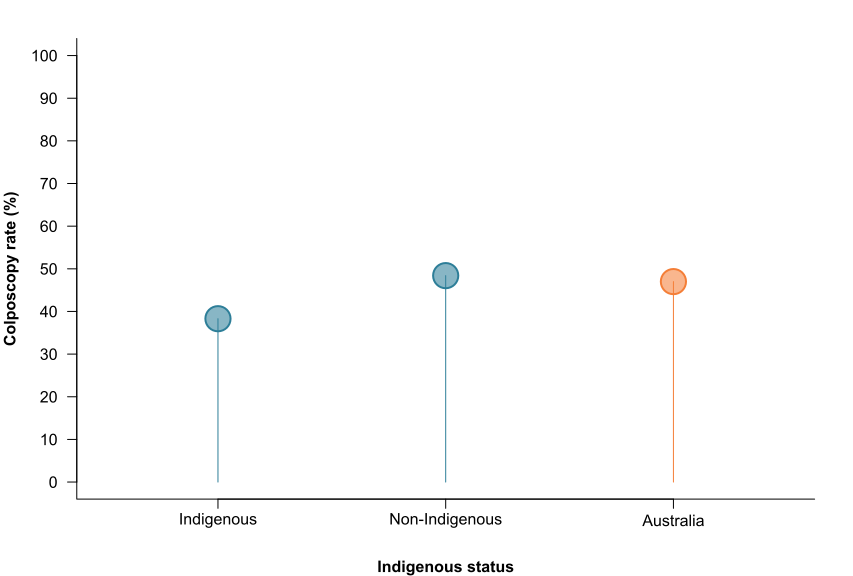
Note: Aboriginal and Torres Strait Islander participants are respectfully referred to as Indigenous participants in this figure.
Source: AIHW analysis of NCSR data (NCSR RDE 11/07/2025). Data and notes for this figure are available in Table Indigenous people 6.
Median time to colposcopy was also calculated. In 2023, the median time to colposcopy for Aboriginal and Torres Strait Islander participants was 102 days.
This is 24 days more than the median time to colposcopy of 78 days for non-Indigenous participants (Table Indigenous people 2).
Indigenous status | Median (days) | 90th percentile |
|---|---|---|
Indigenous | 102 | 441 |
Non-Indigenous | 78 | 433 |
Australia | 79 | 439 |
Note: Aboriginal and Torres Strait Islander participants are respectfully referred to as Indigenous participants in this table.
Source: AIHW analysis of NCSR data (NCSR RDE 11/07/2025).
Colposcopy rate and median time to colposcopy are further disaggregated by remoteness area to enable a better understanding of the lower colposcopy rate and higher median time to colposcopy experienced by Aboriginal and Torres Strait Islander participants.
The colposcopy rate differed across remoteness areas for Aboriginal and Torres Strait Islander participants, at 41.2% for participants residing in Major cities, 41.5% for participants residing in Inner regional areas, 39.9% for participants residing in Outer regional areas, 21.5% for participants residing in Remote areas, and 25.1% of Aboriginal and Torres Strait Islander participants residing in Very remote areas (Figure Indigenous people 4).
Note that the colposcopy rate for Very remote areas is based on small numbers, so should be interpreted with caution, but was considered important to report separately to ensure that Aboriginal and Torres Strait Islander experiences are visible.
Non-Indigenous participants experienced a similar pattern over remoteness areas, except for participants residing in Remote areas, for which there was a more modest decrease in the colposcopy rate than that experienced by Aboriginal and Torres Strait Islander participants. The colposcopy rate for non-Indigenous participants fell from 49.0% for participants residing in Major cities and 48.0% for participants residing in Inner regional areas, to 45.2% in Outer regional areas and 41.7% in Remote areas, before decreasing further to 25.4% for participants residing in Very remote areas (Figure Indigenous people 4).
Figure Indigenous people 4: Colposcopy rate, by Indigenous status and remoteness area, participants aged 25–74, 2023
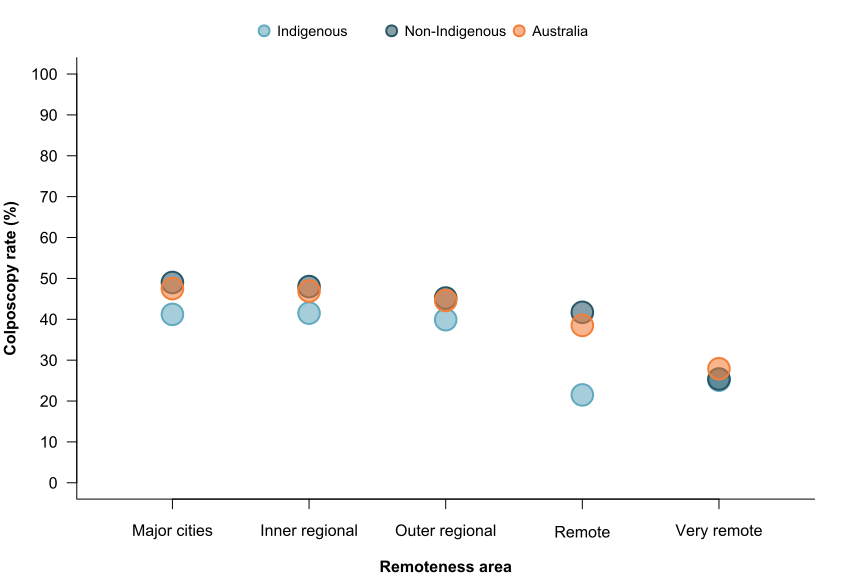
Note: Aboriginal and Torres Strait Islander participants are respectfully referred to as Indigenous participants in this figure.
Source: AIHW analysis of NCSR data (NCSR RDE 11/07/2025). Data and notes for this figure are available in Table Indigenous people 7.
Median time to colposcopy also differed across remoteness areas for Aboriginal and Torres Strait Islander participants.
Median time to colposcopy was 97 days for participants residing in Major cities, 99 days for participants residing in Inner regional and Outer regional areas, 130 days for participants residing in Remote areas, and 132 days for Aboriginal and Torres Strait Islander participants residing in Very remote areas (Table Indigenous people 3).
This was higher than for non-Indigenous participants, at 76 days for participants residing in Major cities, 82 days for participants residing in Inner regional areas, 87 days for participants residing in Outer regional areas, 90 days for participants residing in Remote areas, and 131 days for non-Indigenous participants residing in Very remote areas (Table Indigenous people 3).
Indigenous status | Major cities | Inner regional | Outer regional | Remote | Very remote |
|---|---|---|---|---|---|
Indigenous | 97 | 99 | 99 | 130 | 132 |
Non-Indigenous | 76 | 82 | 87 | 90 | 131 |
Australia | 77 | 84 | 88 | 94 | 121 |
Note: Aboriginal and Torres Strait Islander participants are respectfully referred to as Indigenous participants in this table.
Source: AIHW analysis of NCSR data (NCSR RDE 11/07/2025).