


Performance Indicator 1: Participation
Summary of participation data
5,513,616 participants aged 25–74 had an HPV test in 2020–2024. This equates to participation of 77.9% of the target population.
Participation
Definition
Number of participants aged 25–74 screened in a 5.5-year period as a percentage of eligible females in the population.
Rationale
Higher participation in cervical screening means that more precancerous abnormalities can be detected and treated, which is necessary for achieving the overall aim of reducing incidence and mortality from cervical cancer.
Guide to interpretation
A higher participation rate is better.
Data considerations
While the recommended screening interval is five years, participation is measured over a 5.5-year period. This extended timeframe allows for the inclusion of individuals who screen slightly later than the five-year mark, providing a more accurate representation of overall participation in the NCSP.
The age group 25–29 includes participants from the age of 24 years and 9 months, since this is the age at which eligible people are first invited to participate.
A new definition of participation in cervical screening
Previous National Cervical Screening Program monitoring reports included two measures under Performance Indicator 1: Participation – participation and coverage. Having two measures caused confusion and it was unclear when and how each measure should be used. Therefore in 2025, a new, single measure of participation was developed to be used for monitoring participation in the NCSP, which appears for the first time in this report.
This new definition of participation differs from both previous measures in three ways: (1) it includes all HPV tests performed for any reason rather than only screening HPV tests (participation) or all HPV and LBC tests performed for any reason (coverage); (2) the most recent test is selected instead of the first test; and (3) it is measured over 5.5 years instead of 5 years. These three changes all impact the number of participants, which is the numerator; no changes were made to the way that population is calculated, which is the denominator.
Participation from this report onwards is defined as the number of participants aged 25–74 who had an HPV test over 5.5 years as a proportion of the number of eligible females aged 25–74 in the population.
All participation trends (including Australia, state and territory, remoteness area, and socioeconomic area) have been recalculated using this new definition.
Results
In 2020–2024, there were 5,513,616 participants aged 25–74 who had an HPV test in a 5.5 year period, which was 77.9% of the eligible population (78.1% after adjusting for age to allow comparison over time or across population groups).
Participation by age
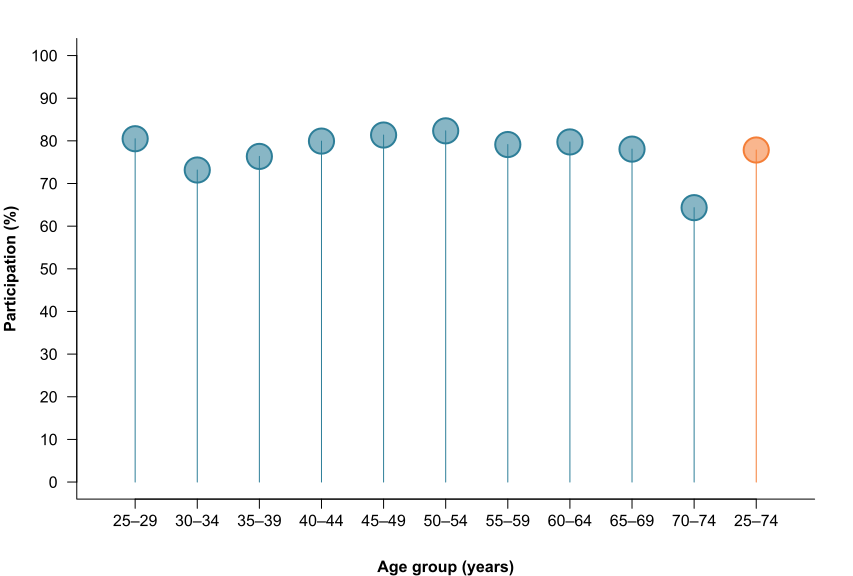
The highest participation in cervical screening of 80.5% was observed in participants aged 25–29. The lowest participation was observed in participants aged 70–74, with only 64.3% of this age group screening (Figure 1.1). Participants aged 70–74 have re-entered the target age group under the renewed NCSP after leaving the previous NCSP after age 69, so lower participation is expected in this age group.
It is of note, however, that participation in this age group increased from 50.4% in 2018–2022 to 62.0% in 2019–2023, and to 64.3% in 2020–2024 since re-entering the target age group.
Figure 1.1: Participation, by age, 2020–2024
Source: AIHW analysis of NCSR data (NCSR RDE 11/07/2025). Data and notes for this figure are available in Table A1.1.
Participation by state and territory
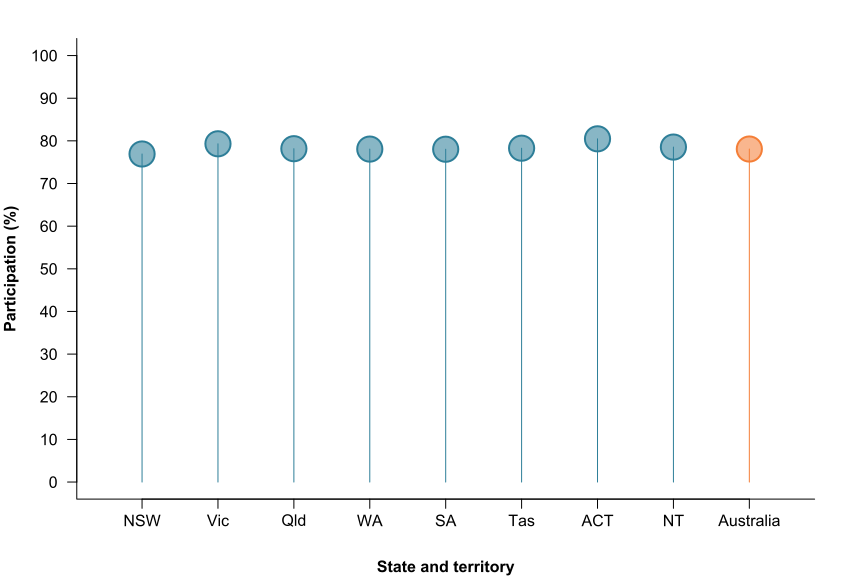
Participation in cervical screening across states and territories is shown in Figure 1.2.
Direct comparisons between the states and territories of Australia are not advised, due to the substantial differences that exist between the jurisdictions, including population, area, geographical structure, policies, and other factors.
Even with these differences, participation was very similar across states and territories, ranging between 76.9% and 80.5% after adjusting for age.
Figure 1.2: Participation, by state and territory, participants aged 25–74, 2020–2024
Source: AIHW analysis of NCSR data (NCSR RDE 11/07/2025). Data and notes for this figure are available in Table A1.2.
Participation by remoteness area
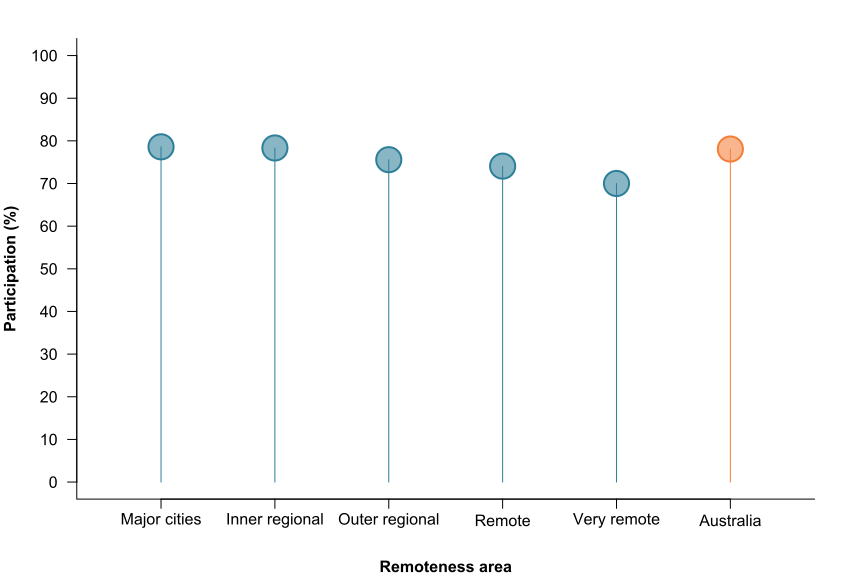
Participation in cervical screening decreased with increasing remoteness (Figure 1.3).
After adjusting for age, participation was highest for participants residing in Major cities at 78.6%, decreasing to 78.3% in Inner regional, 75.6% in Outer regional and 74.1% in Remote areas. Participation was lowest for participants residing in Very remote areas, at 70.0%.
Figure 1.3: Participation, by remoteness area, participants aged 25–74, 2020–2024
Source: AIHW analysis of NCSR data (NCSR RDE 11/07/2025). Data and notes for this figure are available in Tables A1.3.
Participation by socioeconomic area
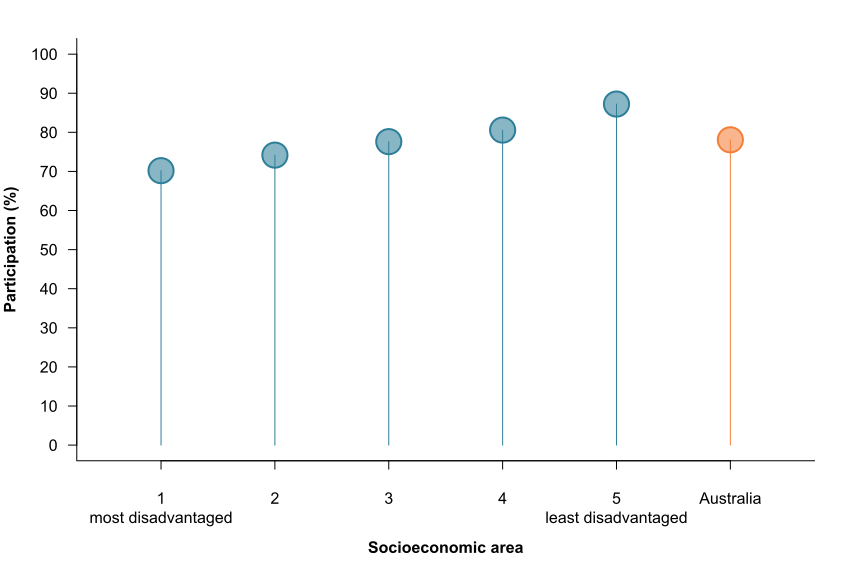
Participation in cervical screening increased with decreasing socioeconomic disadvantage (Figure 1.4).
After adjusting for age, participation was lowest for participants residing in areas with highest disadvantage at 70.2%; thereafter participation increased with decreasing disadvantage to be highest for participants residing in areas of lowest disadvantage at 87.2%.
Figure 1.4: Participation, by socioeconomic area, participants aged 25–74, 2020–2024
Source: AIHW analysis of NCSR data (NCSR RDE 11/07/2025). Data and notes for this figure are available in Tables A1.4.
Participation trends
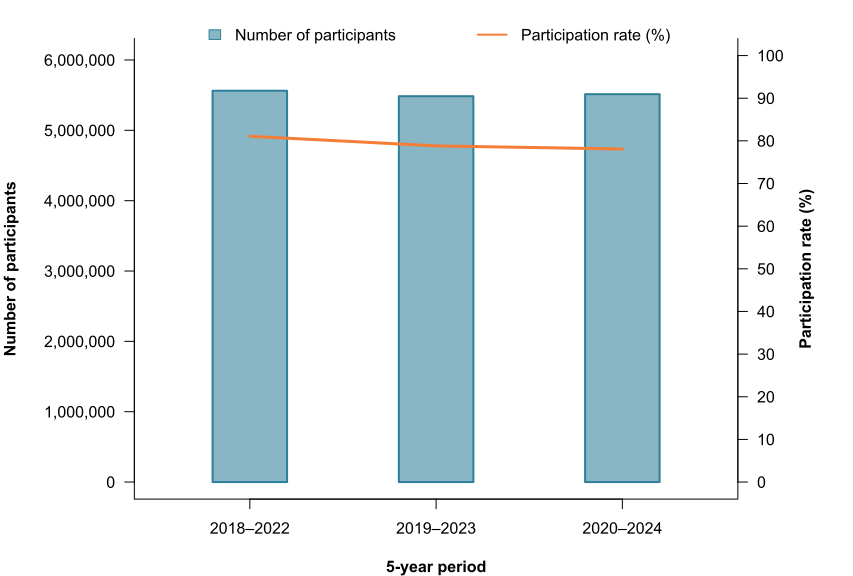
Age-adjusted participation was 81.1% in 2018–2022, 78.8% in 2019–2023, and 78.1% in 2020–2024 (Figure 1.5).
Figure 1.5: Participation, by 5-year period, participants aged 25–74, 2018–2022 to 2020–2024
Source: AIHW analysis of NCSR data (NCSR RDE 11/07/2025). Data and notes for this figure are available in Table A1.5.
Number of HPV tests
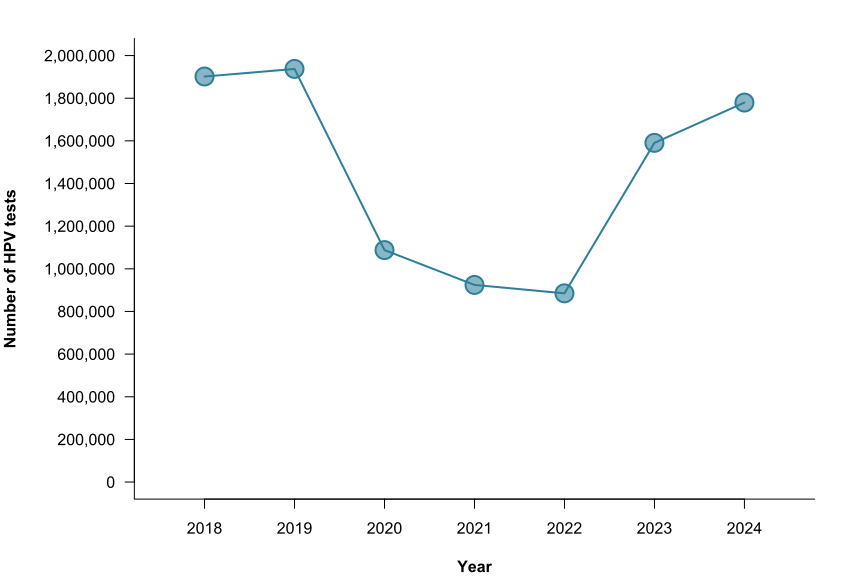
The number of HPV tests performed over the years 2018 to 2024 is shown in Figure 1.6.
Most noticeable is the markedly lower number of HPV tests in 2020, 2021, and 2022 compared to 2018 and 2019. The number of HPV tests was expected to be lower from 2020 due to the change from 2-yearly to 5-yearly screening. This is because the first 2 years of the renewed NCSP was a transition period in which participants who had had a Pap test under the previous NCSP become due for their first HPV test, after which time they moved to a 5-yearly screening interval.
This means that HPV tests in 2020, 2021 and the majority of 2022 were comprised of tests performed for participants who were overdue for their first HPV test, and those who were newly eligible for cervical screening – mostly due to turning 25. This has the effect of a sharp decline in the number of HPV tests in 2020, 2021, and 2022 compared to 2018 and 2019, as illustrated in Figure 1.6.
The number of HPV tests then increased markedly in 2023, as this is the year in which participants who had a negative HPV test early in the renewed NCSP returned for their second HPV test. The number of HPV tests in 2023 and 2024 was not as high as in 2018 and 2019, however, which has had the effect of slightly lowering participation in 2019–2023 and 2020–2024, as the years 2018 and 2019 have been replaced with the years 2023 and 2024 in these calculations.
Figure 1.6: Number of HPV tests, by year, participants aged 25–74, 2018 to 2024
Source: AIHW analysis of NCSR data (NCSR RDE 11/07/2025). Data and notes for this figure are available in Table A1.6.
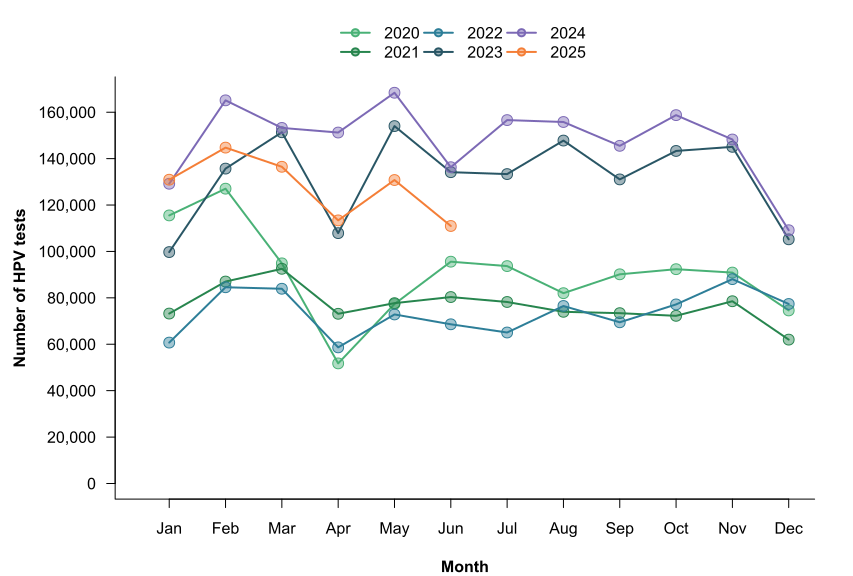
The number of HPV tests performed each month from January 2020 to June 2025 is shown in Figure 1.7. These HPV tests cover the 5.5 years included in participation, and provide useful contextual information.
As noted above, there were fewer HPV tests performed in 2020, 2021, and 2022 than in 2023 and 2024. Apart from January, the number of HPV tests in the first 6 months of 2025 appears to be lower than the number of HPV tests in the first 6 months of 2024.
Irrespective of the number of HPV tests performed each year, all years had similar month-to-month trends, with fewer screening tests in April and December, aligning with the national holidays of Easter and Christmas.
Figure 1.7: Number of HPV tests, by month, participants aged 25–74, January 2020 to June 2025
Source: AIHW analysis of NCSR data (NCSR RDE 11/07/2025). Data and notes for this figure are available in Table A1.7.
Number of self-collected HPV tests
Self-collection is a strategy that was introduced along with the renewed NCSP to offer an alternative method of sample collection for those who were under-screened or who had never screened, to encourage their participation in cervical screening. However, from 1 July 2022, self-collection became an available method of sample collection for all participants in cervical screening aged 25–74, not only those who met the criteria for self-collection in place from 1 December 2017 to 30 June 2022.
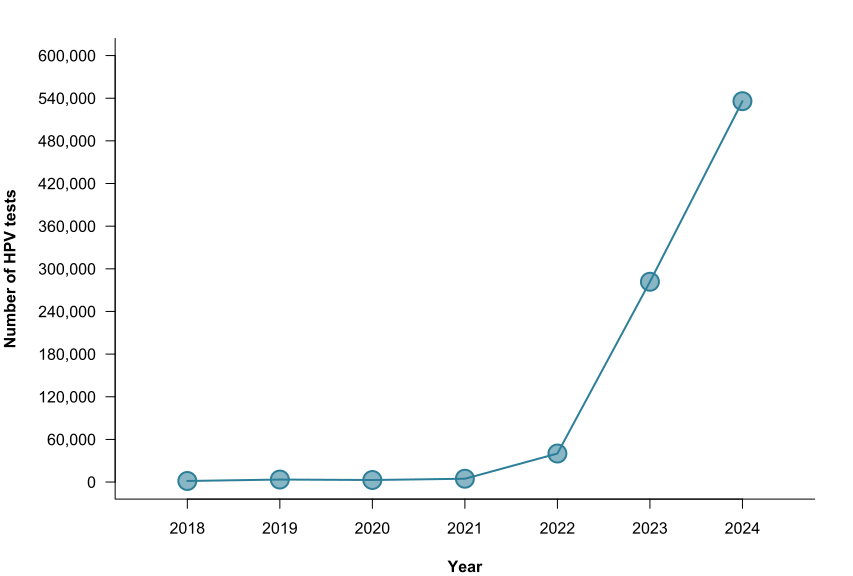
The number of self-collected HPV tests performed over the years 2018 to 2024 is shown in Figure 1.8.
As expected, the number of tests that were self-collected was very low when these were restricted to under-screeners or never-screeners. This number increased rapidly from July 2022 when restrictions were lifted and all participants became eligible.
The number of self-collected HPV tests increased from 1,512 in 2018 to 4,663 in 2021, before increasing to 40,135 in 2022, 281,782 in 2023, and to 535,817 in 2024 (Figure 1.8).
Figure 1.8: Number of self-collected screening HPV tests, by year, participants aged 25–74, 2018 to 2024
Source: AIHW analysis of NCSR data (NCSR RDE 11/07/2025). Data and notes for this figure are available in Table A1.8.