


Performance Indicator 6: Screening HPV test positivity
Summary of screening HPV test positivity data
Of the 1,342,226 valid primary screening HPV tests performed in 2024 in participants aged 25–74:
- 1.4% were positive for oncogenic HPV 16/18
- 5.9% were positive for oncogenic HPV (not 16/18)
- 7.3% were positive for oncogenic HPV (any)
Screening HPV test positivity
Definition
Percentage of valid screening HPV tests that are positive for oncogenic HPV in participants aged 25–74 in a calendar year.
Rationale
Monitoring the positivity rate provides important information about a screening test. There are three measures of positivity relevant to the NCSP:
- oncogenic HPV 16/18 positivity is the proportion of valid HPV tests that are positive for oncogenic HPV 16/18
- oncogenic HPV (not 16/18) positivity is the proportion of valid HPV tests that are positive for oncogenic HPV (not 16/18)
- any oncogenic HPV positivity is the proportion of valid HPV tests that are positive for any oncogenic HPV.
Screening HPV test positivity is calculated only for primary screening HPV tests. Follow-up HPV tests and HPV tests performed for other reasons are not included as these may be more likely to be positive than primary screening HPV tests. Unsatisfactory HPV tests are also excluded, as positivity is based only on valid primary screening HPV tests.
Data considerations
HPV vaccination was introduced in Australia on 1 April 2007. As some HPV-vaccinated individuals are now at the age at which they are participating in cervical screening, it is necessary to consider the impact of HPV vaccination on screening HPV test positivity.
It is useful to distinguish between participants who were offered HPV vaccination (since these participants are more likely to be vaccinated against HPV), and those who were not. Date of birth was used to determine whether HPV vaccination had been offered. Participants born after 30 June 1980 were considered to have been offered HPV vaccination as these participants were eligible for HPV vaccination when the school program commenced in April 2007 and the primary care catch up program commenced in July 2007. Participants born on or before 30 June 1980 were considered to have not been offered HPV vaccination, as these participants were outside the eligible age for HPV vaccination.
The oncogenic HPV types against which participants are likely to have been vaccinated is also a highly relevant consideration. Before 2018, the HPV vaccine used was against oncogenic HPV types 16 and 18, which means that the majority of HPV-vaccinated participants will be protected against only these two oncogenic HPV types, with some limited cross protection against closely related types.
From 2018, an HPV vaccine effective against oncogenic HPV types 16, 18, 31, 33, 45, 52 and 58 was introduced. The additional HPV types included are the next 5 most common HPV types that cause cervical cancer after types 16 and 18. However, it will be some time before individuals vaccinated against these oncogenic HPV types commence cervical screening.
Results
In 2024, there were 1,342,226 valid primary screening HPV tests in participants aged 25–74.
Screening HPV test positivity was determined for participants aged 25–74, as well as for participants who had been offered or not offered HPV vaccination, according to birth cohort.
Screening HPV test positivity was calculated separately for HPV tests that were positive for oncogenic HPV 16/18 and those that were positive for oncogenic HPV (not 16/18), as well as an overall positivity for any type of oncogenic HPV.
Screening HPV test positivity results for these 9 permutations are shown in Table 6.1.
The results indicate that screening HPV test positivity for oncogenic HPV 16/18 was low, irrespective of age, with oncogenic HPV 16/18 detected in fewer than 2% of primary screening HPV tests. This was 1.4% in participants aged 25–74, 1.1% in participants offered HPV vaccination, and 1.6% in participants not offered HPV vaccination) (Table 6.1).
In contrast, screening HPV test positivity for oncogenic HPV (not 16/18) varied considerably depending on whether participants were of an age at which HPV vaccination was offered or not offered. Screening HPV test positivity was 5.9% in participants aged 25–74, 9.3% in participants young enough to have been offered HPV vaccination and 3.6% in participants outside the eligible age for HPV vaccination (Table 6.1).
Age group | Oncogenic HPV 16/18 detected | Oncogenic HPV (not 16/18) detected | Oncogenic HPV (any type) detected |
|---|---|---|---|
Target age group 25–74 | 1.4 | 5.9 | 7.3 |
Birth cohort offered HPV vaccination | 1.1 | 9.3 | 10.5 |
Birth cohort not offered HPV vaccination | 1.6 | 3.6 | 5.2 |
Note: Participants born after 30 June 1980 were considered to have been offered HPV vaccination as these participants were eligible for the school or catch-up program during 2007; Participants born on or before 30 June 1980 were considered to have not been offered HPV vaccination, as these participants were outside the eligible age for HPV vaccination.
Source: AIHW analysis of NCSR data (NCSR RDE 11/07/2025).
Higher screening HPV test positivity in participants who had been offered HPV vaccination seems counterintuitive, but is an expected result for screening HPV test positivity for oncogenic HPV (not 16/18), since the higher infection rates of HPV in younger participants (that thereafter decline with increasing age) would not be affected by HPV vaccination for these oncogenic HPV types, as only HPV types 16 and 18 were included in the HPV vaccine that the majority of these participants would have received (Brotherton et al. 2019).
Screening HPV test positivity results by age
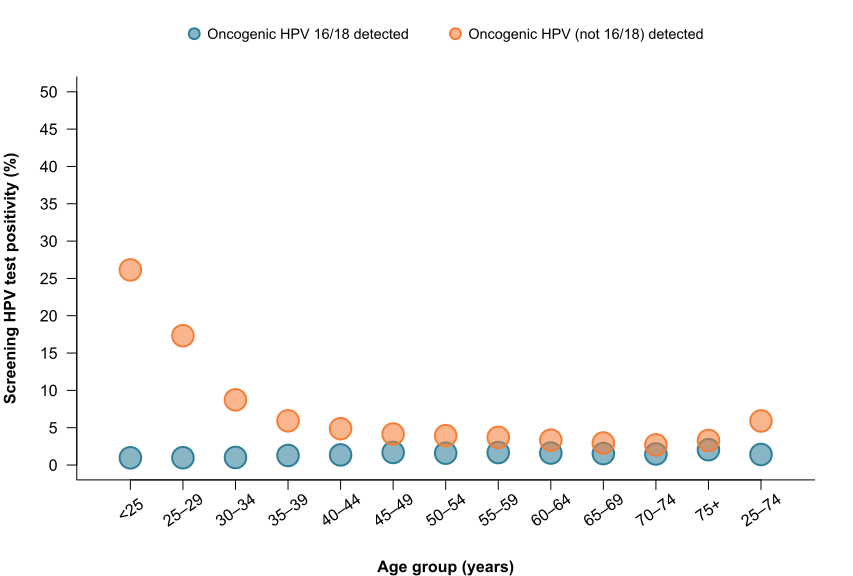
Positivity of oncogenic HPV (not 16/18) shows the typical pattern of HPV infection before HPV vaccination was introduced, with positivity of oncogenic (not 16/18) highest among the youngest participants and decreasing with increasing age. Positivity was 26.1% in participants aged under 25, falling to 17.3% in participants aged 25–29 and 8.7% in those aged 30–34, continuing to fall to a low of 2.7% in participants aged 70–74 (Figure 6.1).
Oncogenic HPV types other than 16 and 18 were not included in the HPV vaccine administered prior to 2018.
In contrast, positivity of oncogenic HPV 16/18 was lowest in the youngest age groups, being 1.0% in participants aged under 25, 25–29 and in those aged 30–34. Thereafter, positivity ranged between 1.3% and 1.7% for all age groups between 35–74 (Figure 6.1).
Oncogenic HPV types 16 and 18 have been included in the HPV vaccine administered since 2007. The lower positivity in the youngest participants likely reflects that participants now in their 20s were vaccinated in the school program at age 12–13 years, with higher coverage and effectiveness than HPV vaccine administered to those vaccinated at older ages.
Figure 6.1: Screening HPV test positivity, by oncogenic HPV type, by age, 2024
Source: AIHW analysis of NCSR data (NCSR RDE 11/07/2025). Data and notes for this figure are available in Table A6.1b.
Screening HPV test positivity by screening history
To understand the impact of screening history, positivity is reported for participants who are recently-screened (previous screen was in the last 6 years), under-screened (previous screen was more than 6 years ago), and never-screened (no previous screen). For both oncogenic HPV 16/18 and oncogenic HPV (not 16/18), and for all birth cohorts, positivity was lowest for HPV tests in participants who were recently-screened (Figure 6.2a, Figure 6.2b, and Figure 6.2c).
For participants aged 25–74:
- oncogenic HPV 16/18 positivity was 1.2% for those who were recently-screened, 2.1% for those who were under-screened, and 1.8% for those who were never-screened
- oncogenic HPV (not 16/18) positivity was 4.2% for those who were recently-screened, 7.0% for those who were under-screened, and 12.9% for those never-screened.
Figure 6.2a: Screening HPV test positivity by screening history, participants aged 25–74, 2024
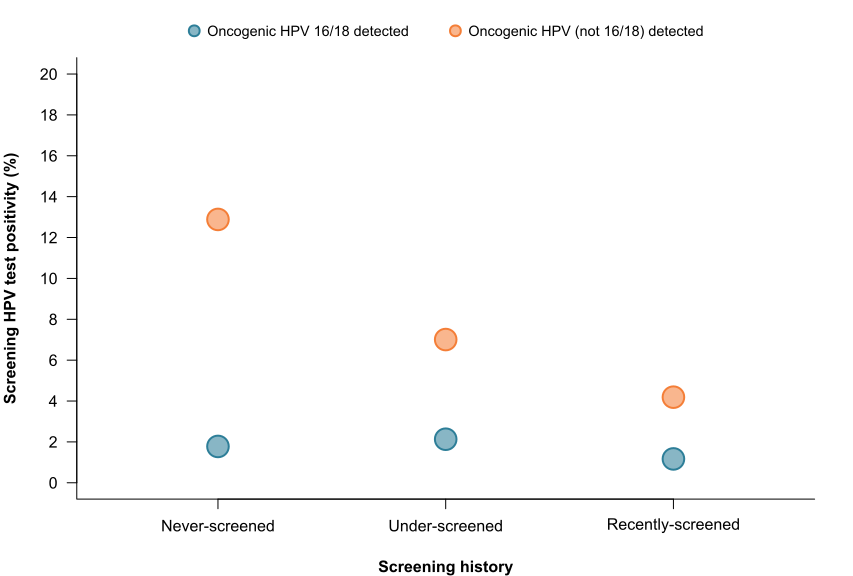
Figure 6.2b: Screening HPV test positivity by screening history, birth cohort offered HPV vaccination, 2024
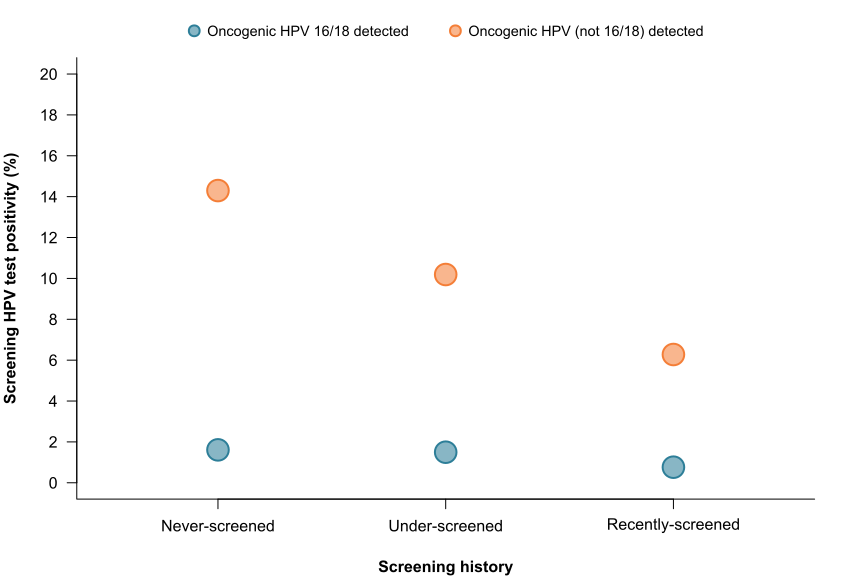
Figure 6.2c: Screening HPV test positivity by screening history, birth cohort not offered HPV vaccination, 2024
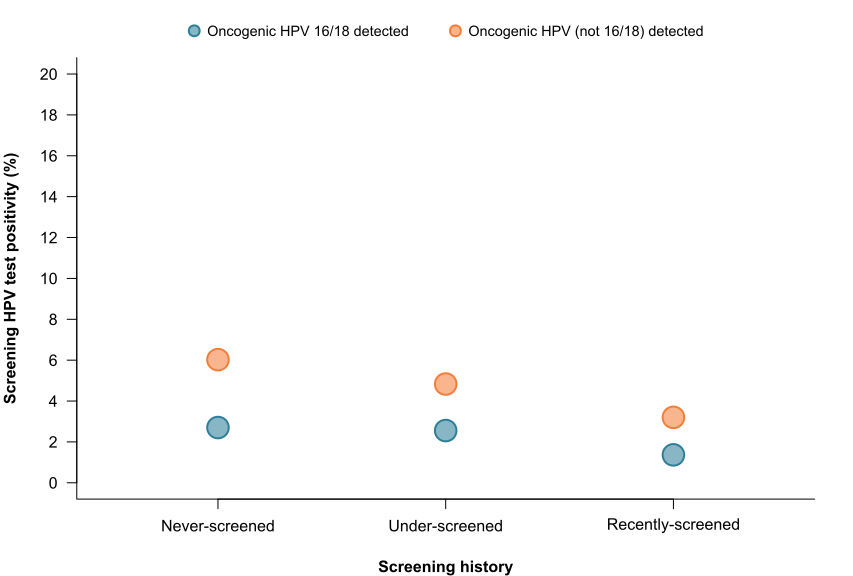
Note: Recently-screened is defined as participants whose previous HPV, LBC, or Pap test was in the 6 years prior to their oncogenic HPV test; Under-screened is defined as participants whose previous HPV, LBC, or Pap test was more than 6 years prior to their oncogenic HPV test; Never-screened is defined as participants who had no previous HPV, LBC, or Pap test prior to their oncogenic HPV test.
Source: AIHW analysis of NCSR data (NCSR RDE 11/07/2025). Data and notes for Figure 6.2a, Figure 6.2b, and Figure 6.2c are available in Table A6.2b.
Screening HPV test positivity trends
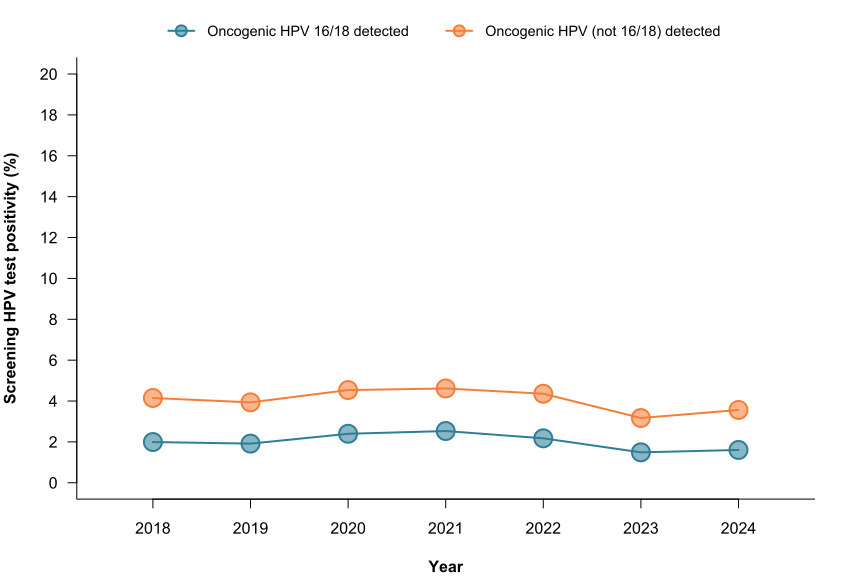
Trends in positivity over the years 2018 to 2024 for oncogenic HPV 16/18 and oncogenic HPV (not 16/18) are shown separately for participants aged 25–74, participants in the birth cohort offered HPV vaccination, and participants in the birth cohort not offered HPV vaccination in Figure 6.3a, Figure 6.3b, and Figure 6.3c.
Positivity for oncogenic HPV 16/18 for participants aged 25–74 increased from 2.0–2.1% of valid primary screening HPV tests in 2018 and 2019 to 2.2–2.3% in 2020 and 2021, before decreasing to 1.9% in 2022 and decreased further to 1.4% in 2023 and 2024.
The decreases in 2022 and 2023 were mirrored in participants who were offered HPV vaccination, for whom positivity decreased from 2.0% in 2021 to 1.1% in 2024, and in participants who were not offered HPV vaccination, for whom positivity decreased from 2.5% in 2021 to 1.5% in 2023 and 1.6% in 2024.
Positivity of oncogenic HPV (not 16/18) for participants aged 25–74 increased from 6.5–6.7% of valid primary screening HPV tests in 2018 and 2019 to 8.2% in 2020 and to 8.7% of valid primary screening HPV tests in 2021, then decreased to 8.4% in 2022 and to 5.6% in 2023 and 5.9% in 2024.
The decreases in 2022, 2023, and 2024 were mirrored in participants who were offered HPV vaccination, for whom positivity decreased from 12.7% in 2021 to 9.3% in 2024, and in participants who were not offered HPV vaccination, for whom positivity decreased from 4.6% in 2021 to 3.2% in 2023 and 3.6% in 2024.
Many factors affect positivity, including screening history as noted earlier, with under- and never-screened participants experiencing higher rates of HPV infection and higher positivity.
Positivity for the birth cohort offered HPV vaccination is also affected by the proportion of participants that are of a younger age within this birth cohort, as some participants within this birth cohort – by virtue of their age – will experience higher rates of HPV infection than others, which will in turn impact the overall positivity for this cohort of participants.
As introduced earlier in this report, the first 2 years of the renewed NCSP was a transition period during which participants who had had a Pap test under the previous NCSP became due for their first screening HPV test, after which time they moved to a 5-yearly screening interval. This means that screening HPV tests in 2020, 2021, and the majority of 2022, comprised tests performed for participants who were overdue for their first screening HPV test, and those who were newly eligible for cervical screening – mostly due to turning 25.
The higher screening HPV test positivity observed in 2020 and 2021 compared to 2018 and 2019 is due to 2020 and 2021 having a higher proportion of participants overdue for screening (or who have never previously screened), who have higher rates of HPV infection. The small decrease in positivity in 2022 may be due to the inclusion of participants rescreening for the first time in the last few months of 2022.
The further lowering of screening HPV positivity rates in 2023 and 2024 reflects that participants in 2023 and 2024 are primarily those who have returned for their second HPV test 5 years after their first negative HPV test in the renewed NCSP. Low positivity in 2023 and 2024 is an expected outcome of the second round of HPV testing due to the 'second round effect' (Olthof and de Kok 2024). Positivity of first round HPV screens reflects that these tests detect existing infections (prevalent disease). In the second round of HPV screens, infection and disease has either mostly cleared or been treated, so positivity is lower, with positive HPV tests reflecting mostly new infections (incident disease) that commenced since the first screening round.
In addition, given the very low positivity of oncogenic HPV 16/18 in the birth cohort offered HPV vaccination in 2023 and 2024, there is likely also an impact on positivity from recipients of HPV vaccination comprising a greater proportion of screening participants over time.
Figure 6.3a: Screening HPV test positivity trends, by year, participants aged 25–74, 2018 to 2024
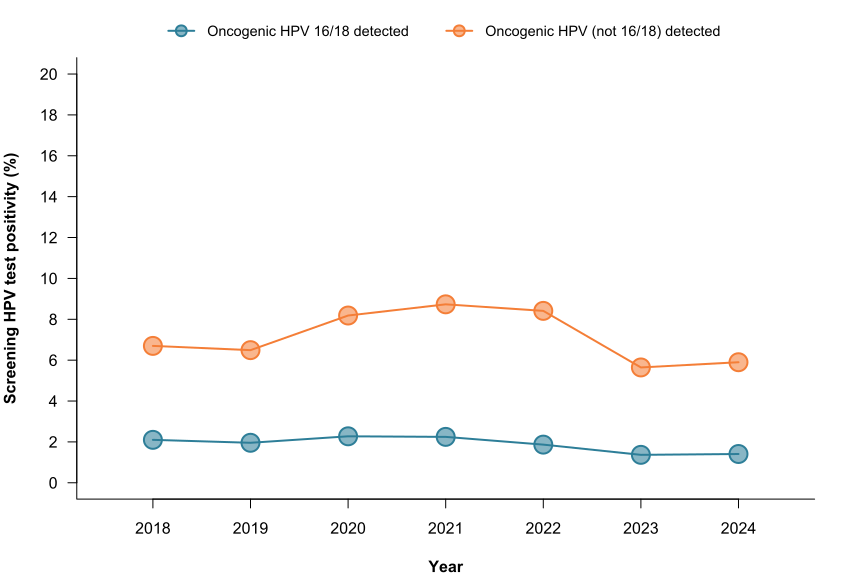
Figure 6.3b: Screening HPV test positivity trends, by year, birth cohort offered HPV vaccination, 2018 to 2024
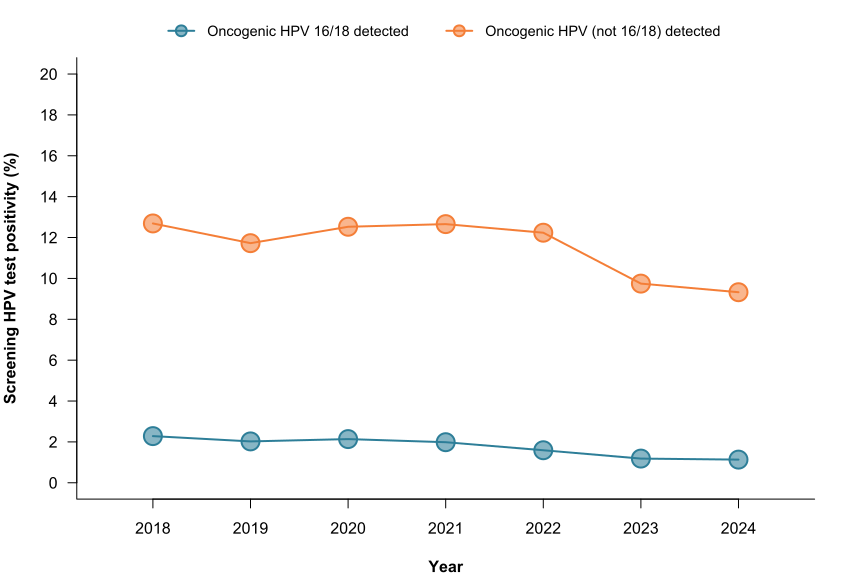
Figure 6.3c: Screening HPV test positivity trends, by year, birth cohort not offered HPV vaccination, 2018 to 2024
Source: AIHW analysis of NCSR data (NCSR RDE 11/07/2025). Data and notes for this Figure 6.3a, Figure 6.3b, and Figure 6.3c are available in Table A6.4b.