


Screening HPV test positivity for Aboriginal and Torres Strait Islander participants
Screening HPV test positivity is the proportion of valid screening HPV tests that detect oncogenic HPV – either oncogenic HPV 16/18 or oncogenic HPV (not 16/18).
To look at the impact of HPV vaccination on screening HPV test positivity, participants are split into those who were offered HPV vaccination (since these participants are more likely to be vaccinated against HPV), and those who were not, based on birth cohort.
People born after 30 June 1980 were considered to have been offered HPV vaccination as these people were eligible for HPV vaccination when the school program commenced in April 2007 and the primary care catch up program commenced in July 2007. People born on or before 30 June 1980 were considered to have not been offered HPV vaccination, as these people were outside the eligible age for HPV vaccination.
Screening HPV test positivity for Aboriginal and Torres Strait Islander participants
In 2024, of the 33,711 valid screening HPV tests in Aboriginal and Torres Strait Islander participants aged 25–74:
- oncogenic HPV 16/18 was detected in 657 (1.9% positivity)
- oncogenic HPV (not 16/18) was detected in 3,170 (9.4% positivity) (Figure Indigenous people 1a).
In 2024, of the 17,403 valid screening HPV tests in Aboriginal and Torres Strait Islander participants who were of an age at which HPV vaccination was offered (participants born after 30 June 1980):
- oncogenic HPV 16/18 was detected in 256 (1.5% positivity)
- oncogenic HPV (not 16/18) was detected in 2,302 (13.2% positivity) (Figure Indigenous people 1b).
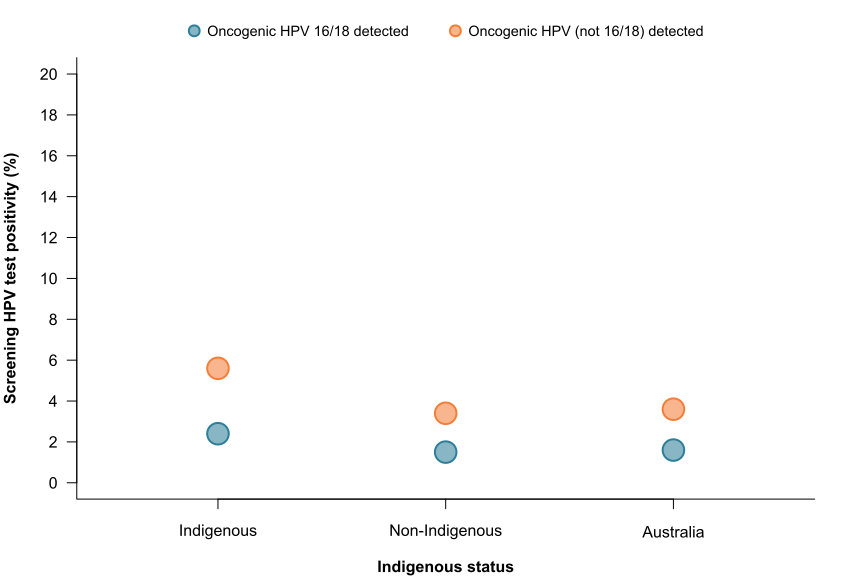
In 2024, of the 16,581 valid screening HPV tests in Aboriginal and Torres Strait Islander participants who were of an age at which HPV vaccination was not offered (participants born on or before 30 June 1980):
- oncogenic HPV 16/18 was detected in 404 (2.4% positivity)
- oncogenic HPV (not 16/18) was detected in 928 (5.6% positivity) (Figure Indigenous people 1c).
These results indicate that screening HPV test positivity for oncogenic HPV 16/18 is lower and screening HPV test positivity for oncogenic HPV (not 16/18) is higher in participants whose age indicates they were offered HPV vaccination.
As noted earlier in Performance Indicator 6: Screening HPV test positivity, these are expected results for all participants (Aboriginal and/or Torres Strait Islander participants and non-Indigenous participants). This is because the occurrence of HPV is higher in this younger age group (born after 30 June 1980), and vaccination will only have an impact on the positivity of HPV 16/18, as only HPV 16 and 18 were included in the HPV vaccine that the majority of the current cervical screening participants would have received (Brotherton et al. 2019). HPV vaccine coverage for Aboriginal and Torres Strait Islander people is shown in Appendix D.
Positivity for oncogenic HPV (not 16/18) will not be impacted by vaccination with an HPV vaccine that only includes HPV 16 and 18, and so remains higher for these participants.
Aboriginal and Torres Strait Islander participants experience higher screening HPV test positivity than non-Indigenous participants. This was true for both oncogenic HPV 16/18 and oncogenic HPV (not 16/18). In participants aged 25–74:
- screening HPV test positivity for oncogenic HPV 16/18 for Aboriginal and Torres Strait Islander participants was 1.5 times that of non-Indigenous participants in 2024 (1.9% and 1.3% of valid screening HPV tests, respectively)
- screening HPV test positivity for oncogenic HPV (not 16/18) for Aboriginal and Torres Strait Islander participants was 1.8 times that of non-Indigenous participants in 2024 (9.4% and 5.3% of valid screening HPV tests, respectively) (Figure Indigenous people 1a).
Figure Indigenous people 1a: Screening HPV test positivity, by Indigenous status, participants aged 25–74, 2024
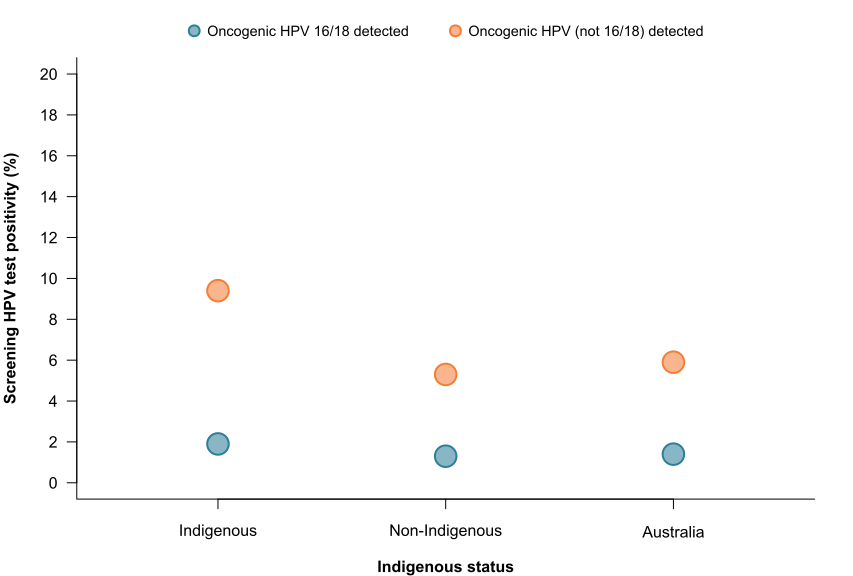
Figure Indigenous people 1b: Screening HPV test positivity, by Indigenous status, birth cohort offered HPV vaccination, 2024
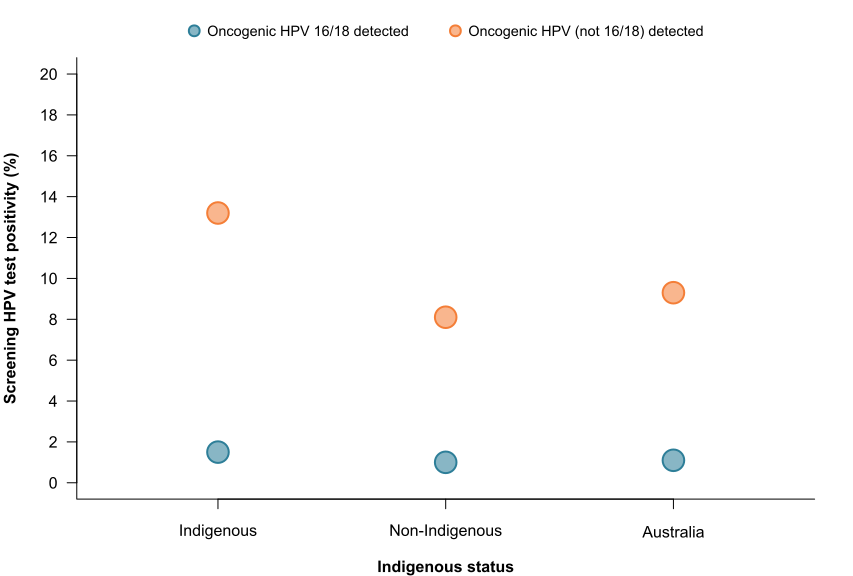
Figure Indigenous people 1c: Screening HPV test positivity, by Indigenous status, birth cohort not offered HPV vaccination, 2024
Note: Aboriginal and Torres Strait Islander participants are respectfully referred to as Indigenous participants in this figure.
Source: AIHW analysis of NCSR data (NCSR RDE 11/07/2025). Data and notes for Figure Indigenous people 1a, Figure Indigenous people 1b, and Indigenous people 1c are available in Table Indigenous people 4b.
Screening HPV test positivity trends for Aboriginal and Torres Strait Islander participants
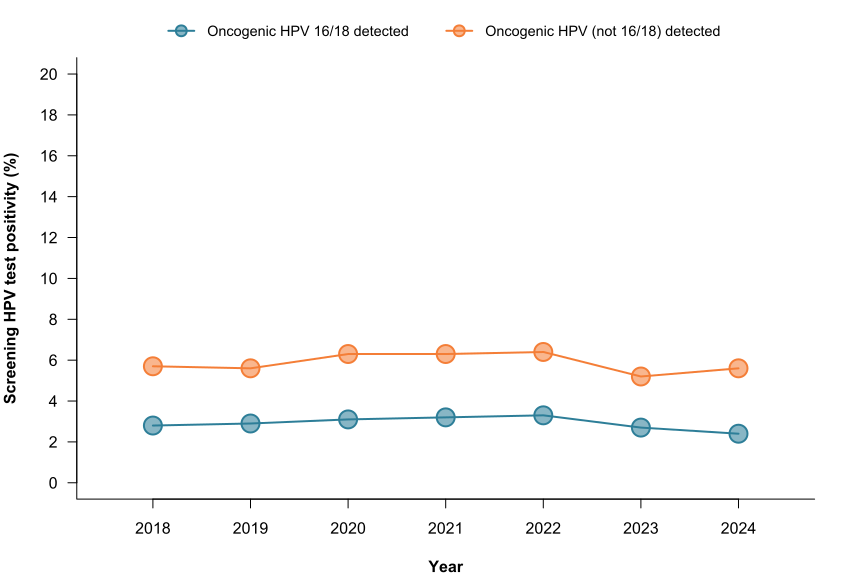
Screening HPV test positivity trends for Aboriginal and Torres Strait Islander participants over the years 2018 to 2024 for oncogenic HPV 16/18 and oncogenic HPV (not 16/18) are shown for ages 25–74, the birth cohort that was offered HPV vaccination, and the birth cohort that was not offered HPV vaccination.
For oncogenic HPV 16/18:
Screening HPV test positivity for Aboriginal and Torres Strait Islander participants who were offered HPV vaccination ranged between 2.2% and 2.4% across the years 2018 to 2021, before falling to 1.9% in 2022, 1.6% in 2023, and 1.5% in 2024 (Figure Indigenous people 2b).
Screening HPV test positivity for Aboriginal and Torres Strait Islander participants who were not offered HPV vaccination increased from 2.8% and 2.9% in 2018 and 2019, respectively, to between 3.1% and 3.3% over the years 2020 to 2022, before falling to 2.7% in 2023 and 2.4% in 2024 (Figure Indigenous people 2c).
For oncogenic HPV (not 16/18):
Screening HPV test positivity for Aboriginal and Torres Strait Islander participants who were offered HPV vaccination ranged between 14.9% and 15.6% over the years 2018 to 2022, before falling to 13.8% in 2023 and 13.2% in 2024 (Figure Indigenous people 2b).
Screening HPV test positivity for Aboriginal and Torres Strait Islander participants who were not offered HPV vaccination increased from 5.7% and 5.6% in 2018 and 2019, respectively, to between 6.3% and 6.4% over the years 2020 to 2022, before falling to 5.2% in 2023 and 5.6% in 2024 (Figure Indigenous people 2c).
As for all Australians, lower positivity in 2023 and 2024 compared to earlier years is likely due to participants in 2023 and 2024 primarily being those who have returned for their second HPV test 5 years after their first negative HPV test in the renewed NCSP, and so are considered recently-screened. HPV infection is lower in recently-screened participants than in those who are under- or never-screened.
In addition, given the very low positivity of oncogenic HPV 16/18 in the birth cohort offered HPV vaccination in 2023 and 2024, there is likely also an impact on positivity from recipients of HPV vaccination comprising a greater proportion of screening participants over time.
Figure Indigenous people 2a: Screening HPV test positivity trends for Aboriginal and Torres Strait Islander participants aged 25–74, by year, 2018 to 2024
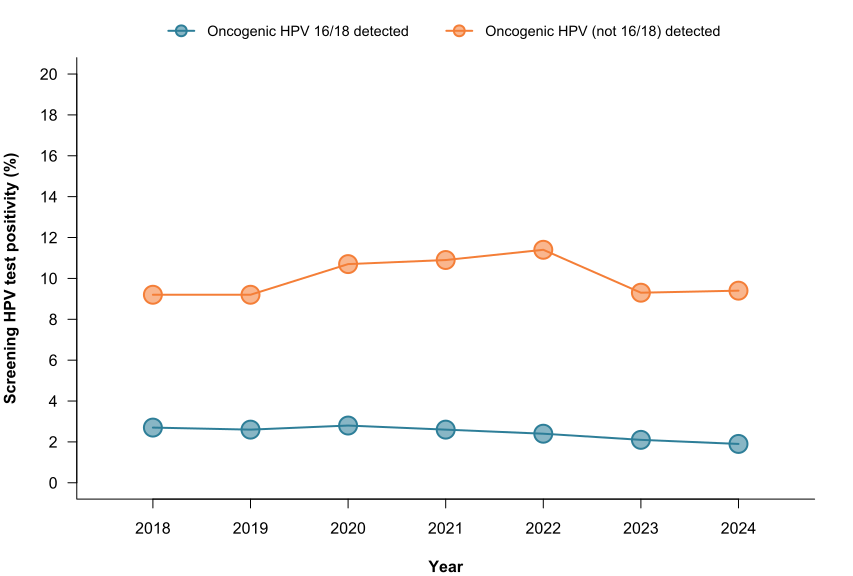
Figure Indigenous people 2b: Screening HPV test positivity trends for Aboriginal and Torres Strait Islander participants in birth cohort offered HPV vaccination, by year, 2018 to 2024
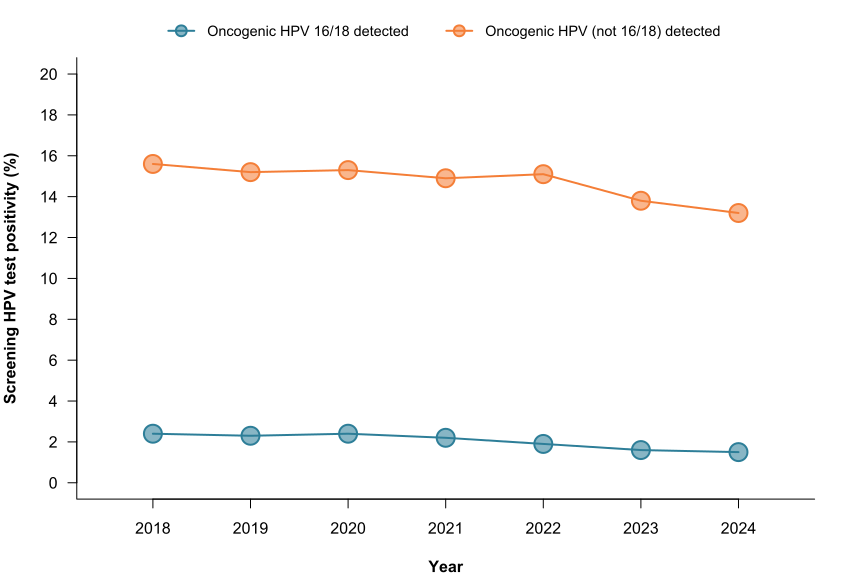
Figure Indigenous people 2c: Screening HPV test positivity trends for Aboriginal and Torres Strait Islander participants in birth cohort not offered HPV vaccination, by year, 2018 to 2024
Source: AIHW analysis of NCSR data (NCSR RDE 11/07/2025). Data and notes for Figure Indigenous people 2a, Figure Indigenous people 2b, and Figure Indigenous people 2c are available in Table Indigenous people 5b.