


Incidence of cervical cancer for Aboriginal and Torres Strait Islander women
Incidence is the number of new cases of cervical cancer per 100,000 population.
Reliable national data on the diagnosis of cervical cancer for Aboriginal and Torres Strait Islander peoples are not available. All state and territory cancer registries collect information on Indigenous status; however, in some jurisdictions, the quality of the data is insufficient for analysis. Data for cervical cancer incidence by Indigenous status are only included for New South Wales, Victoria, Queensland, Western Australia, the Australian Capital Territory, and the Northern Territory. Data are not included for South Australia or Tasmania because the Indigenous status variable is not of sufficient quality in these jurisdictions.
The incidence counts and rates for Aboriginal and Torres Strait Islander women and non-Indigenous women presented are underestimates due to the relatively large proportion of women whose Indigenous status is not stated, or not available. Also, it is likely that some Aboriginal and Torres Strait Islander women are misclassified as non-Indigenous. Therefore, the estimates presented should be interpreted with caution.
Analysis of data from these jurisdictions showed that, over the 5 years 2017–2021, there were 194 Aboriginal and Torres Strait Islander women aged 25–74 diagnosed with cervical cancer, equating to 19.1 new cases per 100,000 females in the population.
After adjusting for age, incidence among Aboriginal and Torres Strait Islander women was twice the rate of non-Indigenous women over the 5 years 2017–2021 for women aged 25–74 (19.9 and 10.1 new cases per 100,000 females in the population, respectively) (Figure Indigenous people 7).
Figure Indigenous people 7: Cervical cancer incidence (New South Wales, Victoria, Queensland, Western Australia, the Australian Capital Territory, and the Northern Territory), by Indigenous status, women aged 25–74, 2017–2021
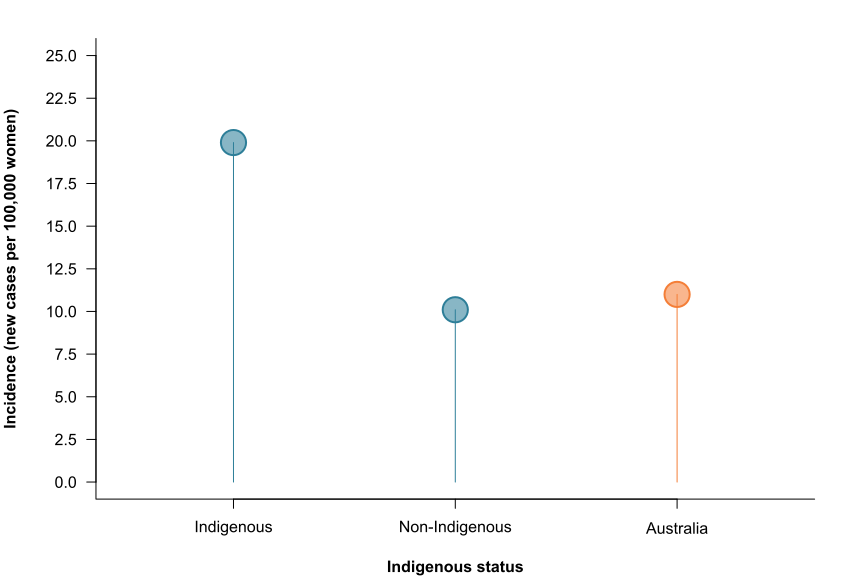
Note: Data shown for 'Aboriginal and Torres Strait Islander', 'Non-Indigenous' and 'Total' are for New South Wales, Victoria, Queensland, Western Australia, the Australian Capital Territory, and the Northern Territory only; data from these jurisdictions were considered to have adequate levels of Indigenous identification in cancer registration data at the time this report was prepared.
Aboriginal and Torres Strait Islander women are respectfully referred to as Indigenous women in this figure.
Source: AIHW Australian Cancer Database 2021. Data and notes for this figure are available in Table Indigenous people 10.