


Performance Indicator 10: Adherence to recommendation for follow-up
Summary adherence to recommendation for follow-up data
- 61.9% of participants aged 25–74 who had a primary screening episode in 2023 that indicated they were of intermediate risk had a follow-up HPV test between 9 and 15 months, indicating adherence with the recommendation for follow-up.
- 71.3% of participants aged 25–74 who had a first follow-up episode in 2023 that indicated they were of intermediate risk had a follow-up HPV test between 9 and 15 months, indicating adherence with the recommendation for follow-up.
Adherence to recommendation for follow-up
Definition
Percentage of participants aged 25–74 who have an intermediate risk screening episode in a calendar year who have a follow-up HPV test between 9 and 15 months.
Percentage of participants aged 25–74 who have an intermediate risk follow-up episode in a calendar year who have a follow-up HPV test between 9 and 15 months.
Rationale
Participants who test positive for oncogenic HPV (not 16/18) and have a negative or pLSIL/ LSIL reflex LBC test result are considered to be of intermediate risk for this primary screening episode and are recommended to have a follow-up HPV test in 12 months. This indicator monitors compliance with this recommendation for a participant's first follow-up HPV test 12 months after their intermediate risk primary screening episode (allowing 3 months either side of the recommended 12 months).
Participants who test positive for oncogenic HPV (not 16/18) and have a negative or pLSIL/ LSIL reflex LBC test result at their first follow-up HPV test (and are not under-screened, Aboriginal and/or Torres Strait Islander, or aged 50 or over) are considered to be of intermediate risk for this first follow-up episode and are recommended to have a second follow-up HPV test in another 12 months. This indicator monitors compliance with this recommendation for a participant's second follow-up HPV test 12 months after their intermediate risk follow-up episode (allowing 3 months either side of the recommended 12 months).
Guide to interpretation
A higher percentage is better.
Data considerations
Participants who have a primary screening test that indicates they are at intermediate risk of a significant cervical abnormality require a follow-up HPV test 12 months after their primary screening test to determine whether they have cleared the HPV infection and have become low risk, or if the infection has persisted. Adherence with the recommendation for follow-up after an intermediate risk screening episode is reported from 2018 onwards.
Prior to 1 February 2021, participants could only be deemed either low risk (no oncogenic HPV detected) or higher risk (any oncogenic HPV detected) at the first follow-up HPV test. From 1 February 2021, a second follow-up HPV test was introduced, along with an option of remaining intermediate risk at the first follow-up HPV test.
This performance indicator is based on primary screening episodes and follow-up episodes performed in 2023. This allows 15 months to 31 March 2025 to know whether a follow-up HPV test occurred as recommended.
Results
Adherence to recommendation for follow-up after intermediate risk primary screening episode
There were 43,487 participants aged 25–74 who had a primary screening episode in 2023 that indicated they were at intermediate risk of a significant cervical abnormality.
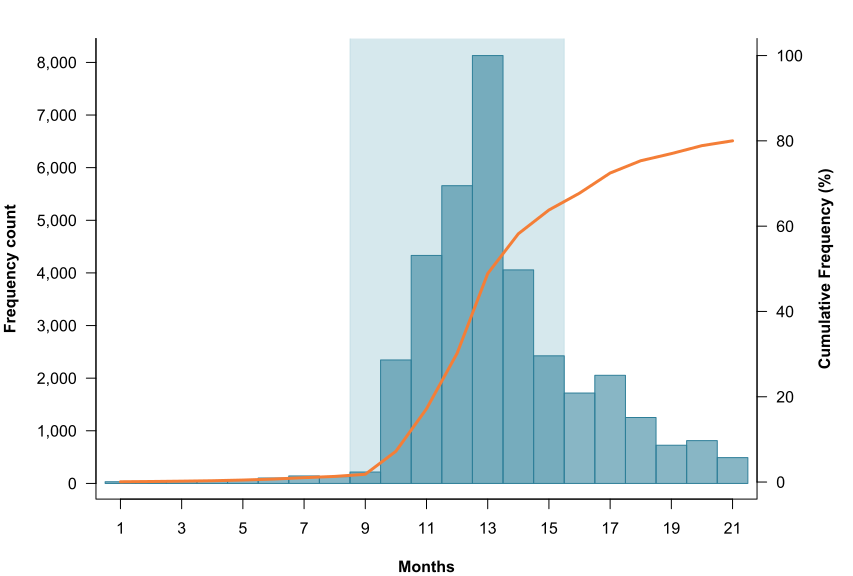
Of these intermediate risk participants, 61.9% had a follow-up HPV test between 9 and 15 months, indicating adherence with the recommendation for follow-up. This range allows 3 months either side of 12 months for participants who may have their follow-up HPV test before or after 12 months, but still within an appropriate length of time.
Figure 10.1 shows the distribution of follow-up HPV tests after a primary screening episode of intermediate risk. Compliance with the 12-month recommendation was highest at 12–13 months after the screening episode, with 13.0% of intermediate risk participants having a follow-up HPV test at 12 months and 18.7% of intermediate risk participants having a follow-up HPV test at 13 months after an intermediate risk screening episode.
At 21 months after an intermediate risk primary screening episode, 20.0% of participants had not had a follow-up HPV test (Figure 10.1).
Figure 10.1: Distribution of follow-up HPV tests after intermediate risk primary screening episode, participants aged 25–74, 2023
Source: AIHW analysis of NCSR data (NCSR RDE 11/07/2025). Data and notes for this figure are available in Table A10.1.
Adherence to recommendation for follow-up after intermediate risk primary screening episode by age
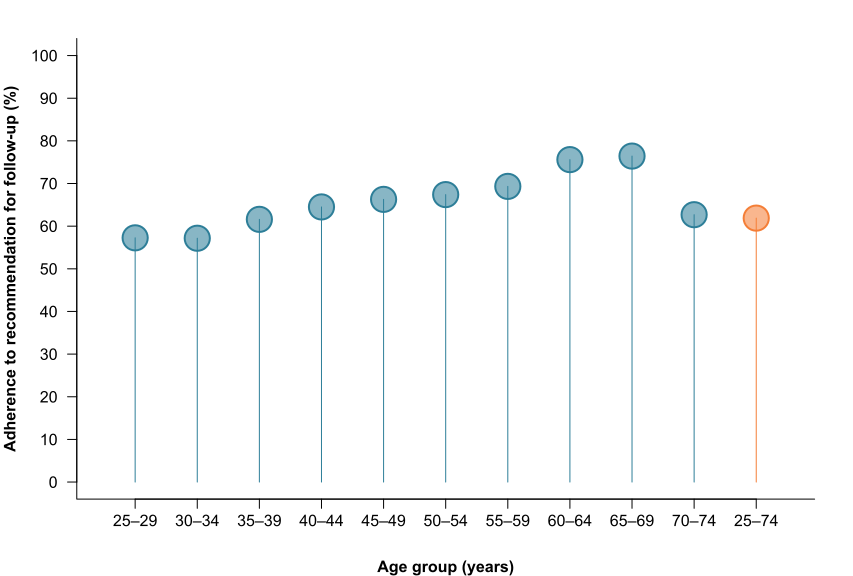
The proportion of participants who had a follow-up HPV test between 9 and 15 months after their intermediate risk primary screening episode is shown by age in Figure 10.2.
Adherence to recommendation for follow-up generally increased with age, from 57.3% of participants aged 25–29, to a high of 76.4% for participants aged 65–69 (Figure 10.2).
Figure 10.2: Adherence to recommendation for follow-up after intermediate risk primary screening episode, by age, 2023
Source: AIHW analysis of NCSR data (NCSR RDE 11/07/2025). Data and notes for this figure are available in Table A10.2.
Adherence to recommendation for follow-up after intermediate risk primary screening episode trends
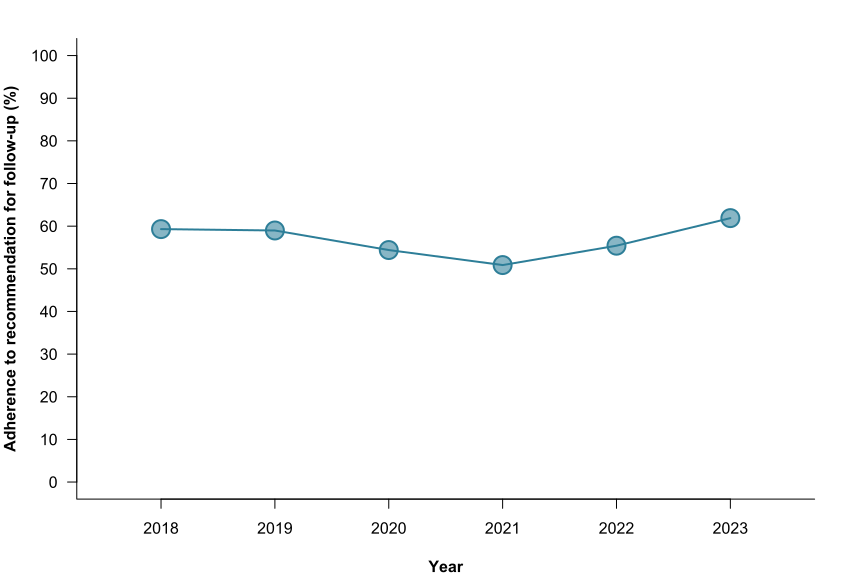
The proportion of participants who had a follow-up HPV test between 9 and 15 months after their intermediate risk primary screening episode was around 59% in 2018 and 2019, falling to 54.4% in 2020 and 50.9% in 2021, before increasing again to 55.4% in 2022 and 61.9% in 2023 (Figure 10.3).
Figure 10.3: Adherence to recommendation for follow-up after intermediate risk primary screening episode, by year, 2018 to 2023
Source: AIHW analysis of NCSR data (NCSR RDE 11/07/2025). Data and notes for this figure are available in Table A10.4.
Adherence to recommendation for follow-up after intermediate risk first follow-up episode
There were 1,061 participants aged 25–74 who had a first follow-up episode in 2023 that indicated they were at intermediate risk of a significant cervical abnormality.
Of these intermediate risk participants, 71.3% had a follow-up HPV test between 9 and 15 months, indicating adherence with the recommendation for follow-up. This range allows 3 months either side of 12 months for participants who may have their follow-up HPV test before or after 12 months, but still within an appropriate length of time.
Figure 10.4 shows the distribution of follow-up HPV tests after a first follow-up episode of intermediate risk. Compliance with the 12-month recommendation was highest at 12–13 months after the follow-up episode, with 16.0% of intermediate risk participants having a follow-up HPV test at 12 months and 19.5% having a follow-up HPV test at 13 months after their intermediate risk follow-up episode.
At 21 months after an intermediate risk first follow-up episode, 11.2% of participants had not had a follow-up HPV test (Figure 10.4).
Figure 10.4: Distribution of follow-up HPV tests after intermediate risk first follow-up episode, participants aged 25–74, 2023
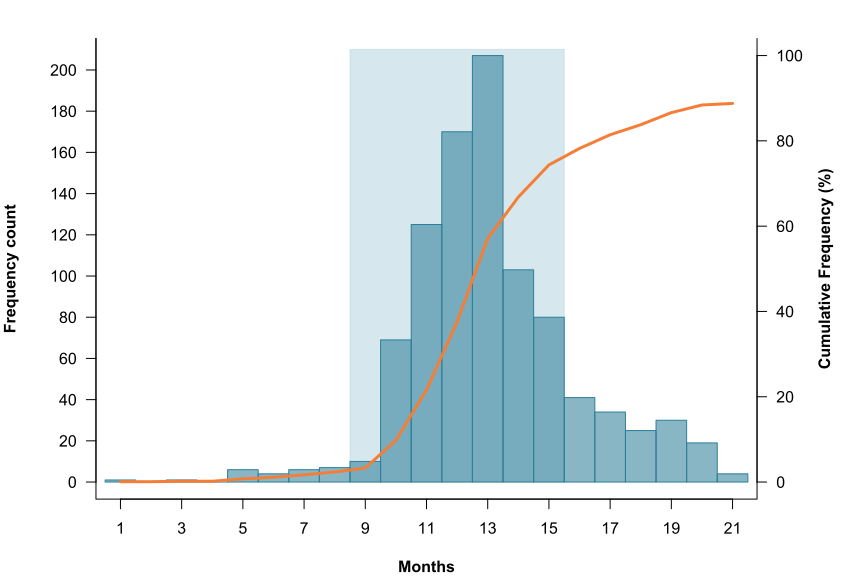
Note: First follow-up episodes are defined as those with a reason for HPV test of 'Follow-up HPV test' and an intermediate risk screening episode with a recommendation of 'Repeat HPV test in 12 months' within the last 9 to 18 months.
Source: AIHW analysis of NCSR data (NCSR RDE 11/07/2025). Data and notes for this figure are available in Table A10.5.
Adherence to recommendation for follow-up after intermediate risk first follow-up episode by age
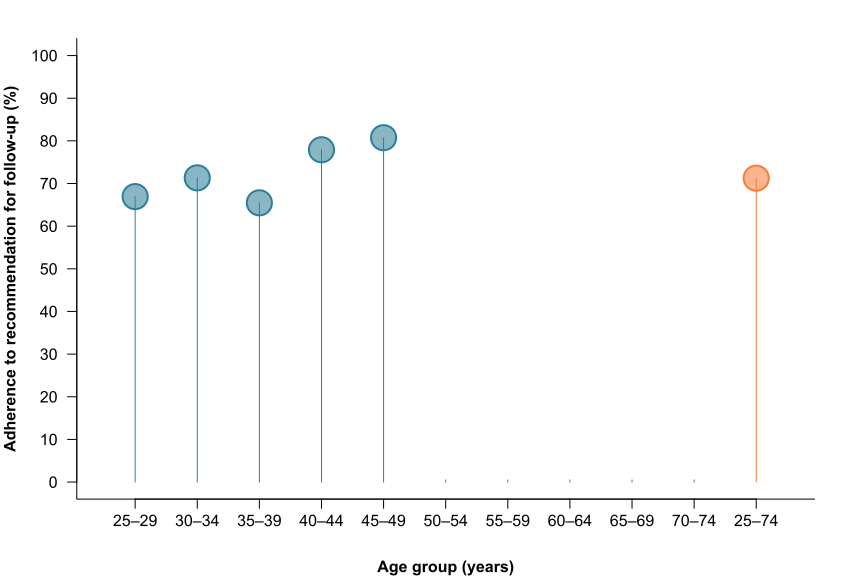
The proportion of participants at intermediate risk who had a follow-up HPV test between 9 and 15 months after their first follow-up episode is shown by age in Figure 10.5. Note that participants aged 50 and over who would otherwise be of intermediate risk are considered to be higher risk, so there are no intermediate risk participants aged 50 or over at first follow-up episodes. Adherence to recommendation for follow-up ranged between 65.5% and 80.7% for participants aged under 50 (Figure 10.5).
Figure 10.5: Adherence to recommendation for follow-up after intermediate risk first follow-up episode, by age, 2023
Source: AIHW analysis of NCSR data (NCSR RDE 11/07/2025). Data and notes for this figure are available in Table A10.6.
Adherence to recommendation for follow-up after intermediate risk first follow-up episode trends
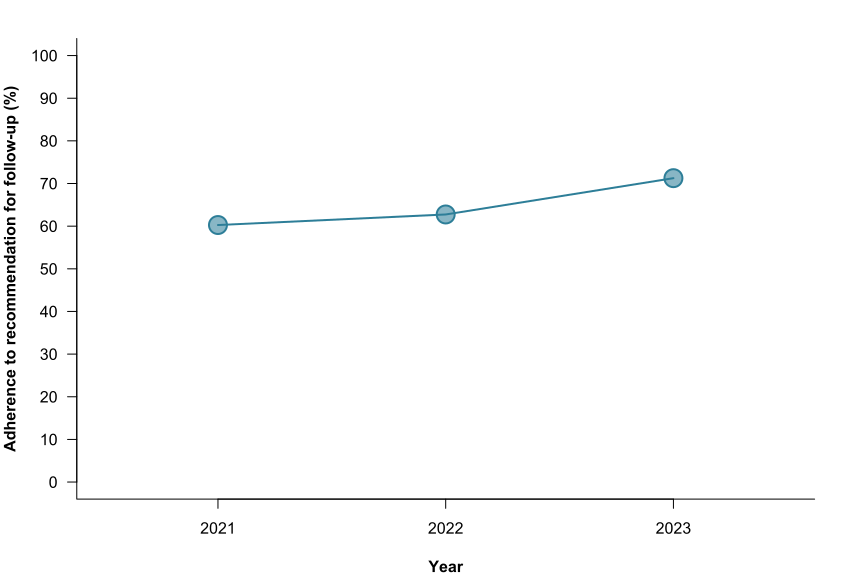
The proportion of participants who had a follow-up HPV test between 9 and 15 months after their intermediate risk first follow-up episode increased from 60.3% in 2021 to 62.7% in 2022 and to 71.3% in 2023 (Figure 10.6).
Figure 10.6: Adherence to recommendation for follow-up after intermediate risk first follow-up episode, by year, 2021 to 2023
Source: AIHW analysis of NCSR data (NCSR RDE 11/07/2025). Data and notes for this figure are available in Table A10.8.