


Performance Indicator 20: Mortality from cervical cancer
Summary cervical cancer mortality data
210 women aged 25–74 died from cervical cancer in 2023, which is a mortality rate of 2.5 deaths per 100,000 women.
Mortality from cervical cancer
Definition
Number of deaths from cervical cancer in females aged 25–74 in a calendar year per 100,000 estimated resident population.
Rationale
Mortality data provide contextual information about the number of deaths from cervical cancer in the population that is an indicator of program performance against its aim to reduce mortality from cervical cancer through organised screening.
Guide to interpretation
Lower cervical cancer mortality is better.
Results
In 2023, there were 265 deaths from cervical cancer, which is 2.0 deaths per 100,000 women in the population (1.7 deaths per 100,000 women after adjusting for age to allow comparison over time or across population groups). Of these, 210 deaths from cervical cancer occurred in women aged 25–74 (the target age group for the NCSP), which is equivalent to 2.5 deaths per 100,000 women in the population (2.4 deaths per 100,000 women after adjusting for age to allow comparison over time or across population groups).
Mortality by age
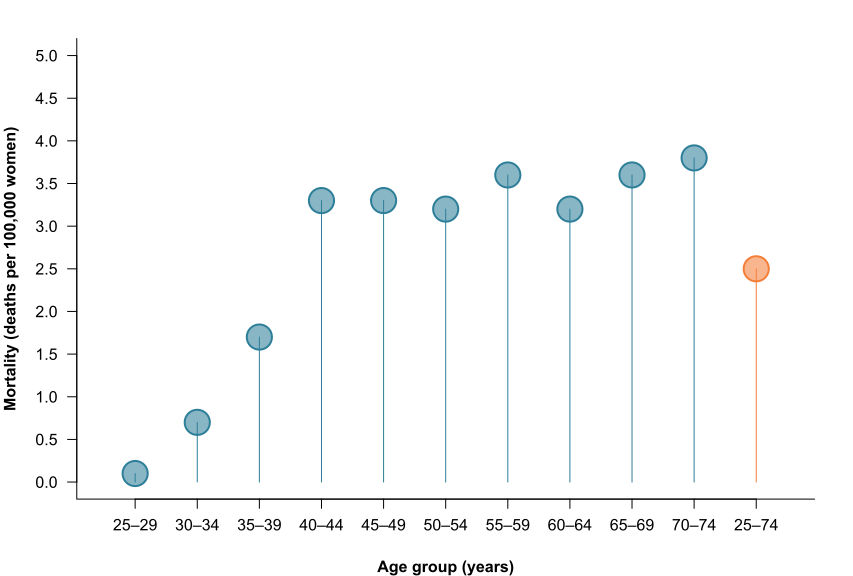
Cervical cancer mortality by age is shown in Figure 20.1.
In 2023, within the age group 25–74, cervical cancer mortality was lowest for women aged under 30, being fewer than 1 death per 100,000 women for ages 25–29 and 30–34. Mortality increased with age, reaching 3.8 per 100,000 for women aged 70–74.
Figure 20.1: Cervical cancer mortality, by age, 2023
Source: AIHW National Mortality Database. Data and notes for this figure are available in Table A20.1.
Mortality by remoteness area
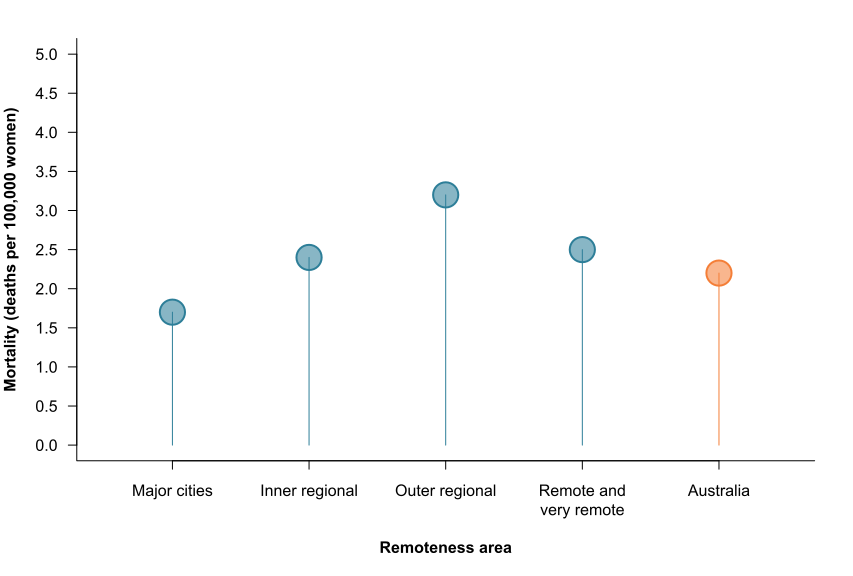
In 2019–2023, cervical cancer mortality for women aged 25–74 increased with increasing remoteness.
After adjusting for age, mortality in 2019–2023 was lowest for women residing in Major cities at 1.7 deaths per 100,000 women aged 25–74. Mortality was highest for women residing in Outer regional areas at 3.2 deaths per 100,000 women aged 25–74 (Figure 20.2).
Figure 20.2: Cervical cancer mortality, by remoteness area, women aged 25–74, 2019–2023
Source: AIHW National Mortality Database. Data and notes for this figure are available in Table A20.3.
Mortality by socioeconomic area
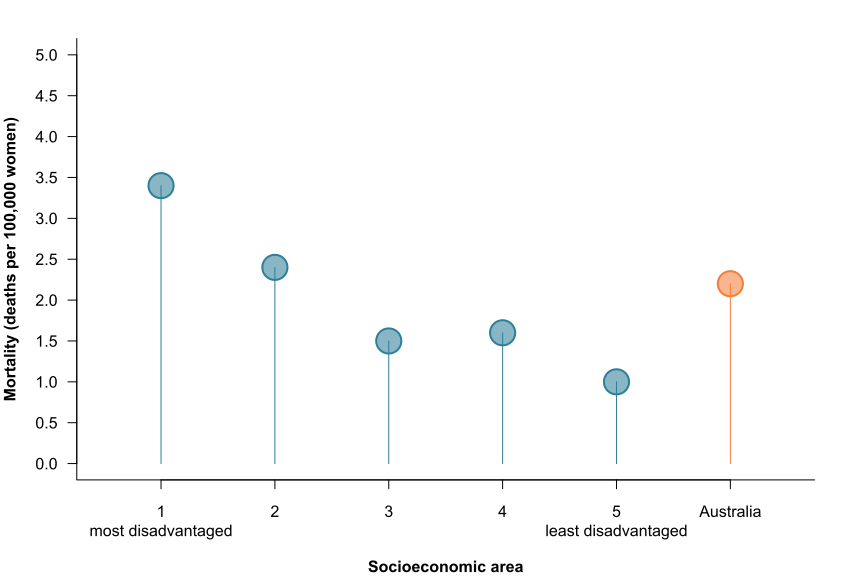
In 2019–2023, cervical cancer mortality for women aged 25–74 increased with increasing socioeconomic disadvantage.
After adjusting for age, mortality in 2019–2023 was highest for women aged 25–74 residing in areas of highest socioeconomic disadvantage at 3.4 deaths per 100,000 women, and lowest for women residing in areas of lowest socioeconomic disadvantage at 1.0 deaths per 100,000 women (Figure 20.3).
Figure 20.3: Cervical cancer mortality, by socioeconomic area, women aged 25–74, 2019–2023
Source: AIHW National Mortality Database. Data and notes for this figure are available in Table A20.4.
Mortality trends
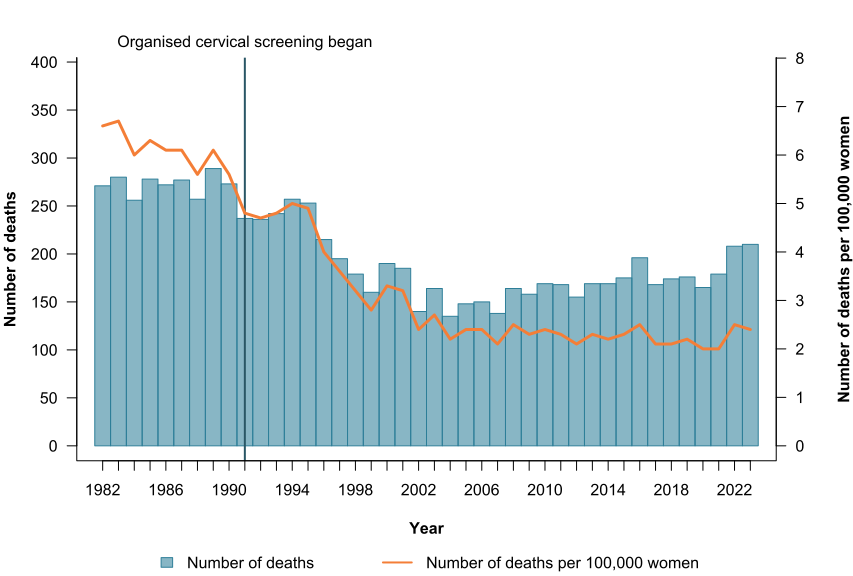
Similar to the trend for cervical cancer incidence, after adjusting for age, there was a modest decrease in mortality for cervical cancer for women aged 25–74 between 1982 and 1990, from 6.6 to 5.6 deaths per 100,000 women.
The greatest decrease in mortality occurred following the introduction of the NCSP in 1991, with mortality from cervical cancer falling to 2.4 deaths per 100,000 women in 2002. Mortality remained steady at between 2.0 and 2.5 deaths per 100,000 women for all years between 2004 and 2023 (Figure 20.4).
The trend for women aged 20–69, the target age group for the NCSP from 1991 to 2017, mirrors this trend for women aged 25–74, the target age group for the NCSP from 2018.
Trends for women aged 25–74 and women of all ages are shown in Table A20.5.
Between 2004 and 2023:
- Mortality remained steady for women aged 25–74, at between 2.0 and 2.5 deaths per 100,000 women, with a slight upturn from 2.0 deaths per 100,000 women in 2021 to 2.5 in 2022 and 2.4 in 2023.
- Mortality remained steady for women of all ages at around 1.5 and 2.0 deaths per 100,000 women, with a slight upturn from 1.5 deaths per 100,000 women in 2021 to 1.8 in 2022 and 1.7 in 2023.
This trend of a decrease in mortality over time has been accompanied by a decrease in the risk of death from cervical cancer by age 85, from 1 in 165 in 1982, to 1 in 553 in 2023 (AIHW 2025a).
Figure 20.4: Mortality from cervical cancer in women aged 25–74, 1982 to 2023
Source: AIHW National Mortality Database. Data and notes for this figure are available in Table A20.5.