


Performance Indicator 2: Response to invitation
Summary of response to invitation data
Of the 1,826,830 invitees aged 25–74 sent an invitation to screen or rescreen in 2024, 37.4% had an HPV test within 6 months.
Response to invitation
Definition
Percentage of invitees aged 25–74 invited to screen or rescreen in a calendar year who screened within 6 months.
Rationale
How many invitees screen in response to an invitation provides a measure of the effectiveness of sending invitations. Measuring this by mode of invitation will also provide useful information as to the most effective method of invitation (which may differ by age or other factors).
Guide to interpretation
A higher response rate is better.
Data considerations
Invitations are restricted to invitations to screen and invitations to rescreen. Reminders to screen or rescreen are not included.
It is not possible to know how many invitees received an invitation to screen or rescreen, therefore these data are based on invitations sent, not invitations received.
For the years of data used in this report, invitations were only sent by letter, so response to invitation according to mode of invitation cannot yet be measured.
Letter types
Initially, there were four letter types that were used as invitations to screen or rescreen:
A1 Invitation to screen
B1 Invitation to screen, self-collect eligible
C1 Invitation to rescreen
D1 Invitation to rescreen, self-collect eligible.
Following the removal of eligibility criteria for self-collection from 1 July 2022, there have been some changes to the letter types:
A1 Invitation to screen is used to invite those aged 25–29 to screen (either due to turning 25 so now being eligible to screen or due to being never-screeners aged 25–29)
B1 Invitation to screen is now used to invite those aged 30–74 to screen (due to being never-screeners aged 30–74)
C1 Invitation to rescreen continues to be used to invite previously-screened participants to rescreen (primarily participants aged 30–74 but can include some aged 25–29)
D1 is no longer used, as has been incorporated into C1 Invitation to rescreen.
Results
In 2024, there were 1,826,830 invitees aged 25–74 sent an invitation to screen or rescreen. Of these, 682,646 had an HPV test within 6 months of the date the invitation was sent. This was 37.4% of invitees aged 25–74 who were sent an invitation in 2024.
Response to invitation by age
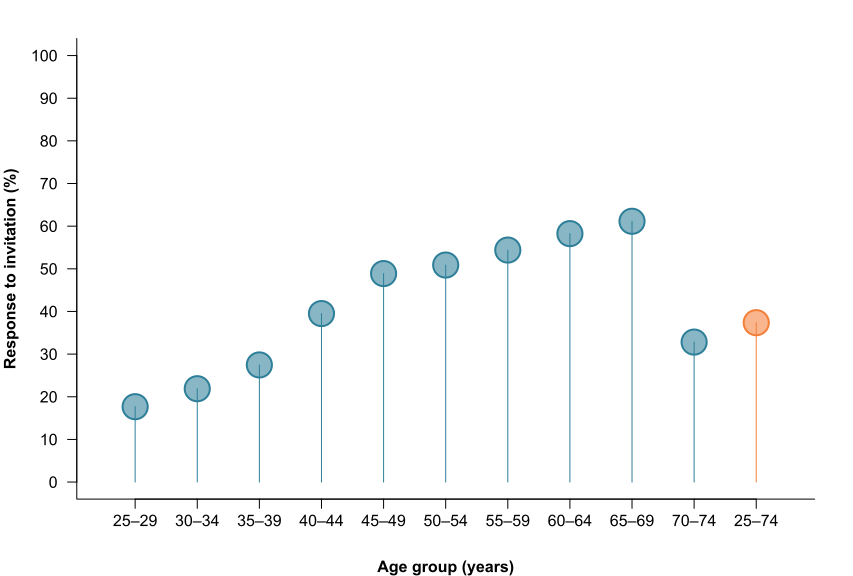
Number of invitees in 2024 are shown by age in Table 2.1, and response to invitation for 2024 is shown by age in Figure 2.1.
Age group | Number of invitees |
|---|---|
25–29 | 220,715 |
30–34 | 292,403 |
35–39 | 271,646 |
40–44 | 193,688 |
45–49 | 150,824 |
50–54 | 156,041 |
55–59 | 138,778 |
60–64 | 136,788 |
65–69 | 116,380 |
70–74 | 149,567 |
25–74 | 1,826,830 |
Note: Number of invitees sent an invitation to screen or rescreen.
Source: AIHW analysis of NCSR data (NCSR RDE 11/07/2025).
There were 220,715 invitees aged 25–29 invited to screen in 2024, of whom 39,000 had an HPV test, which is a response to invitation of 17.7%. For age groups between 30–34 and 65–69, the response to invitation ranged between 21.9% (for invitees aged 30–34) and 61.1% (for invitees aged 65–69) (Figure 2.1). Invitees aged 70–74 had a response to invitation of 32.8%, which aligns with the increase in participation in this age group.
Figure 2.1: Response to invitation to screen or rescreen within 6 months, by age, 2024
Source: AIHW analysis of NCSR data (NCSR RDE 11/07/2025). Data and notes for this figure are available in Table A2.1.
Response to invitation by letter type
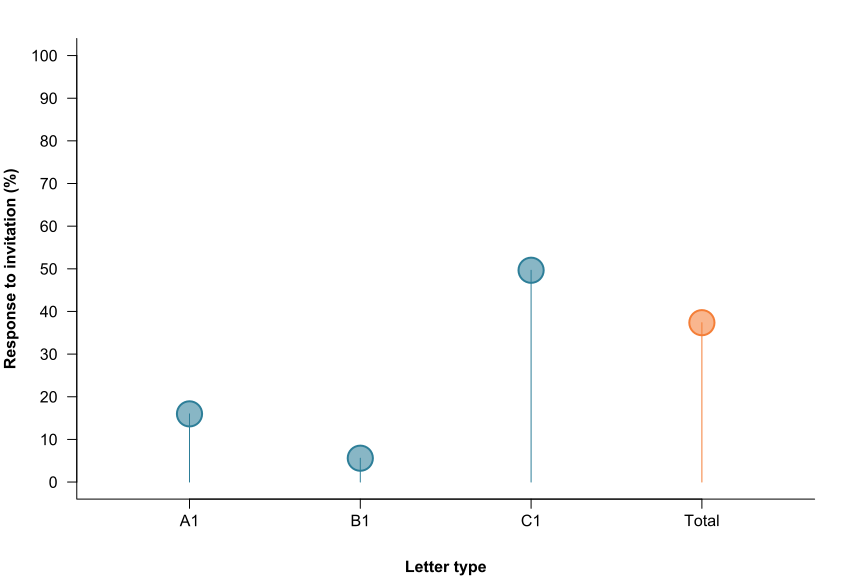
The proportion of invitees aged 25–74 who screened within 6 months of an invitation to screen or rescreen is shown by letter type in Figure 2.2.
Letter type 'C1 Invitation to rescreen' had the highest response to invitation, with 49.7% of invitees sent an invitation to rescreen having an HPV test within 6 months. The next highest response to invitation was for letter type 'A1 Invitation to screen' used to invite those aged 25–29, with 16.0% of invitees having an HPV test within 6 months. The lowest response was the letter type 'B1 Invitation to screen' used to invite never-screeners aged 30–74, with 5.6% of these invitees having an HPV test within 6 months.
The high response rate for letter type 'C1 Invitation to rescreen' in 2024 is likely related to these participants being routine screeners, and is in contrast to the very low response rate of never-screeners. Further, the inclusion of these routine screeners in response to invitation data from late 2022 onwards has led to an increase in overall response to invitation in 2023 and 2024. These participants were not included in this measure during the transition from 2-yearly to 5-yearly screening over the years 2018 to 2022, as participants aged 30–74 whose previous Pap test was normal were sent a reminder to rescreen after they were overdue, not an invitation to rescreen.
Figure 2.2: Response to invitation to screen or rescreen within 6 months, by letter type, invitees aged 25–74, 2024
Note: A1 Invitation to screen (ages 25–29), B1 Invitation to screen (ages 30–74), C1 Invitation to rescreen.
Source: AIHW analysis of NCSR data (NCSR RDE 11/07/2025). Data and notes for this figure are available in Table A2.2.
Response to invitation trends
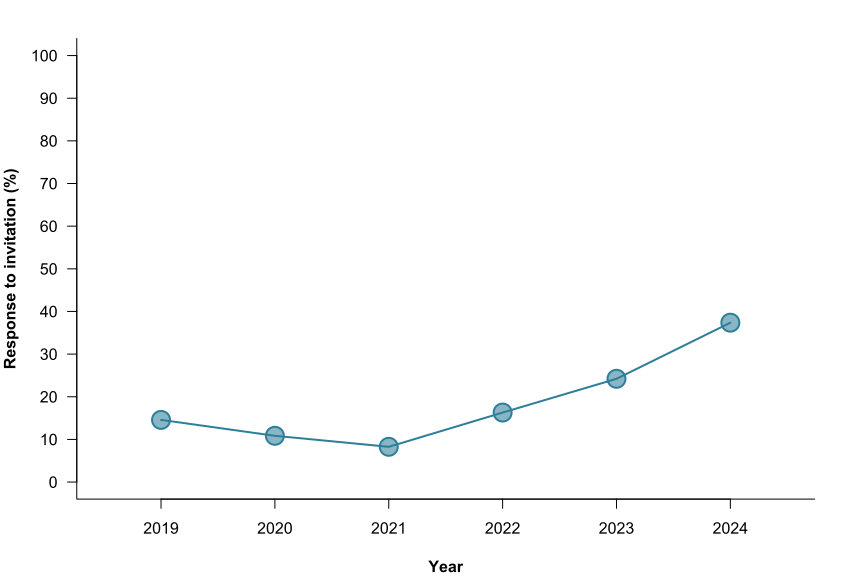
As noted above, response to invitation data during the transition from 2-yearly to 5-yearly screening over the years 2018 to 2022 are different to response to invitation data from 2023 onwards, due to the difference in invitations to screen and rescreen sent during transition compared to after transition. Specifically, participants that received a reminder to rescreen during the transition now receive an invitation to rescreen and are hence now included. This represents a large proportion of participants invited, and as routine screeners, they respond better to invitations to rescreen than new-screeners or never-screeners.
This had a large impact on response to invitation over time.
Response to invitation to screen or rescreen for invitees aged 25–74 was low over the transition years 2019 to 2022, ranging between 8.3% and 16.3%, before increasing after transition to 24.2% in 2023 and 37.4% in 2024 (Figure 2.3).
Figure 2.3: Response to invitation to screen or rescreen within 6 months, by year, invitees aged 25–74, 2019 to 2024
Note: Too few invitations were sent in 2018 to include data for this year therefore trends start from 2019.
Source: AIHW analysis of NCSR data (NCSR RDE 11/07/2025). Data and notes for this figure are available in Table A2.4.