Monitoring key aspects of the National Cervical Screening Program
Population-based cancer screening programs require monitoring of their performance, quality, and safety. To facilitate this, the NCSP has performance indicators, quality standards and measures, and safety monitoring protocols. This report presents the latest data for the performance indicators of the NCSP; these measure key aspects of the screening pathway.
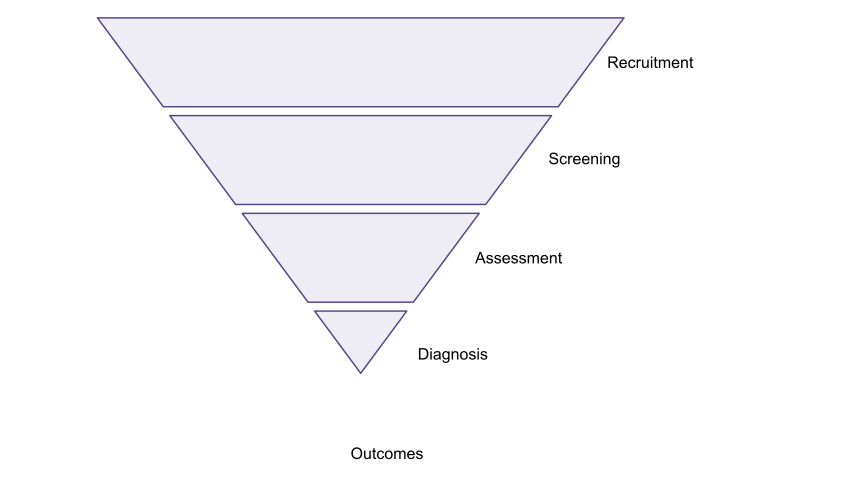
These performance indicators are structured within the five incremental stages of a population screening pathway, as described in the Population Based Screening Framework (Standing Committee on Screening 2016). These stages are recruitment, screening, assessment, diagnosis, and outcomes. Each incremental stage includes fewer individuals, represented diagrammatically in Figure NCSP 1 by an inverted triangle.
The largest section (recruitment) represents the target population of the screening program, followed by a smaller screening section, which represents the individuals who participate. The next section (assessment) is smaller again; it represents the subset of screening individuals who have diagnostic assessment, since a screening test is not intended to be diagnostic but rather aims to identify individuals more likely to have the disease and therefore require further investigation with diagnostic tests. A subset of individuals assessed will be found to have the disease, represented by the smallest section of the triangle (diagnosis).
The final section (outcomes) sits below the triangle and refers to morbidity and mortality. Screening programs aim to reduce morbidity and mortality.
Figure NCSP 1: Population screening pathway stages