


Performance Indicator 11: Follow-up results
Summary follow-up results data
Of the 27,299 first follow-up episodes in 2024 in participants aged 25–74:
- 39.7% were low risk
- 54.1% were intermediate risk
- 4.0% were higher risk
- 2.2% could not be assigned a risk
Of the 15,752 second follow-up episodes in 2024 in participants aged 25–74:
- 29.9% were low risk
- 69.8% were higher risk
- 0.3% could not be assigned a risk
Follow-up results
Definition
Percentage of follow-up episodes in participants aged 25–74 in each risk category in a calendar year.
Rationale
Follow-up results are the follow-up HPV test result and reflex LBC (where indicated) that occur 12 months after an intermediate risk screening episode result, or 12 months after an intermediate risk follow-up episode result. Distribution of follow-up episode results is a key measure for the screening program and any changes in these distributions over time will require investigation within the broader context of the screening program. For this reason, follow-up results are based on test risk, not participant risk.
This indicator is reported separately for first follow-up episodes and second follow-up episodes.
Data considerations
Prior to 1 February 2021, only one follow-up HPV test was performed 12 months following an intermediate risk primary screening episode, with the participant deemed to be either low risk (no oncogenic HPV detected) or higher risk (any oncogenic HPV detected). Since 1 February 2021, if the first follow-up HPV test detects oncogenic HPV (not 16/18) and the reflex LBC is negative or low-grade, then the participant remains at intermediate risk, and a second follow-up HPV test is performed 12 months after the first, with the participant deemed to be either low risk (no oncogenic HPV detected) or higher risk (any oncogenic HPV detected).
In the screening pathway, characteristics of participants including age, screening history, and Indigenous status can result in a participant with an intermediate risk follow-up episode being managed as higher risk instead of intermediate risk.
However, this indicator looks only at the risk of the follow-up episode based on the follow-up HPV test result and, where indicated, the LBC test result, without considering characteristics of the participants. The result of this is that there are a number of intermediate risk follow-up episodes where the participant will instead be managed as higher risk due to their age, screening history, or Indigenous status.
This report includes a breakdown of the risk of both first and second follow-up episodes.
Guide to interpretation
From 1 February 2021, there are three risk categories (low, intermediate, and higher) for the first follow-up episode 12 months after an intermediate risk primary screening episode. The assigned risk category is determined by a combination of the follow-up HPV test result and, where indicated, the LBC test result. Risk is defined as the risk of a significant cervical abnormality. Determination of risk is illustrated in the screening pathway.
- A first follow-up HPV test that does not detect oncogenic HPV indicates low risk, and no reflex LBC is performed.
- A first follow-up HPV test that detects oncogenic HPV 16/18 indicates higher risk, and while reflex LBC is performed, the outcome of this test does not affect the risk.
- A first follow-up HPV test that detects oncogenic HPV (not 16/18) does not indicate a risk on its own, but requires reflex LBC to be performed to determine whether risk remains as intermediate or becomes higher risk.
A reflex LBC is only indicated when the first follow-up HPV test detects oncogenic HPV. LBC test results are the same as Pap test results from the previous NCSP. These are:
- negative (no abnormality detected)
- low-grade abnormality (possible or definite low-grade squamous intraepithelial lesion)
- high-grade abnormality (possible or definite high-grade squamous intraepithelial lesion or squamous cell carcinoma)
- glandular abnormality (possible or definite glandular abnormality or adenocarcinoma)
The reflex LBC can also be unsatisfactory for evaluation.
In some cases, a first follow-up HPV test that does not detect oncogenic HPV is followed by an LBC, despite this not being indicated. These episodes have been allocated a risk according to their LBC test result, which is intermediate or higher if the LBC is not negative.
There are also some first follow-up episodes for which a risk cannot be allocated, usually due to unsatisfactory tests. Unsatisfactory HPV tests that are followed by an LBC are only allocated a risk if the LBC indicates a high-grade abnormality, glandular abnormality, or cancer (higher risk).
From 1 February 2021, there are two risk categories (low and higher) for the second follow-up episode 12 months after an intermediate risk follow-up episode that are determined by the second follow-up HPV test result. Risk is defined as the risk of a significant cervical abnormality. Determination of risk is illustrated in the screening pathway.
- A second follow-up HPV test that does not detect oncogenic HPV indicates low risk, and no reflex LBC is performed.
- A second follow-up HPV test that detects any oncogenic HPV indicates higher risk, and while reflex LBC is performed, the outcome of this test does not affect the risk.
Results
First follow-up episodes
In 2024, there were 27,299 first follow-up episodes that occurred in participants aged 25–74. These episodes were assigned to one of the three risk categories of low, intermediate, or higher (or were unable to be assigned to a risk category) based on the combination of the first follow-up HPV test result and, where indicated, the LBC test result. The risk assigned to a test may differ from the risk assigned to a participant. This is explained in the 'Guide to interpretation' for this performance indicator.
Overall, of the 27,299 first follow-up episodes in 2024 in participants aged 25–74:
- 39.7% were low risk
- 54.1% were intermediate risk
- 4.0% were higher risk
- 2.2% could not be assigned a risk.
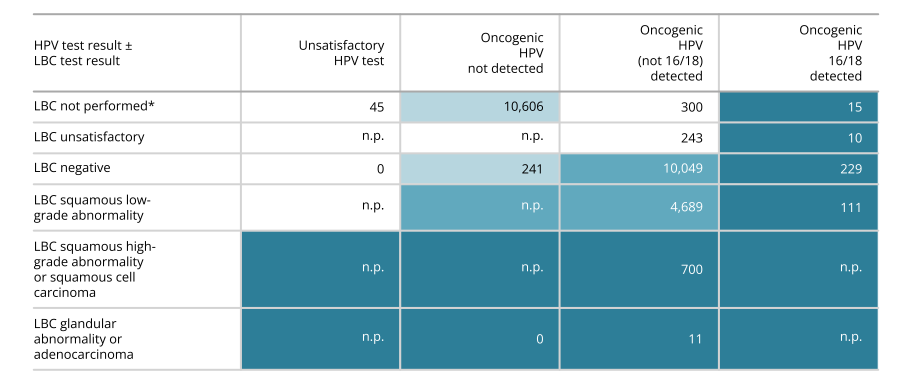
In Table 11.1, the combination of first follow-up HPV test result and LBC test result is shown for each first follow-up episode.
Table 11.1: First follow up HPV ± LBC test results, participants aged 25–74, 2024
First follow-up episodes by age
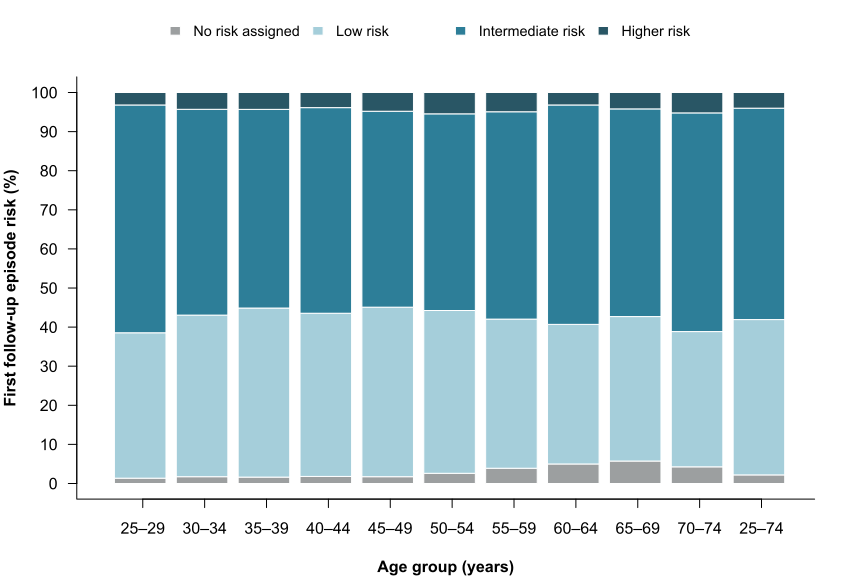
Risk categories for each age group are shown in Figure 11.1.
The proportion of first follow-up episodes that were low risk was highest for ages 30–54 at between 41.3% and 43.4%, decreasing after this age. The proportion of first follow-up episodes that were intermediate risk was highest for the age group 25–29 at 58.3%. The proportion of first follow-up episodes that were higher risk was lowest in participants aged 25–29 and in participants aged 60–64 at 3.2% (Figure 11.1).
Figure 11.1: First follow-up episode risk categories, by age, 2024
Source: AIHW analysis of NCSR data (NCSR RDE 11/07/2025). Data and notes for this figure are available in Table A11.1b.
First follow-up episode risk trends
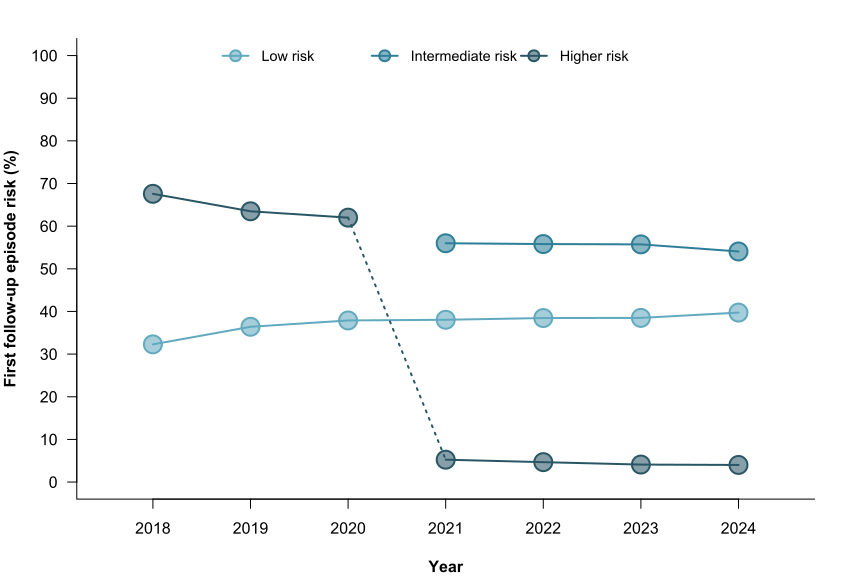
Between 2018 and 2020, there were no intermediate risk first follow-up episodes, only low risk and higher risk. This means that direct comparisons cannot be made between data before and after 2021.
Risk categories for each year are shown in Figure 11.2.
The proportion of first follow-up episodes that were low risk increased slightly from 32.3% in 2018 to 37.9% in 2020. This increase continued after 2020, from 38.1% in 2021 to 39.7% in 2024.
The proportion of first follow-up episodes that were intermediate risk ranged between 54.1% and 56.0% between the years 2021 and 2024.
The proportion of screening episodes that were higher risk was high between 2018 and 2020, since detection of any HPV was considered a higher risk first follow-up episode in those years. This was from 67.6% in 2018 to 62.0% in 2020. The proportion that were higher risk was then much lower after 2020, from 5.2% in 2021 down to 4.0% in 2024.
The profile of more low risk screening episodes and fewer higher risk screening episodes in 2024 is likely reflective of the majority of participants in 2024 being participants who are returning 5 years after a previous low risk HPV test, and so are less likely to have an abnormality.
Figure 11.2: First follow-up episode risk categories, by year, participants aged 25–74, 2018 to 2024
Source: AIHW analysis of NCSR data (NCSR RDE 11/07/2025). Data and notes for this figure are available in Table A11.3b.
Second follow-up episodes
In 2024, there were 15,752 second follow-up episodes that occurred in participants aged 25–74. These episodes were assigned to one of the two risk categories of low or higher (or were unable to be assigned to a risk category) based on the combination of the second follow-up HPV test result and, where indicated, the LBC test result. This is explained in the 'Guide to interpretation' for this performance indicator.
Overall, of the 15,752 second follow-up episodes in 2024 in participants aged 25–74:
- 29.9% were low risk
- 69.8% were higher risk
- 0.3% could not be assigned a risk.
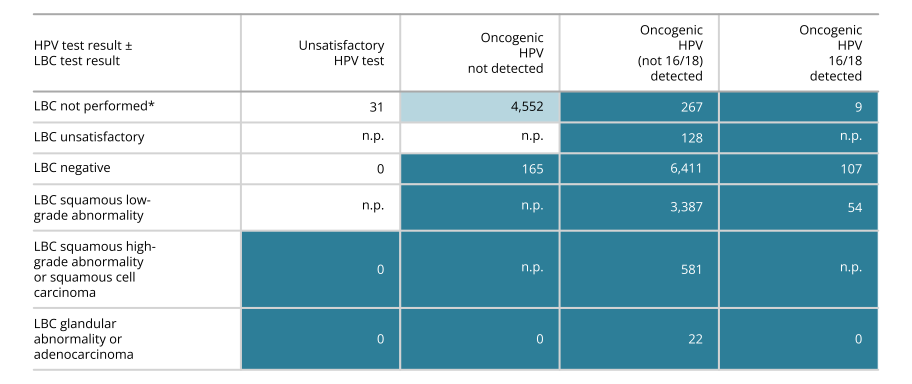
In Table 11.2, the combination of second follow-up HPV test result and LBC test result is shown for each second follow-up episode.
Figure Table 11.2: Second follow-up HPV ± LBC test results, participants aged 25–74, 2024
Second follow-up episodes by age
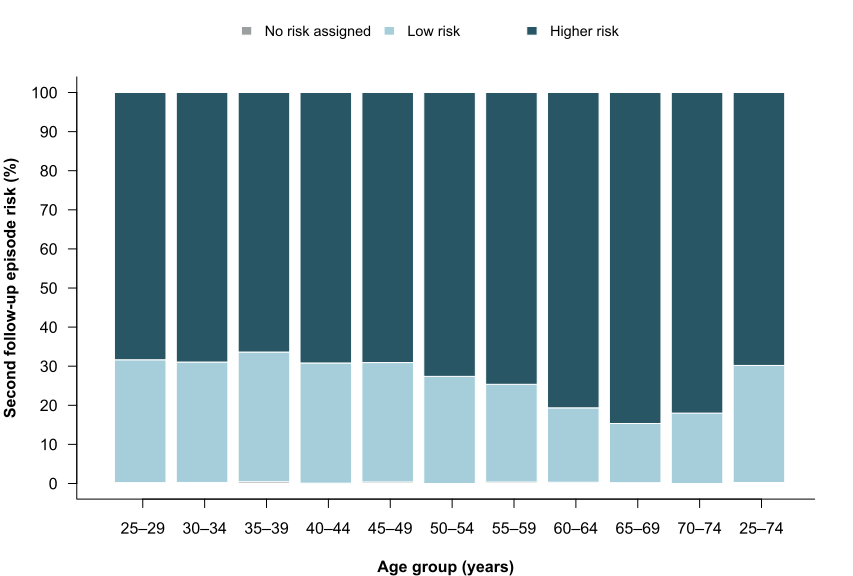
Risk categories for each age group are shown in Figure 11.3.
The proportion of second follow-up episodes that were low risk was higher for participants aged under 55 and lower for participants aged 55 and over. Conversely, the proportion of second follow-up episodes that were higher risk was lower for participants aged under 55 and higher for participants aged 55 and over (Figure 11.3).
The proportion of second follow-up episodes for which risk could not be assigned was too low to be visible in the figure.
Figure 11.3: Second follow-up episode risk categories, by age, 2024
Source: AIHW analysis of NCSR data (NCSR RDE 11/07/2025). Data and notes for this figure are available in Table A11.4b.
Second follow-up episode risk trends
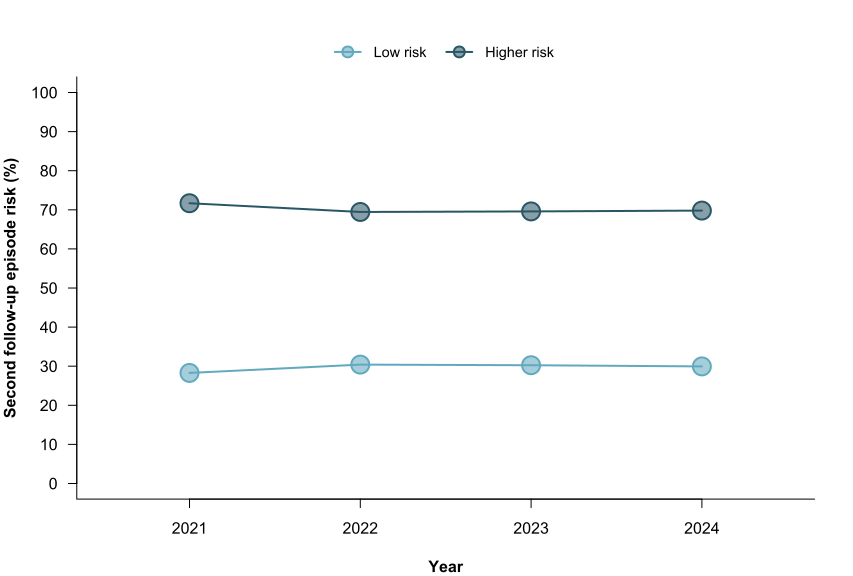
Risk categories for each year are shown in Figure 11.4.
The proportion of second follow-up episodes that were low risk was between 28.3% and 30.4% for all years between 2021 and 2024.
Conversely, the proportion of second follow-up episodes that were higher risk ranged between 69.4% and 71.7% for all years between 2021 and 2024.
Figure 11.4: Second follow-up episode risk categories, by year, participants aged 25–74, 2018 to 2024
Source: AIHW analysis of NCSR data (NCSR RDE 11/07/2025). Data and notes for this figure are available in Table A11.6b.