


High-grade cervical abnormality detection for Aboriginal and Torres Strait Islander participants
High-grade cervical abnormality detection is the proportion of participants screened that have a high-grade abnormality detected on histology. The detection of high-grade abnormalities is an indicator of program performance. Detection of high-grade abnormalities provides an opportunity for treatment before cancer can develop, thus the NCSP aims to detect high-grade abnormalities in line with its broader aim to reduce the incidence of cervical cancer.
High-grade cervical abnormality detection for Aboriginal and Torres Strait Islander participants
In 2024, there were 591 Aboriginal and Torres Strait Islander participants aged 25–74 with a high-grade abnormality detected on histology, which is 12.5 participants with a high-grade abnormality detected per 1,000 participants screened.
This means that, for every 1,000 Aboriginal and Torres Strait Islander participants screened, 13 had a high-grade abnormality detected, providing an opportunity for treatment prior to any possible progression to cervical cancer.
Detection of high-grade abnormalities among Aboriginal and Torres Strait Islander participants was higher than the 6.6 non-Indigenous participants with a high-grade abnormality detected per 1,000 screened (11.8 Aboriginal and Torres Strait Islander participants versus 7.2 non-Indigenous participants with a high-grade abnormality detected per 1,000 participants screened after adjusting for age) (Figure Indigenous people 5).
Figure Indigenous people 5: High-grade cervical abnormality detection, by Indigenous status, participants aged 25–74, 2024
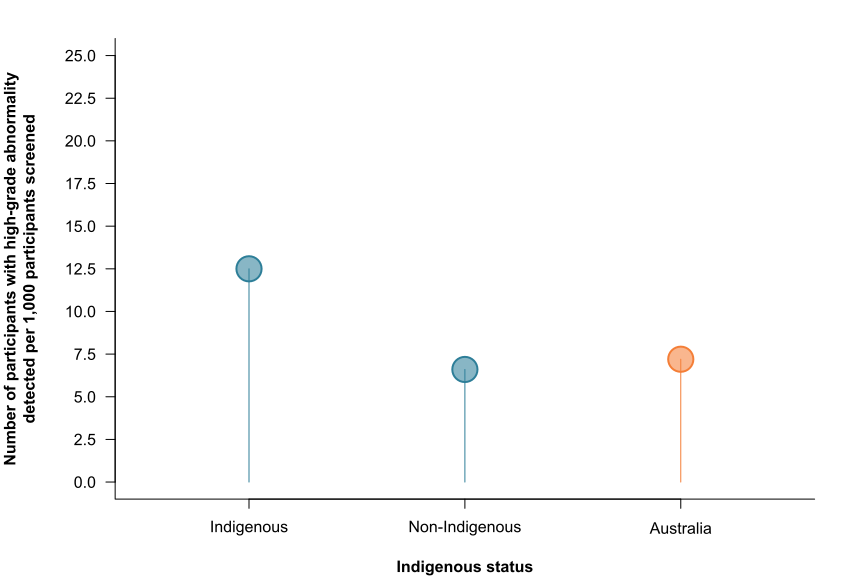
Note: Aboriginal and Torres Strait Islander participants are respectfully referred to as Indigenous participants in this figure.
Source: AIHW analysis of NCSR data (NCSR RDE 11/07/2025). Data and notes for this figure are available in Table Indigenous people 8.
High-grade cervical abnormality detection trends for Aboriginal and Torres Strait Islander participants
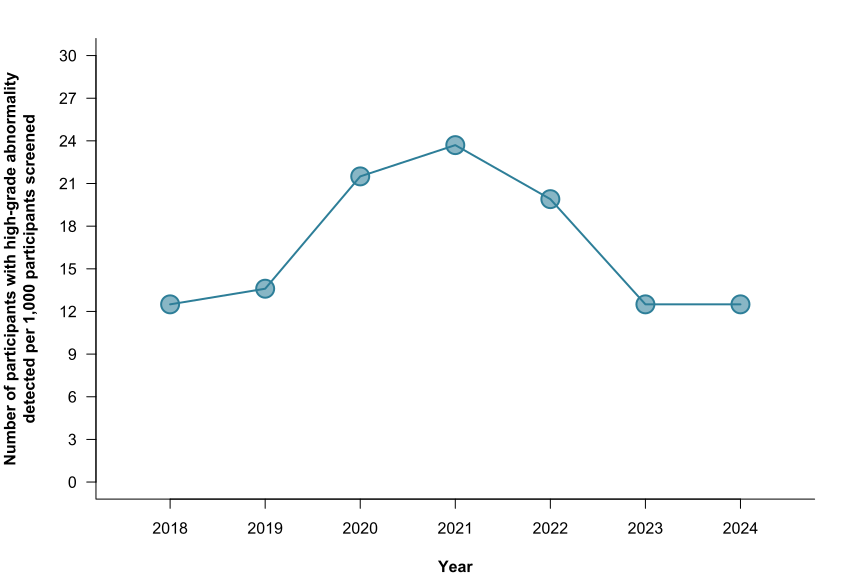
Similar to the trend for all Australians, the high-grade abnormality rate for Aboriginal and Torres Strait Islander participants increased from 12.5 participants with a high-grade cervical abnormality detected by histology per 1,000 participants screened in 2018, to 13.6 in 2019, to 21.5 in 2020, and to 23.7 in 2021. The high-grade cervical abnormality rate then decreased to 19.9 in 2022, and to 12.5 participants with a high-grade cervical abnormality detected by histology per 1,000 participants screened in 2023 and 2024 (Figure Indigenous people 6).
Figure Indigenous people 6: High-grade cervical abnormality detection trends for Aboriginal and Torres Strait Islander participants, by year, participants aged 25–74, 2018 to 2024
Source: AIHW analysis of NCSR data (NCSR RDE 11/07/2025). Data and notes for this figure are available in Table Indigenous people 9.